Every unit,
instantly.
The science and history behind units, measurements, and conversions.
✦ AI-powered — understands natural language

Ten Metres of Water Equals Eight Kilometres of Air

The MPG Illusion: Why 10→20 MPG Saves More Fuel Than 30→50 MPG
Going from 10 MPG to 20 MPG saves nearly 4x more fuel than going from 30 MPG to 50 MPG — even though the second jump looks "bigger" in MPG points. Here's why MPG's "distance per fuel" framing is the inverse of what actually determines fuel costs, why L/100km-style metrics avoid this "MPG illusion" entirely, and why fuel-economy improvements at the low end of the scale represent disproportionately larger real savings.

Human Body Volumes: Blood, Lung Capacity, Gastric Volume, and What They Reveal About Health
Your body contains ~5 litres of blood, can expand its stomach to 3–4 litres, filters 180 litres of plasma through the kidneys daily, and your lungs hold ~6 litres at maximum capacity. Here's how physiological volume measurements work and what they reveal about cardiovascular shock, respiratory disease diagnosis, and satiety.

Combat Sport Weight Classes, Weight Cutting, and Why Losing 10kg Overnight Is Dangerous
MMA fighters sometimes lose 10+ kg between weigh-in and competition through dehydration — competing at weights 10–15% above their weight class. Here's how combat sport weight classes work, the physiology and risks of extreme weight cutting, regulatory responses, and how powerlifting handles weight classes differently.

Animal Speeds and the Physics of Locomotion: Why Cheetahs Tire in 30 Seconds and Humans Are Elite Endurance Runners
A cheetah can't outsprint a horse over a mile, and a peregrine falcon at 320 km/h is faster than both but only in a gravity-assisted dive. Here's why cheetahs tire after 30 seconds, how the pronghorn evolved to outrun extinct North American cheetahs, and why humans are actually elite endurance animals.

Hypermiling Techniques: The Driving Habits That Measurably Improve Fuel Economy
Driving at 70 mph instead of 80 mph cuts fuel consumption by approximately 25% on the motorway. Here's the aerodynamics behind that, plus tyre pressure, anticipatory braking, route planning, and the other hypermiling techniques with measurable impact.

Music and Frequency: Concert A440, Harmonics, the Nyquist Theorem, and How Digital Audio Works
Concert A is 440 Hz because of a 1939 ISO standard. Here's how equal temperament maps notes to frequencies, why instruments at the same pitch sound different (harmonics and timbre), the Nyquist theorem that determines why CD audio samples at 44.1 kHz, and why different historical periods tuned differently.

Food Calories, Thermic Effect, and Why the Label Isn't the Whole Story
Food calorie labels use Atwater values from the 1890s and don't account for the thermic effect of food, the difference between raw and cooked, or gut microbiome variation. Here's what food calories actually measure, why protein delivers fewer net calories than the label suggests, and why individual calorie extraction varies.

Kitchen Temperature: Oven Calibration, Safe Internal Temperatures, and Why Your Oven Lies to You
Consumer ovens can run 10–30°C off their dial setting. Colour and time are indicators; internal temperature is the only reliable doneness test. Here's gas mark to Celsius conversion, food safety internal temperatures, the difference between thermometer types, and why burgers and whole cuts have different safety rules.
Extreme Temperatures: From Blast Furnaces to Quantum Computers to Stellar Classification
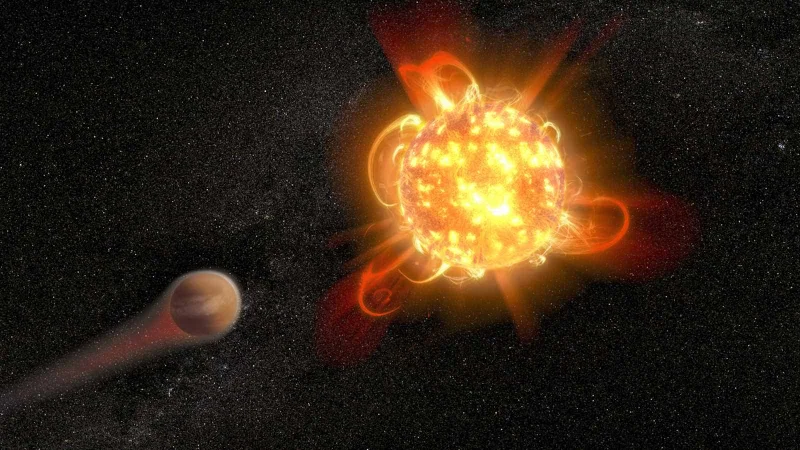
Gas turbine blades operate above their own melting point, cooled by internal airflow. Quantum computers run at 15 millikelvin — colder than outer space. Here's industrial thermocouples and pyrometer accuracy, extreme industrial temperatures, cryogenic applications, and how stellar surface temperature determines star colour.

How Property Floor Area Is Measured: GIA, NIA, and Why UK and US Numbers Aren't Comparable
UK properties use Gross Internal Area, US uses Gross Living Area — and the same building measured both ways gives different numbers. Here's GIA vs NIA vs GEA, how Germany and France mandate floor area disclosure differently, how to calculate price per m² for property comparison, and why EPC certificates are the most reliable floor area source.

Scheduling Across Timezones: Finding Overlap Windows, Fair Meeting Rotation, and Async-First Practices
A 9 AM New York meeting is 10 PM in Singapore — and scheduling from headquarters systematically burdens everyone else. Here's how to visualise timezone overlap (or its absence), rotating meeting approaches for fair distribution, the 2-3 week DST gap between US and European transitions, and async-first practices for wide timezone spreads.

Gradients, Roof Pitch, and Ramp Design: Trigonometry in Everyday Construction and Accessibility
A 5% road gradient is a 1:20 slope at 2.86° — three ways to express the same incline. Here's trigonometry in everyday construction: wheelchair ramp compliance angles, roof pitch in degrees vs rise:run, how GPS calculates horizontal distance from slope distance, and the steepest roads in the world.
