Every unit,
instantly.
The science and history behind units, measurements, and conversions.
✦ AI-powered — understands natural language

Ten Metres of Water Equals Eight Kilometres of Air

The Database That Runs Every Clock in Every App Almost Went Away in 2011 — The IANA Timezone Database Story
The IANA Time Zone Database — the source of timezone rules for Linux, macOS, Python, Java, and essentially every software platform — was briefly taken offline in 2011 due to a copyright lawsuit, creating a crisis for global software infrastructure. Here's how Samoa skipped an entire calendar day in December 2011, why Egypt and Morocco changed their DST rules with days of notice, the correct UTC-first database storage pattern, and why "UTC+1" is the wrong way to store a timezone.

UTC Is 37 Seconds Behind Atomic Time — Why Leap Seconds Exist, Why They Crash Software, and What Replaces Them After 2035
UTC and International Atomic Time (TAI) diverge by 37 seconds because Earth's rotation is slowing — atomic clocks keep perfect SI seconds, but solar noon would drift without periodic leap seconds inserted into UTC. Here's why the June 2012 leap second caused Reddit, Mozilla, and LinkedIn to go offline (a Linux kernel hrtimer bug), why GPS time is 18 seconds ahead of UTC, and why MiFID II's microsecond timestamp requirements create audit trail ambiguities around leap second boundaries.

Labs Have Reached 450 Picokelvin But Can Never Reach Zero — Absolute Zero, Superfluidity, and Why Quantum Computers Run Colder Than Deep Space
Absolute zero is unreachable because the third law of thermodynamics requires infinite cooling steps to extract the final increment of entropy — labs have reached 450 picokelvin, billions of times colder than outer space, but never 0 K. Here's what each temperature scale actually encodes (Fahrenheit's brine mixture zero point, Kelvin's thermodynamic basis), how Bose-Einstein condensates and superfluidity emerge near absolute zero, and why superconducting quantum computers must operate at 15 millikelvin — colder than anywhere in the observable universe.

Triple Your Speed, Use 27 Times More Power — The Physics of Aerodynamic Drag and Why High-Speed Transport Is So Hard
Aerodynamic drag scales with velocity squared and power with velocity cubed — triple your speed and you need 27 times more power to overcome drag. Here's why the Concorde burned 8× more fuel per passenger than a 747, why aircraft cruise at 35,000 feet to exploit thin air, why Hyperloop puts vehicles in a vacuum tube to sidestep the drag equation entirely, and the physics behind terminal velocity varying with altitude.

A Bathroom Scale Measures Force, Not Mass — Why Your "Weight" Changes in Elevators, on the Moon, and in Space
A bathroom scale measures the normal force the floor exerts back on you — not your mass directly — which is why the same scale would misread your weight on the Moon by a factor of 6. Here's why elevators make you feel heavier or lighter while your mass never changes, why astronauts are in continuous free-fall rather than "zero gravity," and why weightless objects still have full inertia and can still injure you.

Why a Unit Conversion Error Destroyed a $327 Million Mars Mission — And Why the US Still Uses Imperial
The US still uses imperial because a voluntary metric conversion law in 1975 lacked enforcement and the Metric Board was abolished in 1982. Here's how the Mars Climate Orbiter was destroyed by a metric-imperial unit confusion costing $327 million, why nautical miles are defined by Earth's geometry (1 arcminute of latitude), and why the modern definition of the metre via the speed of light is reproducible anywhere in the universe without a physical artefact.

Why Official Fuel Economy Figures Were 40% Optimistic — NEDC, WLTP, and What Lab Tests Still Don't Capture
The NEDC fuel economy test was so widely gamed that the gap between official figures and real-world consumption reached 40% before WLTP replaced it. Here's how NEDC, WLTP, and EPA test cycles differ, what WLTP still doesn't capture (AC, cold start, >131 km/h driving), why UK and US mpg figures differ even beyond test cycle differences, and the L/100km vs MPG inverse relationship that creates perceptual distortions.

The Duck Curve, Grid Inertia, and Why Power Quality Is a Different Problem From Power Quantity
The duck curve — the dramatic midday dip and evening ramp that high solar penetration creates in net electrical demand — is one of the core grid stability challenges of the renewable energy transition. Here's what power quality actually means (voltage regulation, frequency stability, harmonic distortion), why grid-scale batteries are valued for power capacity (MW) not energy capacity (MWh), and how declining grid inertia from solar and wind threatens frequency response.
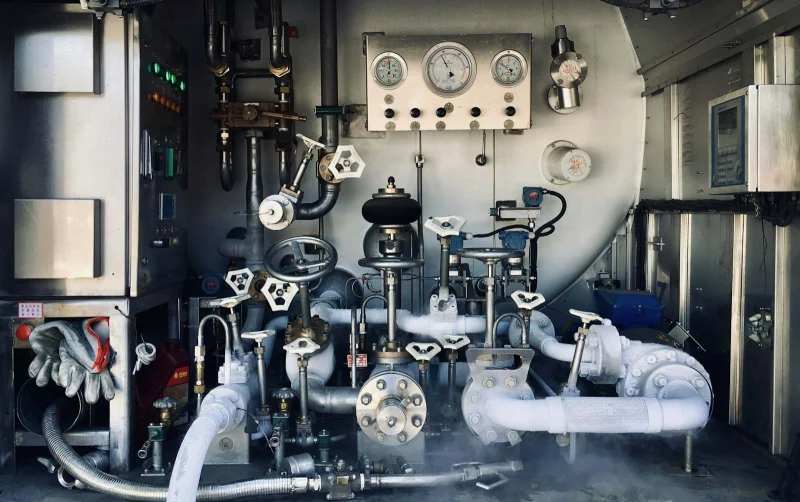
Why Fracking Needs 70 MPa and Food Pasteurisation Needs 600 MPa — Industrial Pressure Engineering Explained
Hydraulic fracturing injects water at 40-70 MPa (6,000-10,000 PSI) — pressures that must overcome 75-90 MPa of lithostatic stress from rock weight above. Here's a pressure scale from car tyres to the Mariana Trench to fracking to diamond anvil cells, supercritical CO₂ and water pressure thresholds, why aircraft hydraulics standardised at 3,000 PSI, and food High-Pressure Processing at 600 MPa (equivalent to 59 km ocean depth).
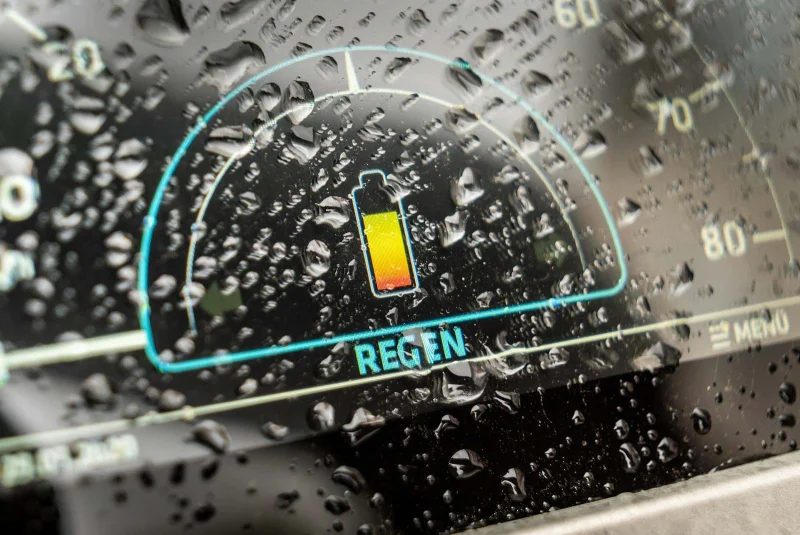
Why Battery EVs Use 3× Less Energy Than Hydrogen Fuel Cell Cars — Well-to-Wheel Efficiency and Energy Density Explained
Hydrogen fuel cell vehicles require 3× more renewable electricity per kilometre than battery EVs — not because the vehicles are worse, but because electrolysis → compression → fuel cell conversion chain loses efficiency at each step. Here's the full well-to-wheel efficiency comparison, why hydrogen's 120 MJ/kg energy density is undercut by its terrible volumetric density at 700 bar, and the BTU-to-kW conversion that makes US and European appliance ratings incomparable without conversion.

Why Your 2TB Drive Shows 1.82TB — Binary vs Decimal Units, Database Overhead, and NVMe vs SATA
A 2TB drive shows as 1.82TB in Windows because manufacturers use decimal terabytes (10^12 bytes) while operating systems use binary tebibytes (2^40 bytes) — a 10% gap that isn't hidden storage, just two different unit systems. Here's the IEC binary prefix standard that resolved this in 1998 (but not in practice), how database row overhead and indexes double storage use, file system block waste, and NVMe vs SATA latency numbers.

Why a US Recipe Fails in the UK — Butter Sticks, Cup Sizes, Tablespoon Volumes, and Egg Standards Compared
Scooping flour vs spooning it into a cup creates a 20-30% weight difference for the same "cup" measurement — and that's before accounting for the fact that US cups (237 mL), UK cups (284 mL old / 250 mL new), and Australian cups (250 mL) are different sizes. Here's the butter stick convention no one outside the US knows, why Australian tablespoons are 33% larger than US ones, and why UK large eggs are closer to US extra-large.
