Converters
Convert any unit of measurement instantly — covering 17 categories from physical units to time zones and currency exchange. Whether you're a student solving science problems, an engineer switching between metric and imperial, or a traveller checking local measurements, every converter works in your browser with no installation required. Results are instant and accurate to the required decimal precision.
Physical Units
Length Converter
Convert between metres, kilometres, miles, feet, inches, yards, nautical miles, and more.
Weight Converter
Convert kilograms, grams, pounds, ounces, stones, tonnes, and other weight units instantly.
Temperature Converter
Convert between Celsius, Fahrenheit, Kelvin, and Rankine with instant real-time results.
Area Converter
Convert square metres, acres, hectares, square feet, square miles, and other area units.
Volume Converter
Convert litres, millilitres, gallons, fluid ounces, cups, pints, quarts, and cubic units.
Speed Converter
Convert km/h, mph, m/s, knots, Mach number, and other speed units with one click.
Pressure Converter
Convert bar, psi, Pa, kPa, MPa, atm, mmHg, and torr pressure units accurately.
Energy Converter
Convert joules, calories, kilowatt-hours, BTU, electronvolts, and other energy units.
Power Converter
Convert watts, kilowatts, horsepower, BTU/hr, and other power measurement units.
Angle Converter
Convert degrees, radians, gradians, arcminutes, arcseconds, and other angular units.
Frequency Converter
Convert Hz, kHz, MHz, GHz, and other frequency units used in electronics and audio.
Fuel Economy Converter
Convert between MPG, L/100km, km/L and other fuel efficiency units for cars and vehicles.
Time & Date
Time Converter
Convert seconds, minutes, hours, days, weeks, months, and years with a simple input.
Time Zone Converter
Convert times across world time zones instantly. Great for scheduling international meetings and calls.
Other Converters
Data Storage Converter
Convert bytes, kilobytes, megabytes, gigabytes, terabytes, and binary/decimal variants.
Cooking Converter
Convert cups, tablespoons, teaspoons, millilitres, and other cooking measurements effortlessly.
Currency Exchange
Convert between world currencies using live exchange rates. Supports 150+ currencies.
Free Online Unit Converters
Our free unit converter collection covers all major measurement categories: length, weight, temperature, area, volume, speed, pressure, energy, power, angle, frequency, fuel economy, time zones, data storage, cooking, and currency — all running instantly in your browser with no sign-up required.
From the Blog
View all articles
Pressure Converter — PSI, Bar, kPa & mmHg for Tyres, Blood & Weather
Learn pressure unit relationships (Pa, kPa, bar, PSI, atm, mmHg), tyre pressure conversion, blood pressure interpretation, weather forecasting, and the difference between absolute and gauge pressure — with a free converter.

Data Storage Converter — Bits, Bytes, KB, MB, GB & TB Explained
Learn how data storage units work, why your 1 TB drive shows as 931 GB, the difference between bits and bytes, and how to convert between any storage unit with a free converter.

Time Precision in Computing: Why Nanoseconds, NTP, and Leap Seconds All Matter
Nanoseconds define CPU cache speeds; milliseconds define user experience; microseconds determine whether distributed database clocks can be trusted. Here's the computing time hierarchy, NTP clock synchronisation, why leap seconds cause outages, and what P99 latency means.

Cooking Converter — Convert Any Recipe's Measurements Across Countries
Learn why cooking measurements cause confusion across countries, what differs between US and Australian tablespoons and UK vs US pints, why weight beats volume for baking, and how to convert any recipe with a free cooking converter.

Recipe Scaling: Why Salt, Leavening, and Baking Time Don't Just Double When Your Recipe Does
Doubling a recipe doesn't mean doubling every ingredient by the same factor — salt and spices that taste "right" at 1x can taste over-seasoned at a linearly-doubled 2x, leavening agents commonly scale by 75-90% rather than 100%, and baking time scales by far less than 2x because heat penetration relates to thickness squared, not to volume. Here's why each of these deviates from linear scaling, and why pan-size choice is inseparable from baking-time expectations.

Measurement in Engineering: Tolerances, Why Metric Dominates, and the Mars Crash That Unit Confusion Caused
A unit confusion caused the $327 million Mars Climate Orbiter to crash in 1999. Here's why metric dominates engineering globally, how manufacturing tolerances work, what CNC achieves, and why the US never fully metricated.
Mbps vs MB/s: Why "100 Mbps" and "12 MB/s" Are the Same Number, Not a Problem
Your "100 Mbps" plan and your download manager's "12 MB/s" aren't a problem — they're almost exactly the same number, because internet speeds are measured in bits and file sizes in bytes, an 8x difference. Here's the Mbps-to-MB/s conversion, why "theoretical maximum" and "actual" speed differ for reasons unrelated to units (overhead, server limits, Wi-Fi, "up to" advertising), and why upload speeds are often a separate, much lower number worth checking.
The Electromagnetic Spectrum: Why 5G, WiFi, X-Rays, and Radio Waves Are All the Same Thing
Radio waves, WiFi, visible light, X-rays, and gamma rays are all the same phenomenon at different frequencies. Here's the full electromagnetic spectrum, why 5G uses higher frequencies than 4G, what WiFi bands mean, and why ionising radiation is dangerous when radio waves aren't.
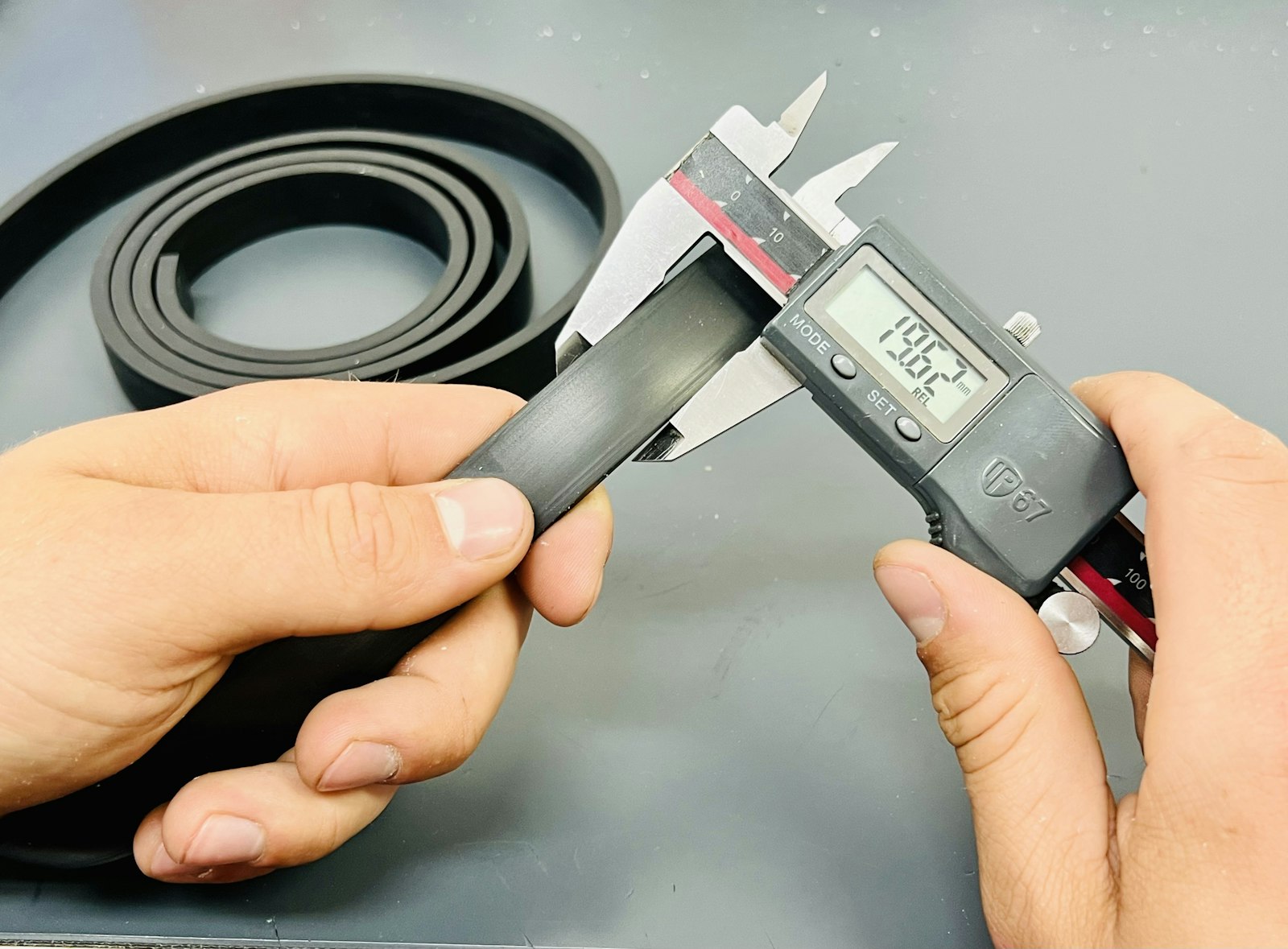
Length Converter — mm, cm, Metres, Inches, Feet & Miles Explained
Learn how to convert between millimetres, centimetres, metres, kilometres, inches, feet, yards, and miles — with real examples for construction, furniture, running, and everyday use.

Volume Converter — ml, Litres, US & UK Pints, Gallons & Cups Explained
Learn the US vs UK volume measurement differences, why a UK pint is 20% larger than a US pint, how to convert cups and gallons for cooking and fuel, and how to use a free volume converter for any scenario.
