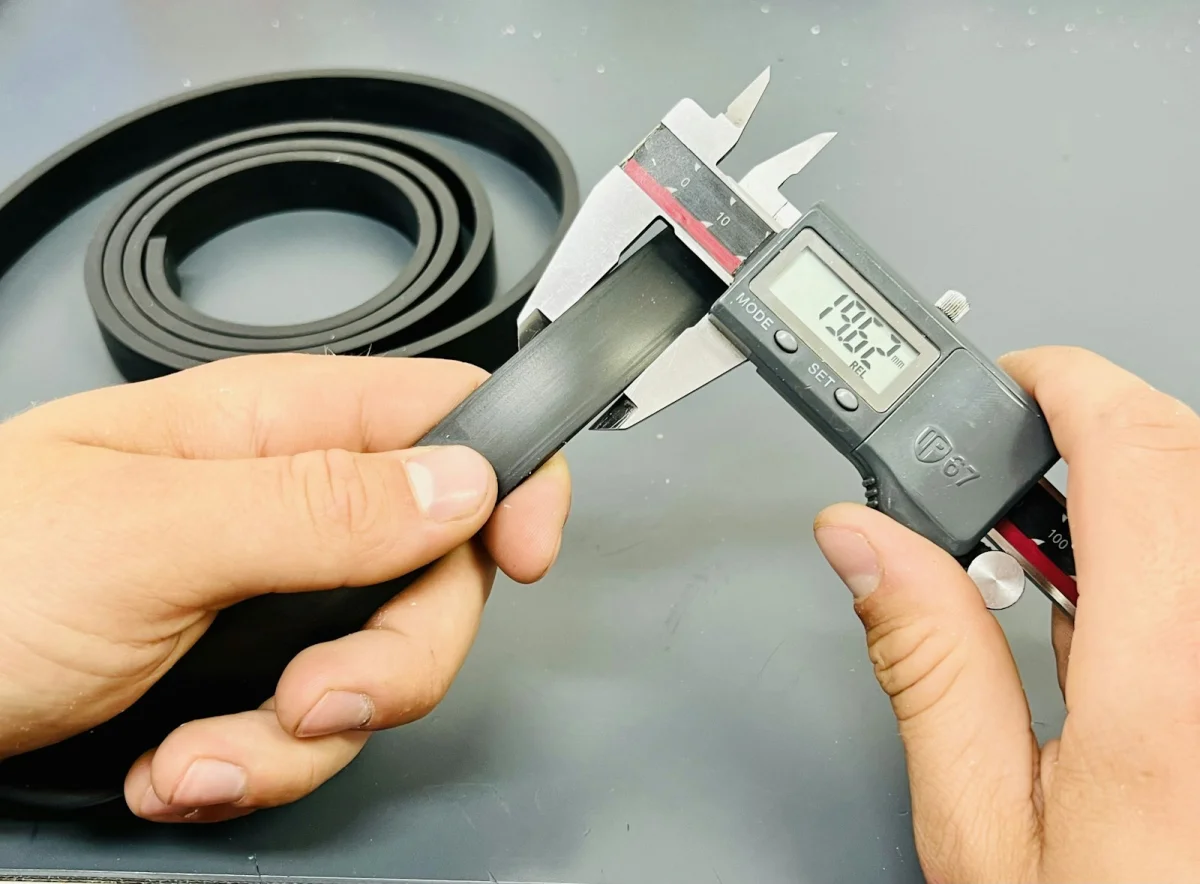
Length is the most commonly converted measurement — and the units never agree
A furniture store lists a sofa as 84 inches wide. Your room measurements are in centimetres. A construction drawing uses millimetres. A running app tracks kilometres. An imported fabric is priced per yard. Length is everywhere, and the units shift depending on the country, the industry, and the era of the document you're reading.
The metric and imperial systems have coexisted — sometimes uneasily — for decades, and neither is going away. A length converter handles the translation instantly, across all the units in active use.
The Main Length Units
Metric
- Millimetre (mm) — precision work, engineering tolerances, rainfall measurement
- Centimetre (cm) — everyday measurements, clothing sizes, height
- Metre (m) — the SI base unit; rooms, distances, fabric
- Kilometre (km) — travel distances, maps, geography
Imperial / US Customary
- Inch (in) — screens, pipes, bolts, US construction
- Foot (ft) — height in the US/UK, construction, aviation altitude
- Yard (yd) — fabric, American football, some construction
- Mile (mi) — road distances in US, UK, and a handful of other countries
Nautical
- Nautical mile (nmi) — maritime and aviation navigation; 1 nmi = 1,852 m = 1.852 km
Other
- Micrometre (μm) — semiconductor manufacturing, cell biology
- Nanometre (nm) — wavelength of light, chip node sizes (e.g. "5nm processor")
- Light year — astronomical distances; 1 ly ≈ 9.461 × 10¹⁵ m
Key conversions to memorise
| 1 inch | 2.54 cm |
| 1 foot | 30.48 cm |
| 1 yard | 91.44 cm |
| 1 mile | 1.609 km |
| 1 nautical mile | 1.852 km |
How to Use the Length Converter on sadiqbd.com
- Enter the length value — the measurement you want to convert.
- Select the source unit — mm, cm, m, km, inches, feet, yards, miles, etc.
- Select the target unit — what you need.
- Read the result — instant conversion.
Real-World Examples
Interior design and furniture
An imported sofa is listed as 84 inches × 36 inches × 34 inches (L × D × H). Your room measurements are in centimetres.
- 84 in × 2.54 = 213.4 cm
- 36 in × 2.54 = 91.4 cm
- 34 in × 2.54 = 86.4 cm
The sofa is 213 cm long — does it fit against your 220 cm wall? Yes, with 7 cm to spare.
Construction and renovation
A tiled floor is specified in a drawing as 4,200 mm × 3,600 mm. How many square feet of tile do you need?
- 4,200 mm = 420 cm = 13.78 ft
- 3,600 mm = 360 cm = 11.81 ft
- Area = 13.78 × 11.81 = 162.8 sq ft
Order 175–180 sq ft to account for cuts and waste (about 10% buffer).
Running and fitness
A treadmill displays distance in kilometres but your training plan is written in miles. Your target is a 10-mile long run.
10 miles × 1.609 = 16.09 km
Set your treadmill to 16.1 km and you've hit your target.
Fabric purchasing
A dress pattern requires 2.5 yards of fabric. The shop prices fabric per metre.
2.5 yards × 0.9144 = 2.286 metres — buy 2.3 m to have a small margin.
Screen size comparison
A 15.6-inch laptop screen vs. a 40 cm screen on a monitor — which is larger?
15.6 in × 2.54 = 39.6 cm — the laptop and the monitor are essentially the same diagonal size. The monitor probably has a better aspect ratio for desk use though.
The Metric vs. Imperial Divide in Practice
Most of the world uses metric. The US is the main holdout for everyday imperial use, and the UK uses a mixed system — metric for most things, but miles for road distances, feet/inches for human height, and pints for beer.
For anyone working internationally — importing goods, following foreign tutorials, comparing product specs — switching between systems is a daily reality. The length converter makes it frictionless.
A few areas where the unit collision happens most often:
Construction and real estate. Bangladesh uses feet and inches for floor area (square feet) but metres and centimetres for engineering drawings. The same building might be described in both systems in different documents.
Manufacturing and engineering. Metric for almost everything globally, but US suppliers and old machinery often use inches. Bolt thread specifications, pipe diameters, and drill bit sizes frequently span both systems.
Screen and display sizes. Almost universally in inches, even in metric countries. A "27-inch monitor" is the same everywhere.
Human height. In South Asia, people commonly know their height in both feet/inches and cm. Younger generations increasingly use cm exclusively; older generations and medical contexts may use feet/inches.
Tips for Length Conversions
1 inch = 2.54 cm exactly. This is a defined relationship — not an approximation. Everything else in the imperial system derives from this exact conversion.
For quick mental approximation: 1 foot ≈ 30 cm, 1 mile ≈ 1.6 km, 1 km ≈ 0.6 miles. These rough figures are useful for quick sanity checks; use the converter for anything that needs to be precise.
Watch out for feet + inches vs. decimal feet. A height of 5′8″ is not 5.8 feet — it's 5 + 8/12 = 5.667 feet = 172.7 cm. The converter handles this correctly; doing it by hand is error-prone.
Nautical miles and kilometres don't round nicely. 1 nmi = 1.852 km — not a clean number. For navigation calculations, always use the converter rather than approximating.
Frequently Asked Questions
How many cm in an inch? Exactly 2.54 cm. This is a defined value, not a rounded approximation.
How many feet in a metre? 1 metre = 3.2808 feet, or about 3 feet 3.37 inches.
What's the difference between a mile and a nautical mile? A statute mile (the road mile) = 1,609 metres. A nautical mile = 1,852 metres — about 15% longer. Nautical miles are used in aviation and maritime navigation because they correspond to one arcminute of latitude.
Why does Bangladesh use square feet for real estate but metres for construction? It's a legacy of British colonial measurement systems combined with modern metrication. Real estate pricing and floor area in everyday use stayed in square feet; technical engineering and construction gradually moved to metric. Both systems remain in active use simultaneously.
Is the length converter free? Yes — completely free, no sign-up, unlimited conversions.
Length conversion is one of the most routine tasks in everyday life, construction, and technical work. Whether you're checking if furniture fits, following a recipe in an old cookbook, or comparing imported product specs, the converter makes it a 5-second job instead of a formula lookup.
Try the Length Converter free at sadiqbd.com — instant conversion between mm, cm, m, km, inches, feet, yards, miles, and more.