Length Converter
Articles, guides, and in-depth tips for the Length Converter — everything you need to get the most out of it.
✦ AI-powered — understands natural language

The Metre Is Defined by Light — and the Inch by the Metre

Why a Unit Conversion Error Destroyed a $327 Million Mars Mission — And Why the US Still Uses Imperial
The US still uses imperial because a voluntary metric conversion law in 1975 lacked enforcement and the Metric Board was abolished in 1982. Here's how the Mars Climate Orbiter was destroyed by a metric-imperial unit confusion costing $327 million, why nautical miles are defined by Earth's geometry (1 arcminute of latitude), and why the modern definition of the metre via the speed of light is reproducible anywhere in the universe without a physical artefact.

Why Converting 10 Inches Gives 25.4 cm — Not 25.400000000000002 — and What Significant Figures Actually Mean
Converting 10 inches to centimetres gives 25.4 cm — not 25.400000000000002, which is a floating-point artifact, not additional precision. Significant figures represent the meaningful digits in a measurement, and conversion can't create precision that wasn't in the original. Here's what significant figures actually mean, why trailing zeros matter differently in different contexts, why scientific notation exists, and how many digits you should actually report at different precision levels.

Why Unit Conversions Produce Long Decimals, and How Many of Those Digits You Should Actually Keep
Converting 5 feet to cm gives a clean 152.4 — but converting 3.7 miles to km gives 5.9545728, a number with far more decimal places than "3.7" ever had. The conversion isn't adding error — it's revealing that the conversion factor itself has many digits, and reporting all of them implies a precision the original measurement never had. Here's the significant-figures principle for converted measurements, and why "round only the final result" matters for multi-step calculations.

Clothing Sizes Explained: UK vs US vs EU, Vanity Sizing, and Why You Should Measure Instead
A UK size 12 is not the same as a US size 12, and both have changed over decades due to vanity sizing. Here's how clothing size systems compare internationally, the anthropometric data behind them, why brand-to-brand variation makes labels unreliable, and why measuring in centimetres is the only solution.

Length Converter — mm, cm, Metres, Kilometres, Feet & Miles Explained
Learn the key metric and imperial length conversions, why 1 inch is exactly 25.4mm, how to convert height and distance quickly, and how to use a free length converter for construction, fitness, and travel.

Measurement in Engineering: Tolerances, Why Metric Dominates, and the Mars Crash That Unit Confusion Caused
A unit confusion caused the $327 million Mars Climate Orbiter to crash in 1999. Here's why metric dominates engineering globally, how manufacturing tolerances work, what CNC achieves, and why the US never fully metricated.
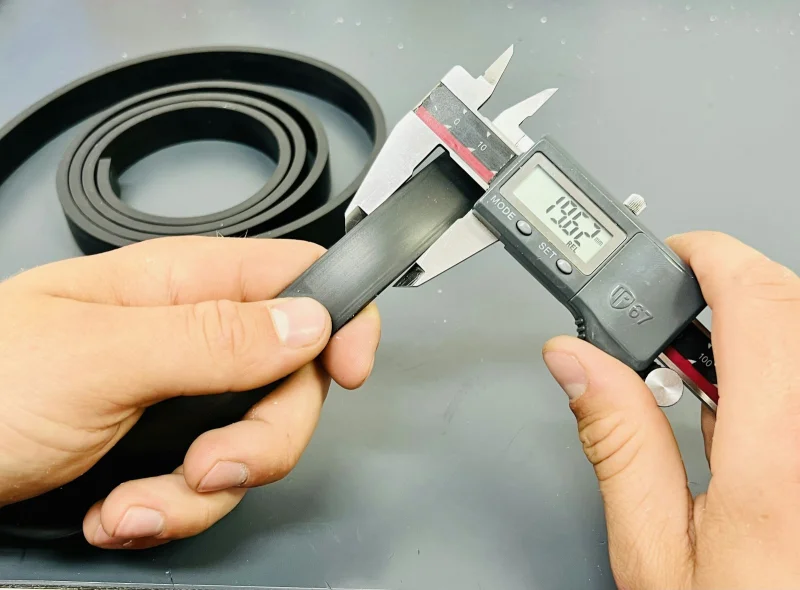
Length Converter — mm, cm, Metres, Inches, Feet & Miles Explained
Learn how to convert between millimetres, centimetres, metres, kilometres, inches, feet, yards, and miles — with real examples for construction, furniture, running, and everyday use.
