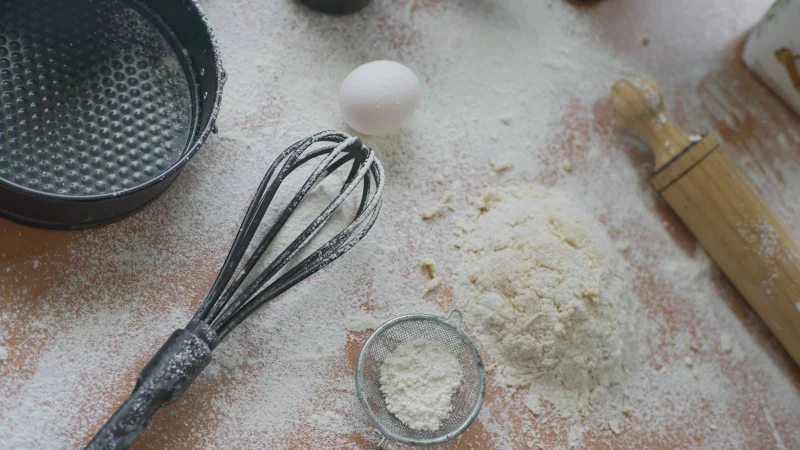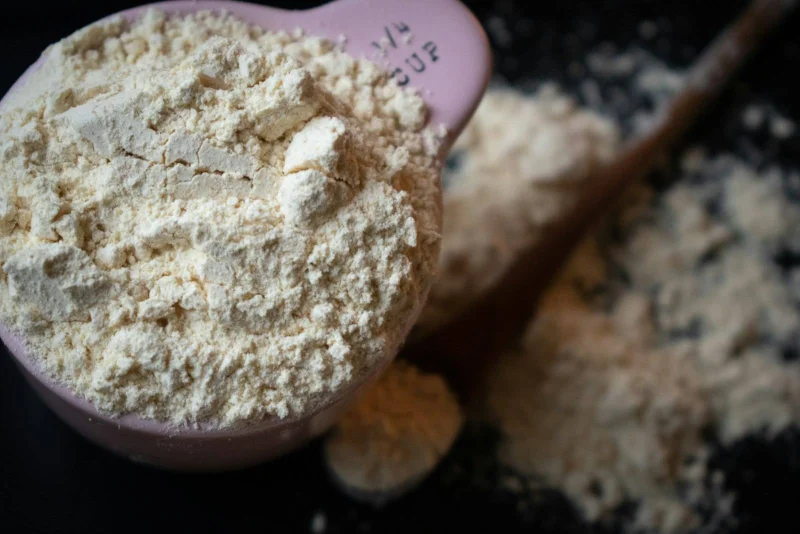
"1 cup of flour" measured by scooping from the bag versus spooning into the cup and levelling can differ by 30-40 grams — a 20-30% difference for the same "cup" — which is why baked goods often fail when made from recipes sourced from different countries, and why every professional baker defaults to weight
The previous articles on this site covered cooking unit basics, recipe conversion across countries, baking chemistry and precision, kitchen temperature, recipe scaling, and why professional bakers use weight not volume. This article addresses international recipe failure modes — the specific measurement conventions, ingredient differences, and technique assumptions that cause recipes to fail when crossed between the UK, US, Australia, and Europe.
The butter measurement problem: the US tablespoon stick convention
American recipes frequently measure butter in tablespoons and sticks rather than grams or ounces — a convention that doesn't exist anywhere else:
- 1 US stick of butter = 8 tablespoons = ½ cup = 113g
- American butter packaging has tablespoon markings printed on the wrapper for measuring
A UK reader seeing "2 sticks of butter" has no packaging reference and likely doesn't know a stick is 113g. The recipe won't work with 2 tablespoons (26g total) or 2 cups (454g total).
The tablespoon volume also differs:
- US tablespoon: 14.79 mL
- UK tablespoon: 17.76 mL (in older UK recipes; modern UK tablespoons follow EU standard at 15 mL)
- Australian tablespoon: 20 mL (significantly larger)
"3 tablespoons of butter" in an Australian recipe:
- Australian: 3 × 20 mL = 60 mL ≈ 57g
- US interpretation: 3 × 14.79 mL = 44.37 mL ≈ 42g
A 26% difference in butter from a three-tablespoon measurement — enough to affect texture in a pastry or sauce.
The flour density problem: measuring by volume
Flour is the most measurement-sensitive ingredient in baking because its density varies enormously depending on how it's measured:
Scooped (dip-and-sweep, American common method): 130-160g per cup Spooned into cup and levelled (recommended method): 120-130g per cup Sifted then spooned: 100-110g per cup
An American recipe tested by the author using scooped flour, recreated by a UK baker who spooned and levelled, can use 15-30% less flour — producing a significantly different texture.
The cups-to-grams problem is worse because cup sizes differ:
- US cup: 236.6 mL
- UK cup: 284.1 mL (older) or 250 mL (modern metric cup)
- Australian cup: 250 mL
- Canadian cup: 250 mL
An American recipe using "2 cups" of flour:
- With US cups: 2 × 236.6 = 473 mL = approximately 280g (if scooped at 120g/cup) to 320g (if scooped at 160g/cup)
- With old UK cups: 2 × 284.1 = 568 mL = much more flour regardless of scooping method
Self-raising flour vs plain flour plus baking powder
In the UK, self-raising flour is a standard, widely-used ingredient. American recipes rarely use it, specifying plain/all-purpose flour plus baking powder separately.
Self-raising flour ≠ plain flour everywhere:
- UK self-raising flour: typically contains approximately 2 tsp baking powder per 150g flour
- US "self-rising flour": contains baking powder and salt — different ratios from UK version, and less commonly used in American baking
The substitution calculation:
- For UK self-raising flour: use plain flour + 2 tsp baking powder per 150g (¾ cup)
- When a US recipe calls for plain flour + baking powder, and you only have self-raising flour: omit the baking powder and use self-raising flour
The salt component: US self-rising flour includes salt; UK self-raising flour does not. If substituting US self-rising flour for UK self-raising flour, add the salt separately.
Egg size standards across countries
Egg sizes are not standardised internationally:
| Classification | EU/UK | US |
|---|---|---|
| Small | <53g | <42g |
| Medium | 53-62g | 42-49g |
| Large | 63-72g | 50-56g |
| Extra-large | 73g+ | 57-63g |
A recipe calling for "3 large eggs":
- UK large (63g each): 189g total egg weight
- US large (50g each): 150g total egg weight
A 26% difference in egg content — which affects binding, structure, and moisture in baking. For most baked goods, one egg size difference is acceptable; using two US large eggs where three UK medium eggs are specified can fail in egg-dependent cakes.
The practical rule: for recipes where egg quantity is critical (custards, soufflés, mousse, genoise sponge), verify whether the recipe is from a country with larger or smaller standard eggs than your eggs. A UK "large" egg is closer to a US "extra-large."
Sugar differences: caster, icing, and the "superfine" confusion
Sugar types are named differently across English-speaking countries:
| UK name | US name | Australian name | Characteristics |
|---|---|---|---|
| Caster sugar | Superfine sugar | Caster sugar | Fine-grain white sugar, dissolves quickly |
| Icing sugar | Powdered sugar / Confectioners' sugar | Icing sugar | Ground to powder |
| Granulated sugar | Granulated sugar | White sugar | Standard table sugar |
| Muscovado | Dark brown sugar | Dark brown sugar | Unrefined, molasses-rich |
| Demerara | Raw sugar | Raw sugar | Large crystal, partial refining |
"Powdered sugar" in US recipes = icing sugar in UK — this is fine to substitute directly. "Brown sugar" in US recipes typically means light brown sugar (moist, soft, contains molasses) — UK "light brown muscovado" is the equivalent, not UK "demerara" which has very different texture and flavour.
How to use the Cooking Converter on sadiqbd.com
- For cups to grams: the converter handles specific ingredient densities (flour, sugar, butter) rather than generic volume-to-weight conversion — specify the ingredient for an accurate gram conversion
- For tablespoon and teaspoon differences: when converting Australian recipes (20 mL tablespoon) for US or EU use (15 mL tablespoon), the 25-33% size difference is significant for spices, leavening agents, and extracts
- For scaling recipes up or down: use the weight outputs (grams) from the converter rather than scaling volume measurements — weight scales linearly; volume measurements compound errors when scaled
Frequently Asked Questions
If I convert all measurements to grams, are UK and US recipes interchangeable? Mostly — but ingredient differences still matter beyond measurement. Converting to grams resolves the measurement inconsistency, but: UK "plain flour" and US "all-purpose flour" are not identical (US flour has slightly higher protein content on average); UK "double cream" is not the same as US "heavy cream" (double cream has ~48% fat vs heavy cream's ~36%, making it thicker and non-whippable-to-the-same-consistency); UK eggs are slightly larger than US large eggs. Weight conversion solves the measurement variable while holding all other variables constant — which gives much better results than volume conversion, but not perfectly identical results to testing with the original country's ingredients.
Is the Cooking Converter free? Yes — completely free, no sign-up required.
Try the Cooking Converter free at sadiqbd.com — convert any recipe measurement between cups, grams, tablespoons, and more for any ingredient.