A "cup of flour" and a "cup of sugar" weigh completely different amounts — 120g vs 200g respectively — and this isn't a quirk of measurement but a fundamental property of density, which is why volume-based baking recipes are less precise than they appear
The previous articles on this site covered cooking measurement conversion, the chemistry of baking, kitchen temperatures, and recipe scaling. This article addresses why density makes volume measurement unreliable — specifically why "1 cup of flour" is particularly problematic, and why professional bakers universally prefer weight measurement.
Density varies dramatically between ingredients
Volume (cups, tablespoons, fluid ounces) measures space occupied. Mass (grams, ounces) measures the actual amount of material. For a given volume, denser ingredients contain more material — and cooking ingredients vary enormously in density:
| Ingredient | Approx. weight per cup |
|---|---|
| Water | 240g |
| Milk | 245g |
| All-purpose flour | 120-130g |
| Cake flour | 100-110g |
| Bread flour | 130-140g |
| White granulated sugar | 200g |
| Powdered/icing sugar | 120g |
| Brown sugar (packed) | 220g |
| Butter | 227g |
| Rolled oats | 90g |
| Honey | 340g |
The difference between flour and sugar per cup (120g vs 200g) is 67% — using volume for both means you're measuring different amounts of material relative to what the recipe's chemistry requires, unless your technique and flour type happen to match the recipe developer's exactly.
The flour problem: compaction and scooping technique
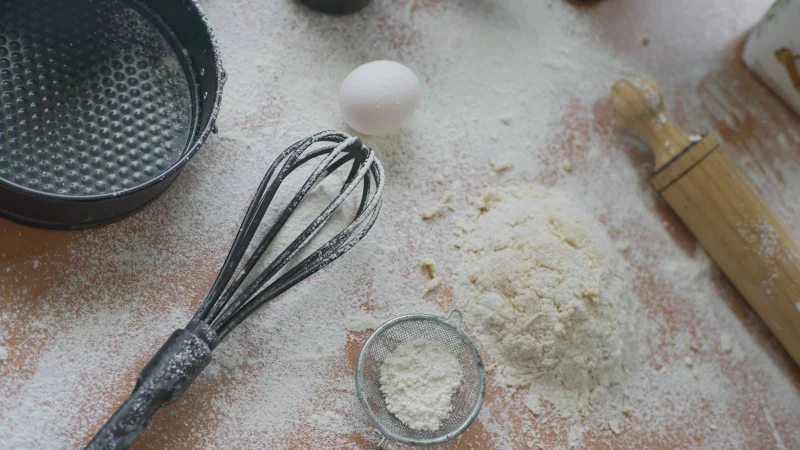
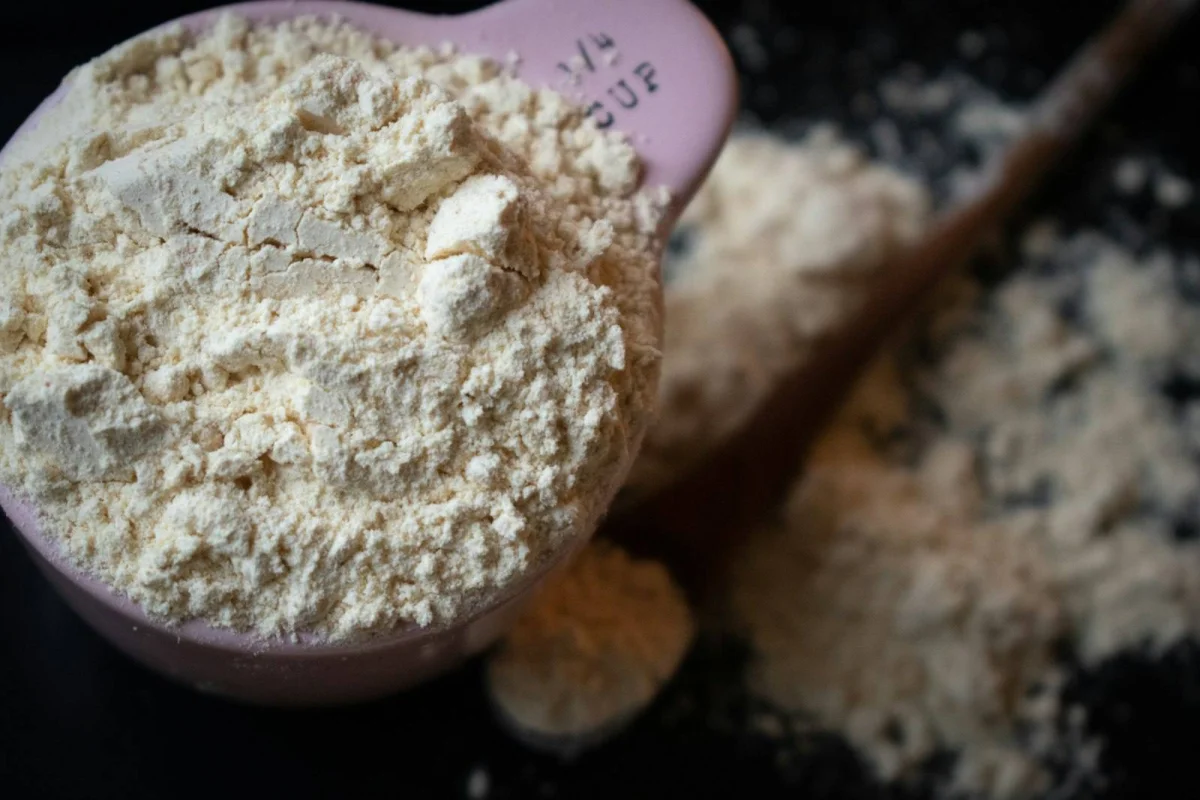
Flour's density is particularly variable because flour compacts. The same cup can contain vastly different weights of flour depending on how it was measured:
- Dip-and-sweep ("scoop") method (scooping the measuring cup directly into the flour bag): ~150-160g — the scooping compacts the flour
- Spoon-and-level (spooning flour into the measuring cup, then leveling the top): ~120-130g
- Sifted then measured: ~90-100g
A recipe that specifies "1 cup of flour" without clarifying which technique leaves a 60% range of possible actual flour amounts (90g to 160g). Whether a cake is dense or light, whether cookies spread or stay thick, whether bread dough is sticky or firm — all depend heavily on which end of this range the baker used.
Recipe developers typically use the spoon-and-level method as their intended standard when writing cup measurements. But most home bakers scoop, adding significantly more flour than intended — which is why many home bakers find cookies don't spread properly or quick breads turn out dry.
The global impact: when a recipe crosses national borders
The cups problem is compounded by the fact that "a cup" isn't the same size everywhere:
- US cup: 236.6 mL
- UK cup (metric): 250 mL (6% larger than US cup)
- Australian cup: 250 mL (same as UK metric cup)
- Canadian cup: 227 mL (4% smaller than US cup, though metric 250mL is now used)
A recipe written for the US and baked in the UK with UK cups will use 6% more of every volume-measured ingredient — small enough to be imperceptible for savory cooking, potentially noticeable for precision baking where the chemistry is sensitive to ingredient ratios.
Weight measurements are universal — 250g of flour is 250g of flour in any country with no ambiguity about the size of the measuring vessel.
Why professional bakers use weight: beyond consistency
Professional and commercial baking uses weight measurement for several interconnected reasons:
Consistency at scale: a bakery producing 500 loaves per day cannot tolerate the variation that cup measurement introduces. Weight provides the precision needed for consistent product quality.
Speed: weighing directly into a bowl is faster than measuring, leveling, and cleaning multiple cups and spoons.
Single bowl: weighing sequentially into one bowl (taring between additions) requires one bowl and one scale. Cup measurement requires multiple cups, spoons, and intermediate bowls.
Easier scaling: scaling a recipe from 12 to 48 cookies is multiplying each weight by 4. Scaling volume amounts by 4 and then fitting them into available measuring equipment is more complex.
Easier documentation: a recipe sheet at a professional bakery shows weights — unambiguous, universal, no technique dependency.
Baker's percentages: the professional formula language
Baker's percentages express every ingredient as a percentage of the total flour weight. The flour is always 100%; everything else is expressed relative to it:
Example (simple white bread):
- Flour: 100%
- Water: 65% (hydration)
- Salt: 2%
- Yeast: 1%
For 500g of flour: water = 325g, salt = 10g, yeast = 5g. For 1,000g of flour: water = 650g, salt = 20g, yeast = 10g. The formula scales linearly because percentages stay constant.
Baker's percentages only work with weight — they're meaningless with volume measurements because different ingredients have different densities.
How to use the Cooking Converter on sadiqbd.com
- For converting recipe volumes to weights: use the per-ingredient conversions — 1 cup of all-purpose flour is approximately 120-130g (use 125g as a middle estimate), 1 cup of sugar is approximately 200g, 1 tablespoon of butter is approximately 14g
- When weight and volume conversions are given: prefer the weight value — it's more precise and technique-independent
- For flour specifically: if using a US recipe with UK/metric cups, reduce slightly (by about 6%) to account for the larger cup size, or better yet, find the recipe's gram equivalent and use that
Frequently Asked Questions
If volume measurement is so imprecise, why do so many recipes still use it? Cultural inertia, accessibility, and target audience. Volume measurement is deeply embedded in home cooking traditions in the US, Canada, and Australia. Most home cooks have measuring cups but many don't own a kitchen scale. Recipe developers targeting a mass home-cook audience write volume measurements because that's what their audience can use — even if the precision is lower. Baking books aimed at serious home bakers or professionals increasingly include weight measurements alongside or instead of volume. The shift is happening: many modern cookbook authors include both, and digital recipe platforms often default to weight. But the transition from "everyone has measuring cups" to "everyone has a kitchen scale" will take decades.
Is the Cooking Converter free? Yes — completely free, no sign-up required.
Try the Cooking Converter free at sadiqbd.com — convert between cups, tablespoons, teaspoons, ml, and grams for hundreds of cooking ingredients.