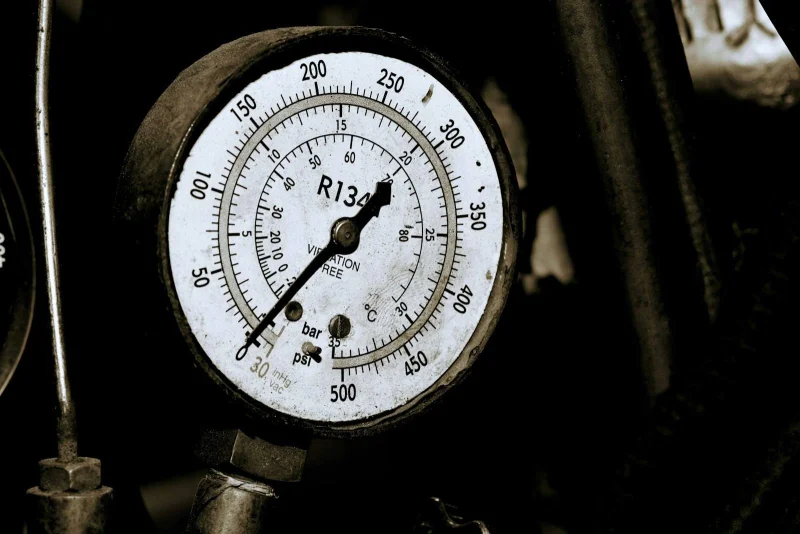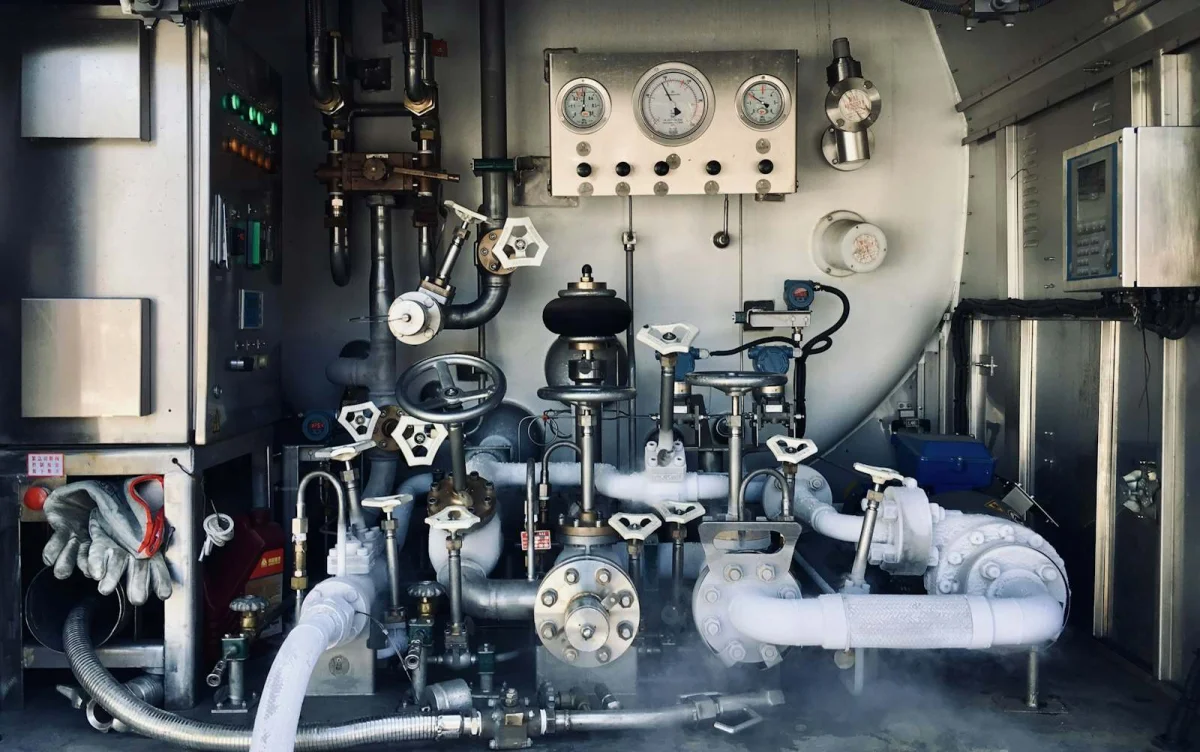
Hydraulic fracturing ("fracking") injects water at pressures of 40-70 MPa (6,000-10,000 PSI) to fracture rock formations thousands of metres underground — pressures that dwarf anything in everyday experience and that illustrate why industrial pressure engineering requires fundamentally different thinking from the household contexts where most people encounter pressure measurement
The previous articles on this site covered pressure unit basics, atmospheric pressure and altitude, scuba diving physics, gauge vs absolute pressure, and why different industries use different pressure units. This article addresses pressure in industrial extraction and manufacturing — specifically the pressures involved in oil and gas extraction, hydraulic systems, and materials processing, and what these extreme values reveal about the engineering challenges involved.
Pressure at scale: the reference points that help
Building a mental model of pressure scales:
| Context | Pressure |
|---|---|
| Atmospheric pressure (sea level) | 101.3 kPa / 1 atm / 14.7 PSI / 1.013 bar |
| Car tyre (typical) | 200-250 kPa gauge / 30-36 PSI gauge |
| Road bicycle tyre | 690-830 kPa gauge / 100-120 PSI gauge |
| Hydraulic car brakes (max) | 10-20 MPa / 1,500-3,000 PSI |
| Household water pressure | 200-500 kPa / 30-70 PSI |
| Fire hose | 700-1,400 kPa / 100-200 PSI |
| Aircraft hydraulic systems | 21-35 MPa / 3,000-5,000 PSI |
| Hydraulic press (manufacturing) | 70-700 MPa / 10,000-100,000 PSI |
| Deep ocean (Mariana Trench) | ~110 MPa / 16,000 PSI |
| Hydraulic fracturing | 40-70 MPa / 6,000-10,000 PSI |
| Supercritical water (360°C, 22 MPa+) | 22+ MPa |
| Diamond anvil cell (research) | Up to 500 GPa / 5,000,000 atm |
Hydraulic fracturing: pressure engineering at depth
Hydraulic fracturing uses high-pressure fluid injection to crack rock formations and release oil or gas. The pressures required depend on:
Hydrostatic pressure: at 3,000 metres depth in rock, the weight of rock above creates lithostatic stress of approximately 75-90 MPa. To fracture the rock, injection pressure must overcome this stress.
Fracture initiation pressure vs propagation pressure: the pressure to initiate a fracture is typically higher than the pressure needed to continue propagating it once started. Fracking operations manage this by initially pressurising to fracture initiation, then maintaining lower pressure as the fracture grows.
What's actually pumped: the injected fluid is mostly water (98-99.5% by volume), with small amounts of proppant (sand or ceramic beads that hold the fracture open) and chemical additives. At 40-70 MPa injection pressure and flow rates of 1-2 cubic metres per minute, the mechanical power required is enormous — fracking pumps typically run at 5-20 MW.
Supercritical fluids: when pressure creates a new phase of matter
Supercritical fluids exist when temperature and pressure both exceed the substance's critical point — where liquid and gas phases become indistinguishable:
Supercritical carbon dioxide (scCO₂):
- Critical point: 31.1°C, 7.38 MPa (73.8 bar)
- Above this: scCO₂ has liquid-like density but gas-like diffusivity
- Applications: coffee decaffeination (scCO₂ selectively extracts caffeine), dry cleaning (replacing perchloroethylene), polymer extraction, pharmaceutical processing
Supercritical water:
- Critical point: 374°C, 22.06 MPa
- Above this: completely miscible with gases; completely destroys organic compounds via oxidation
- Application: supercritical water oxidation (SCWO) for destroying toxic organic waste
Why pressure is central: the supercritical state requires both temperature and pressure conditions simultaneously. The pressure requirement (7.38 MPa for CO₂ = 73.8 bar = 1,071 PSI) is the engineering constraint that determines equipment cost and safety requirements.
Hydraulic systems in aerospace: the 3,000 PSI standard
Aircraft hydraulic systems operate at 3,000 PSI (20.7 MPa) as a long-established standard — the result of decades of engineering refinement that balanced actuator size (higher pressure allows smaller cylinders), weight (smaller cylinders = lighter), and seal technology (higher pressure requires better seals that were historically more difficult).
Modern aircraft pushing to 5,000 PSI: newer aircraft (Boeing 787, Airbus A380) use 5,000 PSI hydraulics in some systems. This allows even smaller, lighter actuators — significant for aircraft weight. But 5,000 PSI requires advanced seal materials and tighter manufacturing tolerances.
Why aircraft hydraulics use PSI (not MPa): aerospace engineering in the US and its international derivatives standardised on PSI historically. Similar to blood pressure in mmHg, the unit is embedded in decades of specifications, manuals, and institutional practice — changing to MPa would require rewriting enormous amounts of documentation for marginal benefit.
High-pressure processing (HPP) in food manufacturing
High-Pressure Processing (HPP) — also called Pascalization — uses very high pressures to pasteurise food without heat:
Typical HPP pressure: 400-600 MPa (4,000-6,000 bar / 58,000-87,000 PSI)
How it works: food (in flexible packaging) is placed in a pressure vessel filled with water. Pressure is applied isostotically (equally from all directions) to 400-600 MPa. At these pressures, bacterial cell walls rupture and enzyme activity is suppressed — effectively pasteurising without the heat that changes flavour and nutrient content.
Applications: fresh-pressed juices, deli meats, guacamole (preventing browning), raw oysters (inactivating Vibrio bacteria), ready meals with fresh-taste profile.
The pressure conversion reality: 600 MPa is approximately 6,000 bar, 87,000 PSI, or 5,921 atm — pressure equivalent to what you'd experience at approximately 59 km ocean depth (if the ocean were that deep). These are the highest pressures encountered in common food manufacturing.
How to use the Pressure Converter on sadiqbd.com
- For industrial specifications: convert between PSI (common in US and aerospace specifications) and bar or MPa (common in European and scientific specifications) — particularly important for hydraulic system specifications that may be in one unit while your equipment gauge shows another
- For HPP food technology research: convert between the extremely high pressures of food processing (400-600 MPa) and more familiar units like atm or bar to contextualise the engineering challenge
- For well depth and fracking pressures: convert depth-related lithostatic pressure (approximately 25 kPa per metre of rock depth) to MPa or PSI to understand the pressure environment that extraction equipment must withstand
Frequently Asked Questions
Why does hydraulic fracturing need such extreme pressures when household water pressure is only 3-4 bar? Because the rock being fractured is under enormous confining stress from the weight of rock above it. Rock at 3,000 metres depth has approximately 75-90 MPa of lithostatic pressure acting on it in all directions (from the weight of overlying rock). To crack that rock, the injected fluid pressure must exceed the minimum horizontal stress — which may be 40-70 MPa, depending on rock type and tectonic environment. Household water pressure is designed just to push water through pipes and out of taps against atmospheric pressure; fracking pressure must overcome geological stress that's 500-700× greater than atmospheric pressure. The pressure requirement isn't arbitrary — it's set by the physics of the formation.
Is the Pressure Converter free? Yes — completely free, no sign-up required.
Try the Pressure Converter free at sadiqbd.com — convert between pascals, bar, PSI, atm, mmHg, and more pressure units instantly.