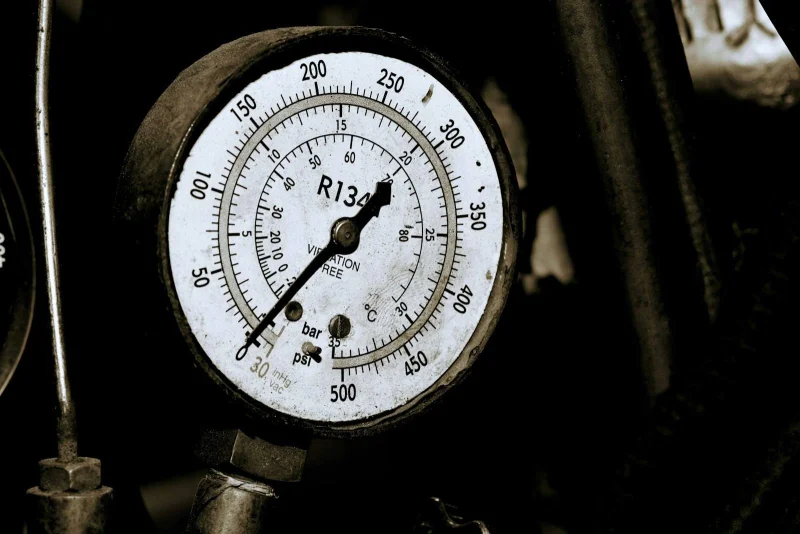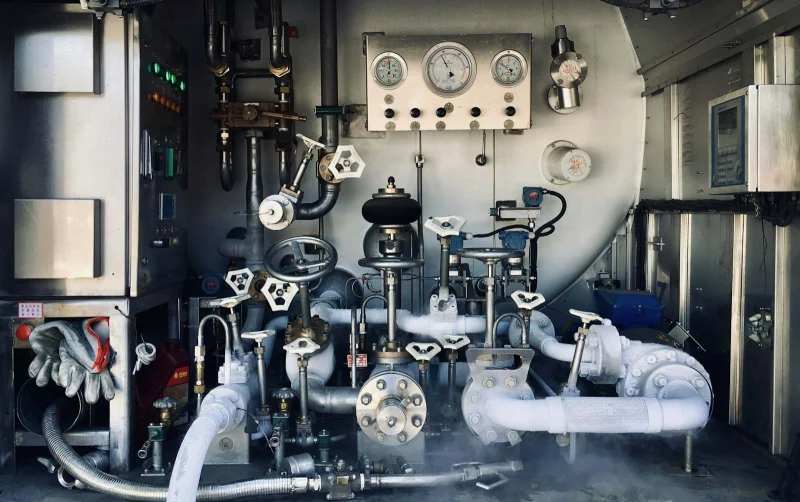
Industrial pressure safety is governed by the Pressure Systems Safety Regulations in the UK and similar regulatory frameworks globally — and the failure modes of pressurized systems are instructive about why pressure unit conversion precision matters in engineering contexts far more than in tyre inflation
The previous articles on this site covered pressure unit basics, atmospheric pressure and altitude, scuba diving physics, and gauge vs absolute pressure. This article addresses pressure in industrial and medical contexts — the specific units used in each domain, why they evolved separately, and the consequences when pressure measurement or conversion goes wrong.
Why pressure has so many units: domain-specific evolution
Pressure units proliferated because different fields developed measurement systems independently before international standardization, and each field's unit reflected both historical measurement methods and typical magnitudes:
Pascal (Pa, kPa, MPa): the SI unit — defined from fundamental SI units (1 Pa = 1 N/m²). Adopted as the international standard but often inconvenient in scale: atmospheric pressure is approximately 101,325 Pa, which is awkward to work with compared to "1 atmosphere."
Bar: metric but not SI — 1 bar ≈ 1 atmosphere (exactly 100,000 Pa, vs atmosphere's 101,325 Pa). Widely used in European industrial and automotive contexts because the scale is intuitive: tyre pressures are 2-3 bar, industrial gas cylinders are 200-300 bar.
PSI (pounds per square inch): derived from imperial units; remains dominant in US industrial, automotive, and plumbing contexts. Atmospheric pressure ≈ 14.7 PSI.
mmHg (millimetres of mercury) / Torr: derived from mercury manometer measurements — the height of a mercury column that a pressure could support. Dominant in medical contexts (blood pressure) because medical measuring instruments historically used mercury manometers. 1 mmHg ≈ 1 Torr.
Atmosphere (atm): historically defined as standard atmospheric pressure; now defined as exactly 101,325 Pa. Used in chemistry, diving physics, and as a reference unit.
inHg (inches of mercury): used in aviation and meteorology for altimetry and barometric pressure in the US; hPa (hectopascals) used for the same purpose in most other countries.
Blood pressure: why mmHg persists in medicine
Blood pressure is reported in mmHg (e.g., 120/80 mmHg) globally — even in countries that otherwise use SI units. The WHO, medical schools, and clinical guidelines worldwide use mmHg for blood pressure because:
- Clinical reference ranges (hypertension criteria, treatment targets) are all established in mmHg
- Digital blood pressure monitors are calibrated and display in mmHg
- Converting to kPa (120 mmHg ≈ 16 kPa, 80 mmHg ≈ 10.7 kPa) would require rewriting all clinical guidelines and re-educating all clinical staff
- The numbers themselves are clinically meaningful to practitioners — "120/80" has immediate clinical interpretation; "16/10.7 kPa" doesn't
Blood pressure is gauge pressure (relative to atmospheric, not absolute) — a systolic reading of 120 mmHg means the arterial pressure is 120 mmHg above atmospheric, not 120 mmHg absolute.
Arterial blood pressure magnitude: 120 mmHg systolic ≈ 0.157 atm ≈ 16.0 kPa ≈ 2.32 PSI — extremely low by industrial standards. An average car tyre at 35 PSI has about 15× the gauge pressure of the systolic blood pressure in a major artery.
Industrial pressure: the safety-critical context
High-pressure systems — gas cylinders, hydraulic circuits, steam systems, chemical reactors — present significant hazard when pressurized above safe limits or when depressurized incorrectly.
Common industrial pressure ranges:
- Hydraulic systems: 50-300 bar (750-4,350 PSI)
- High-pressure gas cylinders: 150-300 bar (2,175-4,350 PSI)
- Steam boilers (industrial): 10-60 bar (150-870 PSI)
- Fire suppression systems (CO₂): 50-60 bar
- Subsea equipment: varies with depth; every 10m ≈ 1 bar additional pressure
Pressure rating vs operating pressure: industrial equipment has a maximum allowable working pressure (MAWP) — typically with a safety factor of 3-4× applied. A vessel rated to 100 bar MAWP is designed to withstand 300-400 bar before catastrophic failure.
Pressure safety valves (PSVs): installed on pressurized vessels to vent automatically at a set pressure, preventing overpressure that could cause catastrophic failure. PSV set pressure is a critical safety parameter — typically 10% above normal operating pressure but below MAWP.
The consequences of pressure unit errors in engineering
Unit conversion errors in pressure engineering have caused real incidents:
Wrong unit on a pressure relief valve setting: a PSV configured in bar units, with a set pressure specified in PSI, without unit conversion — the PSV doesn't open until a pressure 14.7× the intended set pressure is reached (since 1 PSI = 0.0689 bar, a "100 PSI" setting interpreted as "100 bar" means the valve won't open until 1,450 PSI / 100 bar). This is the pressure-domain equivalent of the NASA Mars Climate Orbiter unit error.
Medical device pressure errors: infusion pump pressure limits, ventilator pressure settings, and respiratory therapy equipment all require correct pressure units. A ventilator pressure limit set in cmH₂O units where cmH₂O was interpreted as Pa (1 cmH₂O ≈ 98.1 Pa — a factor of ~100 smaller) produces dangerous overpressure.
Tyre pressure with wrong units: specifying tyre inflation in bar to a mechanic who reads it as PSI results in severely under-inflated tyres (30 bar would be catastrophically over-inflated; 30 PSI is normal inflation). This is why clearly labelling the unit on any pressure specification is required practice.
How to use the Pressure Converter on sadiqbd.com
- For medical contexts: convert between mmHg (blood pressure, respiratory medicine) and kPa or cmH₂O (some European medical devices use these units) — keeping medical pressure in mmHg for clinical communication but converting for equipment calibration
- For automotive: convert between PSI (US specifications) and bar (European specifications) for tyre pressure — recommended range typically 30-36 PSI (2.1-2.5 bar) depending on vehicle
- For industrial work: always explicitly label the unit alongside any pressure value — the conversion tool should be used to verify any values in unfamiliar units before applying them to specifications or safety-critical settings
Frequently Asked Questions
Why is atmospheric pressure approximately 101,325 Pa — such an odd number? Because the pascal is defined from fundamental physics (newtons per square metre), while "1 atmosphere" was defined empirically from the actual pressure of air at sea level. The definition of "1 atmosphere" was standardized historically as the pressure at 0°C at sea level at 45° latitude — a specific measurement that turns out to be 101,325 Pa when expressed in SI units. If we had defined the atmosphere as exactly 100,000 Pa (100 kPa), everything would be rounder — which is essentially what "1 bar" is (exactly 100,000 Pa). The 1.3% difference between 1 atm (101,325 Pa) and 1 bar (100,000 Pa) reflects the choice to keep the historical empirical definition rather than round to a convenient SI-aligned value.
Is the Pressure Converter free? Yes — completely free, no sign-up required.
Try the Pressure Converter free at sadiqbd.com — convert between pascals, bar, PSI, atmospheres, mmHg, and more pressure units instantly.