Air pressure is invisible — but its variations produce weather, affect physiology, and explain why your ears pop on a plane
Atmospheric pressure is the weight of the air column above you pressing down. At sea level, that column exerts about 101,325 pascals (1 atmosphere). Climb to 5,000m altitude and the pressure drops to about 54,000 Pa. Descend into a mine and it rises. That variation — invisible and continuous — drives weather systems, constrains human physiology, and explains why aircraft cabins are pressurised.
Pressure units and their contexts
Pascals (Pa) / kilopascals (kPa): the SI unit. 1 Pa = 1 Newton per square metre. Weather stations and scientific instruments use kPa. Standard atmospheric pressure = 101.325 kPa.
Bar: 1 bar ≈ 100 kPa ≈ 0.987 atm. Used for tyre pressure in most of Europe and internationally. A typical car tyre: 2.0–2.5 bar.
PSI (pounds per square inch): used in the US, UK, and some other markets for tyre pressure, industrial equipment, and plumbing. 1 bar = 14.504 PSI. Car tyre pressure: 30–35 PSI (2.0–2.4 bar).
Atmospheres (atm): 1 atm = 101,325 Pa = 1.01325 bar = 14.696 PSI. Used in chemistry (gas laws), scuba diving (depth pressure), and high-altitude contexts.
mmHg (millimetres of mercury) / Torr: historically derived from mercury manometers. Blood pressure and some medical equipment use mmHg. Standard atmospheric pressure = 760 mmHg. 1 mmHg ≈ 133.3 Pa.
How pressure changes with altitude
The atmosphere doesn't end sharply — it thins continuously with altitude. The barometric formula describes the pressure decrease:
P = P₀ × exp(−Mgh/RT)
Where M is the molar mass of air, g is gravitational acceleration, h is altitude, R is the gas constant, and T is temperature.
Approximate pressures at altitude:
| Altitude | Pressure (kPa) | % of sea level |
|---|---|---|
| Sea level | 101.3 | 100% |
| 1,000m (3,281ft) | 89.9 | 89% |
| 2,000m | 79.5 | 78% |
| 3,000m | 70.1 | 69% |
| Cruising altitude (10,000–12,000m) | 23–26 | 23–26% |
| Top of Everest (8,849m) | 33.7 | 33% |
At Everest's summit, each breath delivers only 33% of the oxygen available at sea level. Mountaineers above 8,000m (the "death zone") are functioning on borrowed time — their bodies cannot acclimatise to pressures this low.
Aircraft cabin pressure: why it's not sea level
A commercial aircraft at 10,000m altitude experiences outside pressure of about 26 kPa. The cabin is pressurised, but not to sea level pressure — maintaining sea level pressure would require stronger (heavier) fuselage construction.
Most commercial aircraft maintain cabin pressure equivalent to altitude of 1,800–2,400m (6,000–8,000ft) — roughly 75–80 kPa. This is why some people feel slightly drowsy or experience mild headaches on long flights.
Why ears pop: the middle ear is connected to the throat via the Eustachian tube. When cabin pressure drops during ascent or rises during descent, the pressure difference between the middle ear and the cabin creates discomfort. Swallowing, yawning, or chewing equalises the pressure by opening the Eustachian tube.
Rapid decompression: if a fuselage failure rapidly drops cabin pressure from 80 kPa to 26 kPa, the sudden pressure change is immediately dangerous — oxygen masks deploy automatically to ensure passengers remain conscious.
Tyre pressure: performance and safety implications
Tyre pressure affects:
- Rolling resistance: under-inflated tyres have more contact with the road (slightly) and higher rolling resistance → worse fuel economy
- Handling: under-inflated tyres have imprecise steering response; over-inflated tyres have less grip (smaller contact patch)
- Tyre wear: under-inflation causes wear on tyre edges; over-inflation causes central wear
- Blowout risk: severely over-inflated tyres are more susceptible to blowout under load
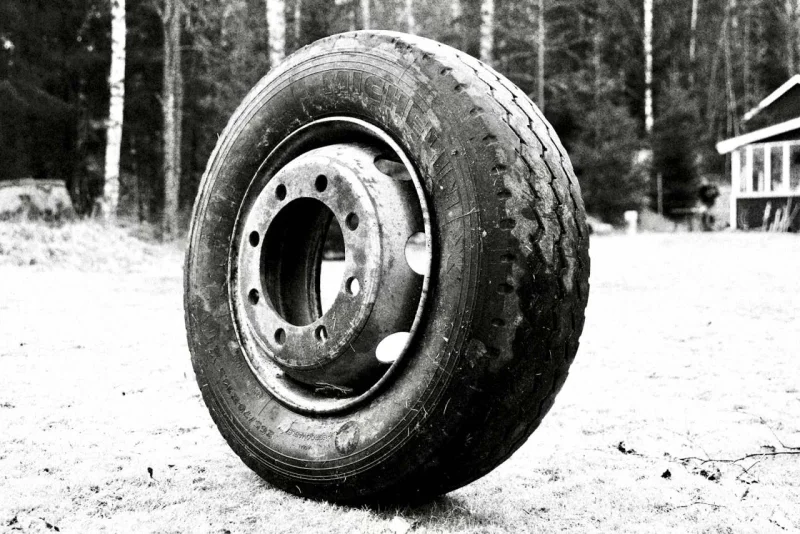
Recommended pressures are found on a sticker inside the driver's door frame or in the owner's manual — not on the tyre sidewall (which shows maximum pressure, not recommended). Pressures are given for cold tyres (tyre pressure rises 5–8 PSI when hot).
Altitude effect on tyre pressure: tyres filled with air at sea level will have slightly lower pressure at altitude (lower atmospheric pressure outside the tyre means the pressure differential is lower even though absolute internal pressure is unchanged). For most driving this is negligible; for racing or precision tuning it's worth accounting for.
Blood pressure: the medical context
Blood pressure is measured in mmHg and reported as two numbers:
Systolic pressure (upper number): pressure during cardiac contraction. Normal: 90–120 mmHg.
Diastolic pressure (lower number): pressure during relaxation between beats. Normal: 60–80 mmHg.
Hypertension thresholds (UK/European guidelines):
- Normal: below 120/80 mmHg
- Elevated: 120–129/80 mmHg
- Stage 1 hypertension: 130–139/80–89 mmHg
- Stage 2 hypertension: ≥140/≥90 mmHg
Converting blood pressure to other units: 120 mmHg systolic = 16.0 kPa = 0.158 atm = 2.32 PSI
Barometric pressure and weather
Weather systems are driven by pressure differences. Low-pressure areas (cyclones) draw air inward and upward — rising air cools, condenses, and forms clouds and precipitation. High-pressure areas (anticyclones) push air outward and downward — descending air warms and stabilises, producing clear conditions.
Weather indicators from barometric pressure:
- 1020+ mbar (102+ kPa): typically high pressure → fair weather
- 1000–1020 mbar: average; variable
- Below 980 mbar (98 kPa): low pressure → unsettled or stormy
- Rapid pressure drop (>3 mbar/hour): approaching storm
Aircraft altimeters measure altitude via barometric pressure. Before landing, pilots set the local altimeter setting (QNH) to calibrate the instrument for local conditions — ignoring this can cause significant altitude errors.
How to use the Pressure Converter on sadiqbd.com
- Enter the pressure value and source unit — PSI, bar, kPa, Pa, atm, mmHg
- Convert — see equivalents across all pressure units
- Apply to context — tyre pressures (bar/PSI), blood pressure (mmHg), weather (mbar/hPa), engineering (kPa/bar)
Frequently Asked Questions
Should I inflate tyres to the max pressure shown on the sidewall? No — the sidewall shows maximum safe pressure, not recommended operating pressure. Use the pressure from the door sticker or manual, which accounts for your specific vehicle's handling and load characteristics.
Does altitude affect cooking? Yes — water boils at lower temperatures at altitude (lower atmospheric pressure means less energy needed to vaporise water). At 2,000m, water boils at ~93°C instead of 100°C. Recipes for boiling and baking need adjustment at high altitude.
Is the Pressure Converter free? Yes — completely free, no sign-up required.
Pressure is the invisible force that shapes weather, governs physiology, and determines how tyres, aircraft cabins, and industrial systems behave. The converter makes working across its many units straightforward.
Try the Pressure Converter free at sadiqbd.com — convert between PSI, bar, kPa, atm, and mmHg instantly.