A blast furnace runs at 1,600°C and a lightning bolt briefly reaches 30,000°C — temperature exists on a scale most people have never encountered
The thermometers and oven dials of everyday life span maybe 200°C. Industrial and astronomical temperature scales span 13 orders of magnitude — from the coldest measured object (450 picokelvin above absolute zero) to the interior of stars (15 million°C). Understanding how temperature is measured at extremes, and what those extremes mean, illuminates the limits of materials, the conditions of astrophysical objects, and the technologies that depend on precise temperature measurement.
Industrial temperature measurement
Thermocouples are the workhorses of industrial temperature measurement. Two dissimilar metals joined at a junction produce a voltage proportional to temperature (Seebeck effect). Different thermocouple types cover different ranges:
| Type | Materials | Range | Typical use |
|---|---|---|---|
| Type K | Chromel/Alumel | -200°C to +1,350°C | Most common industrial |
| Type J | Iron/Constantan | -40°C to +750°C | Older industrial |
| Type S | Pt/Pt-10%Rh | 0°C to +1,600°C | Furnaces, steel |
| Type B | Pt-Rh alloys | +600°C to +1,820°C | Very high temperature |
| Type C | W-Re alloys | 0°C to +2,300°C | Vacuum furnaces |
Infrared (pyrometer) thermometers measure temperature without contact by detecting thermal radiation. Every object above absolute zero emits infrared radiation; more energy = higher temperature. Pyrometers are essential where contact measurement is impossible or impractical: molten metal, moving machinery, live electrical equipment.
Accuracy limitations of IR thermometers: depend on the emissivity of the object (how efficiently it radiates). Polished metals have very low emissivity (~0.1) and give wildly incorrect readings unless the emissivity is compensated. Blackened surfaces have emissivity near 1.0 and read accurately.
Extreme industrial temperatures
Blast furnace (iron smelting): 1,400–1,600°C. Iron melts at 1,538°C; the furnace must exceed this to keep the iron liquid.
Steel electric arc furnace: 1,600–1,800°C.
Incandescent lightbulb filament: approximately 2,700°C (tungsten, melting point 3,422°C — the highest melting point of any element).
Gas turbine blades (jet engines): surface temperatures exceed 1,650°C in the hottest stage — actually above the melting point of the nickel superalloy they're made from (approximately 1,400°C). Turbine blades survive only through sophisticated internal cooling channels that flow cooler air through the blade structure.
Arc welding: the arc itself reaches approximately 6,000°C.
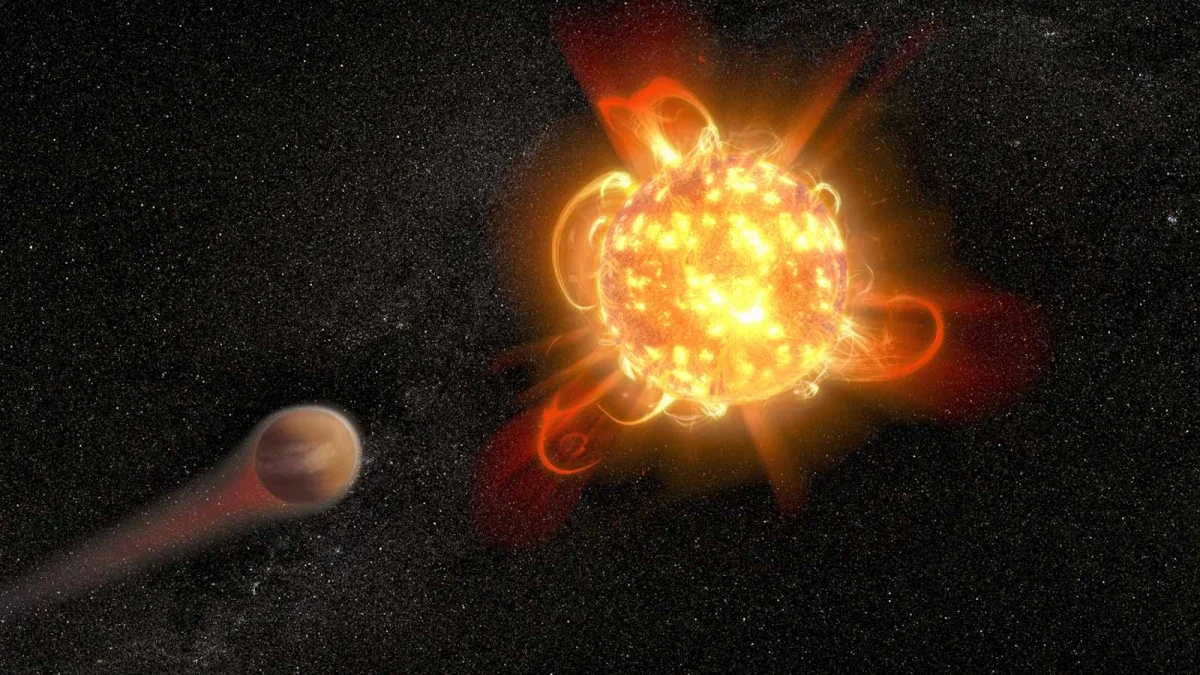
Surface of the Sun: approximately 5,500°C (photosphere).
Cryogenic temperatures: the other extreme
Cryogenic applications require temperatures far below what any refrigerator achieves:
| Temperature | What it enables |
|---|---|
| -40°C | Extreme cold weather testing |
| -78°C (-109°F) | Dry ice (CO₂) temperature |
| -196°C (77K) | Liquid nitrogen boiling point |
| -253°C (20K) | Liquid hydrogen boiling point |
| -269°C (4K) | Liquid helium boiling point |
| ~-271°C (2K) | Superconductivity in many materials |
| mK range (millikelvin) | Dilution refrigerators for quantum computers |
Liquid nitrogen (-196°C) is produced industrially in large quantities and has many applications: food cryopreservation, medical sample storage, cryogenic grinding of plastics, cooling semiconductor equipment.
Superconductivity occurs when some materials are cooled below a critical temperature — electrical resistance drops to exactly zero. MRI machines use superconducting magnets cooled by liquid helium.
Quantum computers (IBM, Google, Rigetti) operate at approximately 15–20 millikelvin (mK) — approximately 0.02 K, colder than outer space (2.7 K background radiation). The extremely low temperature reduces thermal noise that would otherwise disrupt quantum states.
Stellar temperature classification
Stars are classified by surface temperature using the Harvard spectral classification (O B A F G K M):
| Class | Temp range | Colour | Example |
|---|---|---|---|
| O | >30,000K | Blue-white | Rigel, Zeta Puppis |
| B | 10,000–30,000K | Blue-white | Spica, Regulus |
| A | 7,500–10,000K | White | Vega, Sirius |
| F | 6,000–7,500K | Yellow-white | Canopus, Polaris |
| G | 5,200–6,000K | Yellow | Sun, Alpha Centauri A |
| K | 3,700–5,200K | Orange | Epsilon Eridani |
| M | 2,400–3,700K | Red | Proxima Centauri, Betelgeuse |
Our Sun is a G2V star at approximately 5,778K surface temperature. Its core temperature is approximately 15 million K.
Wien's Displacement Law connects temperature to the peak wavelength of emitted radiation:
λ_peak = 2.898 × 10⁻³ / T
The Sun's peak emission is in the yellow-green (visible spectrum). Hotter blue stars peak in UV; cooler red stars peak in infrared. This is why iron heated in a forge goes from dark red to yellow to white as temperature increases.
How to use the Temperature Converter on sadiqbd.com
- Convert industrial temperatures — furnace specs in Celsius to Fahrenheit for American specifications
- Convert stellar temperatures — Kelvin to Celsius for context
- Cryogenic conversions — Kelvin to Celsius for liquid nitrogen and superconductivity temperatures
Frequently Asked Questions
What is the hottest temperature ever achieved by humans? At CERN's Large Hadron Collider, quark-gluon plasma (the state of matter immediately after the Big Bang) has been created at approximately 5.5 trillion K — roughly 250,000 times hotter than the Sun's core. These temperatures exist for fractions of a nanosecond.
What is the coldest naturally occurring place in the universe? The Boomerang Nebula, a protoplanetary nebula approximately 5,000 light-years away, has been measured at approximately 1K (-272°C) — colder than the cosmic microwave background radiation. It's colder than most of empty space because rapid expansion of gas cools it below the background temperature.
Is the Temperature Converter free? Yes — completely free, no sign-up required.
Try the Temperature Converter free at sadiqbd.com — convert between Celsius, Fahrenheit, and Kelvin for any application from ovens to stellar classification.