Understand your
body better.
Evidence-based guides on fitness, nutrition, and understanding health metrics.
✦ AI-powered — understands natural language

Your Cycle's Range Tells You More Than Its Average
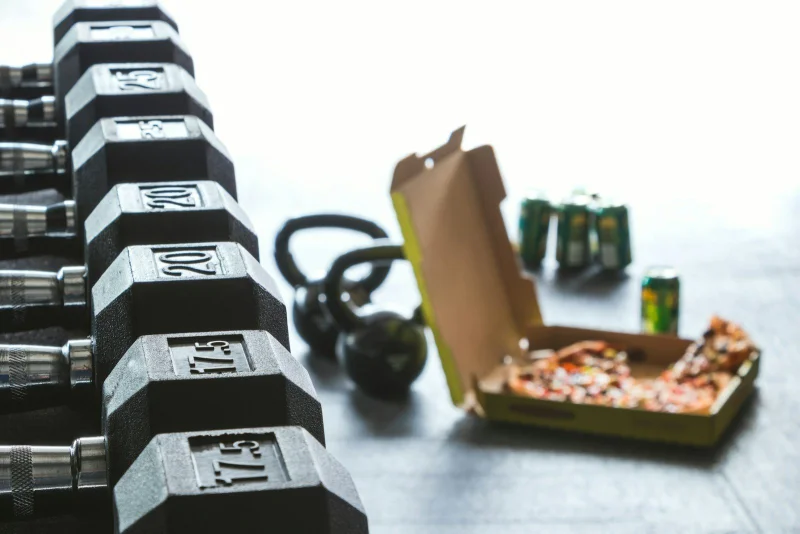
Why Protein + Carbs + Fat, Converted Back to Calories, Doesn't Exactly Match Your Calorie Target
A macro calculator says 150g protein, 200g carbs, 70g fat — multiply each by its calories-per-gram, sum them, and the total often doesn't exactly match the calorie target they're based on. Here's why this is expected rounding (whole-gram display rounding, plus the simplified "4-4-9" calorie-per-gram figures themselves), why it compounds across three macros in either direction, and why it's not something that needs "correcting."

The "5.11 Metres" Error and Other Height Conversion Mistakes in Medical Records — Where Precision Actually Matters
Medical records, sports statistics, and identity documents all record height in different units and formats — and conversion errors range from database inconsistencies to patient safety concerns. Here's the clinical height measurement protocol (stadiometer, Frankfort horizontal plane, three readings), the "5.11" transcription error that appears in medical records, why sports player heights differ by 1-3 cm across national databases, and conversion precision guidance for legal threshold compliance.

Why You're Taller in the Morning Than at Night, and When It Actually Matters
Adult height isn't constant throughout the day — most people are measurably 1-2cm taller in the morning than in the evening, due to overnight rehydration and daily compression of spinal discs. Here's why this happens, why it's almost always imperceptible in everyday life, but why it can genuinely matter for anyone whose height is recorded near a formal threshold, and how this differs from long-term, age-related height changes.

How BMR Is Actually Measured and Why the Formula on Your Calculator Has More Uncertainty Than It Appears
Harris-Benedict's 1919 formula was built from 239 mostly young white men at the University of Oregon. Mifflin-St Jeor's 1990 update is better, but still predominantly white American subjects. "Within 10% accuracy" means your 1,700 kcal BMR estimate could be anywhere from 1,530 to 1,870 — a 340-calorie range that, compounded through TDEE multipliers, explains why "the formula says I should lose weight but I'm not" is often a formula limitation, not a tracking failure.

Why Pregnancy Is Counted From Before It Began — The LMP Convention, Gestational Age, and Why Your App Says You're Further Along Than You Think
Gestational age is counted from the last menstrual period — not conception — which means a "6-week pregnancy" is about 4 weeks post-conception, and "40 weeks" includes approximately 2 weeks before fertilization. Here's why different calculators give different due dates (cycle length adjustments, ultrasound overrides), what "39+4 weeks" notation means and why the days portion matters clinically, and why Naegele's 280-day rule may slightly underestimate the average first pregnancy duration.
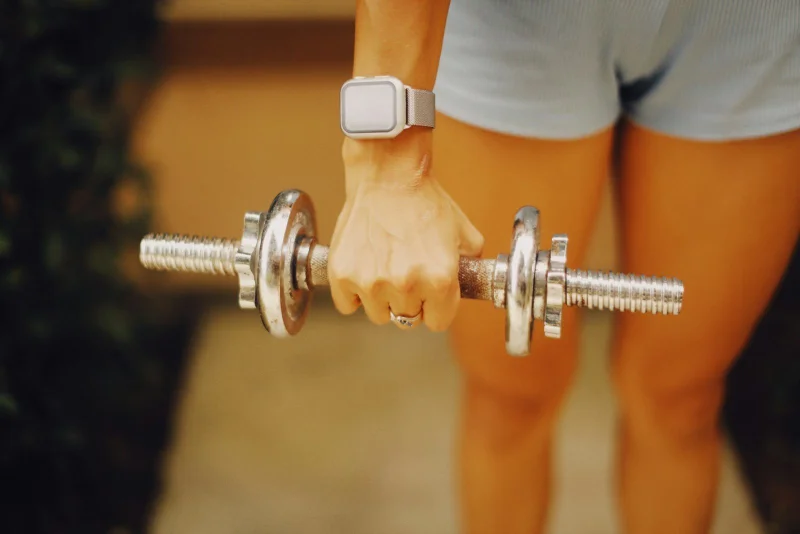
Why Your Fitness Tracker and a MET-Based Calculator Disagree About Calories Burned — and Which to Trust
Your fitness tracker says 450 calories; a MET-based calculator says 320 — for the "same" workout. Both are estimates, but estimating differently: MET values are population averages applied to your weight, while wearables use proprietary heart-rate-based algorithms applied to your measured physiology. Here's why neither is "the truth," why resistance training shows larger discrepancies than steady-state cardio, and why consistency of method matters more than which method.

Alcohol Calories: Why Drinks Often Go Untracked, and Why Mixers Often Contribute More Than the Alcohol Itself
A glass of wine, a beer, and a cocktail can each contain anywhere from 100 to 600+ calories — and in many countries, alcoholic beverages aren't required to display calorie information at all, making them one of the largest "invisible" contributors to calorie intake. Here's why alcohol's 7 calories/gram adds up faster than expected, why cocktail mixers often contribute more calories than the alcohol itself, the "extra food around drinking" effect, and alcohol's distinct metabolic prioritization.

Why Women Need 3× More Essential Body Fat Than Men — and What Different Fat Types Actually Do
Women's essential fat minimum (10-13%) is so much higher than men's (3-5%) not because of reserves or fitness level, but because the sex-specific fat deposits involved in reproductive hormone synthesis and neurological function require it. Here's the essential vs storage fat distinction, why visceral fat location matters more than total body fat percentage for metabolic health, why "athletic" body fat isn't necessarily optimal for non-athletes, and the body recomposition tracking paradox.

Why 10,000 Steps on a Hill Burns Far More Than 10,000 Steps on Flat Ground: Gradient and Calorie Reality
Walking uphill burns substantially more calories per step than flat walking — but most step-to-calorie calculators don't account for this. A 70 kg person walking brisk on flat ground burns ~315 kcal/hour; the same person hiking uphill at 10% grade burns ~525 kcal/hour for the same steps. Here's the physics of vertical work, how MET values capture gradient, why GPS devices estimate terrain calories better than accelerometers alone, and the descending asymmetry (downhill costs fewer calories but isn't free).

Hyponatraemia and Endurance Sports: When Plain Water Isn't Enough — And Drinking Too Much Becomes the Risk
"Drink more water" advice has a limit — exercise-associated hyponatraemia, caused by drinking more fluid than you lose during prolonged exercise, has caused documented fatalities in endurance events. Here's why thirst-based drinking is now generally preferred over fixed schedules, who's at higher risk, and what role sodium intake actually plays.
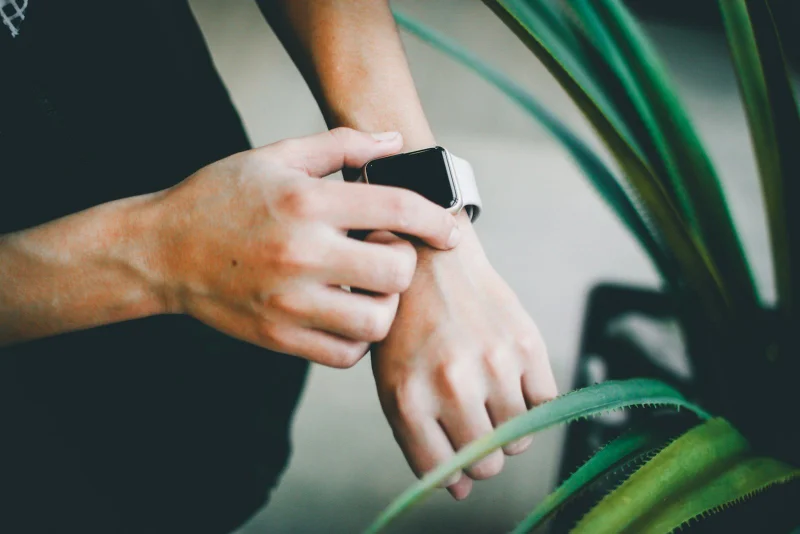
How Step Counters Actually Work — and Why Your Phone and Smartwatch Never Quite Agree
A smartphone in your pocket and a fitness tracker on your wrist can disagree by 10-20% on the same walk — and neither is necessarily "wrong." Here's how accelerometer-based step counting actually works, why wrist-worn and hip-worn devices have different error patterns, what validation studies show about accuracy, and why trend-tracking matters more than absolute numbers.

Your Predicted Period Date Is an Average — Here's the Range Hiding Behind It
A period tracker says "your next period: March 15" — a single date, derived from averaging your past cycles. But "regular" cycles still vary day-to-day within a typical range, and factors like travel, stress, or illness can shift any individual cycle. Here's why treating the predicted date as the center of a range — rather than a precise point — provides more useful information for planning travel, events, and supplies.
