Understand your
body better.
Evidence-based guides on fitness, nutrition, and understanding health metrics.
✦ AI-powered — understands natural language

Your Cycle's Range Tells You More Than Its Average

Walking Burns as Many Calories Per Kilometre as Running — Here's the Biomechanics That Explains Why
Walking burns approximately the same calories per kilometre as running — because running is twice as fast but twice as many calories per minute, netting out the same per distance. The pendulum mechanics of walking and spring-bounce mechanics of running are fundamentally different energy systems that happen to converge at similar efficiency per unit distance. Here's the biomechanics, why brisk walking is the most efficient gait, the NEAT advantage of higher step count, and why fitness trackers give different calorie estimates for the same steps.

Why the First Half and Last Half of Your Night Do Different Things — Sleep Stages, Memory, and Nap Strategy
Sleep stages don't repeat in equal proportions across the night — slow-wave deep sleep dominates the first third, REM dominates the last third. Cutting sleep short primarily loses REM; shifting sleep later primarily loses SWS. Here's what each stage does (SWS for physical restoration and declarative memory, N2 spindles for procedural memory, REM for emotional processing), why the "coffee nap" works, and how nap duration determines which stages you reach.

Why the Second Half of Your Cycle Is Predictable (and the First Half Often Isn't) — Luteal Phase Biology Explained
The luteal phase (ovulation to menstruation) is remarkably consistent at 12-14 days — most cycle length variation happens in the follicular phase (menstruation to ovulation), which is where stress, illness, and travel affect timing. Here's why this makes period prediction harder than it appears, what a short luteal phase means for fertility, and why perimenopause breaks cycle-tracking app predictions.

Why Protein and Carbs Are 4 Calories Per Gram and Fat Is 9 — The Atwater Factors Behind Every Macro Calculator
The 4-4-9 calorie-per-gram values for protein, carbs, and fat are Atwater factors — approximations from 19th-century bomb calorimetry experiments, corrected for digestibility and metabolic losses. Here's why fat has more than twice the calories per gram of carbs (carbon-hydrogen ratio), why fiber produces different calorie values than other carbohydrates, and why tracking macros to the gram implies more precision than the underlying measurement system actually supports.

Why Skinfold Calipers Underestimate Body Fat in Some Populations — The Regression Equation Backstory
Skinfold caliper sites aren't arbitrary — they're the locations where subcutaneous fat thickness best predicted total body fat in the 1970s regression equation development studies using hydrostatic weighing as the reference. Here's why the Jackson-Pollock and Durnin-Womersley equations underestimate body fat in East Asian populations, caliper inter-rater reliability (±3-5% between trained technicians), and why calipers are better for tracking changes than determining absolute percentage.

Why a "200-Calorie" Strength Session Burns More Than a "200-Calorie" Run — The 24-48 Hour Muscle Repair Effect
Cardio burns calories during the session; strength training continues burning calories for 24-48 hours afterward as muscle fibers repair — and long-term muscle gain increases resting metabolism permanently. Here's what skeletal muscle actually costs at rest (6-10 kcal/kg/day), why muscle protein turnover after resistance training adds 100-300 kcal over the following day, and why the "1 kcal/kg/km" running rule is more reliable than MET values for estimating running calorie cost.
Why You Don't Have to Drink 8 Glasses of Water a Day — and When You Actually Do Need to Drink More
The "8 glasses a day" rule omitted the very next sentence from its source: "most of this quantity is contained in prepared foods." Roughly 20-35% of daily fluid comes from food, making the actual drinking target lower. Here's why thirst is a more reliable hydration mechanism than most people think (in healthy adults in normal conditions), the specific situations where following thirst isn't enough, and why urine color is a better real-time hydration indicator than tracking millilitres.

Why Your Exact Birthday Determines Your Pension Age — and the Break-Even Math on Deferring It
State pension age is no longer a single fixed number — it varies by birth year cohort, and three people currently the same age will reach pension age at different years depending on exactly when they were born. Here's how different pension systems define retirement age, the break-even calculation for deferring pension (spoiler: you need to reach roughly 84 for UK deferral to pay off), and why "are you 65 in this tax year" has multiple valid interpretations that affect eligibility.

Why Waist Circumference Predicts Metabolic Risk Better Than "Ideal Weight" — and How to Measure It Correctly
Waist circumference and waist-to-height ratio predict metabolic risk better than ideal weight formulas — because they measure where fat is stored, not just how much. Here's the WHO vs NIH waist measurement protocols (which differ by 3-7 cm on the same person), the ethnicity-adjusted thresholds for waist circumference, why waist-to-height ratio's universal 0.5 threshold works across sexes and ethnicities, and how to use ideal weight alongside these measurements for a more complete picture.

Teenage Sleep Isn't Laziness: The Biology Behind the Circadian Shift and Why School Start Times Matter
Teenagers' late sleep patterns aren't laziness — puberty causes a documented biological shift in circadian timing, pushing melatonin onset later and making early school start times equivalent to asking an adult to perform their best at 3 AM. Here's the neuroscience, why adolescents need 8-10 hours (more than adults), what happens when schools shift start times to 8:30 AM or later, and what this means for using a sleep calculator when your biology and your school schedule disagree.

How BMI Went From Population Statistics to Clinical Screening — And Why That History Matters
BMI was invented by statistician Adolphe Quetelet to study population distributions — and he explicitly said it was unsuitable for judging individuals. It took 150 years of insurance industry adoption, Ancel Keys' 1972 renaming, and a 1998 threshold change that reclassified 29 million Americans as "overweight" overnight for it to become a clinical screening tool. Here's the history of how a population statistic became a medical measure, and what that origin story explains about its limitations.
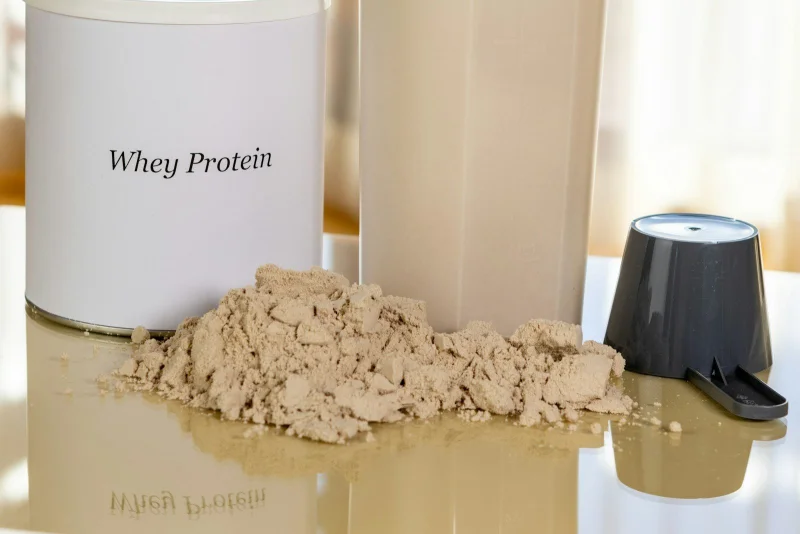
Why 100 Calories of Protein and 100 Calories of Fat Don't Arrive the Same Way — And Why Protein Should Come First in Your Calorie Budget
The same calorie deficit produces different results depending on what those calories are made of — protein has a 20-30% thermic effect (your body burns 20-30 calories per 100 just processing it) vs fat's 0-3%. Here's the satiety mechanisms behind protein's "keeps you full" reputation, the Protein Leverage Hypothesis for why ultra-processed food drives overeating, and why "protein first" is the most practical approach to allocating a calorie budget.
