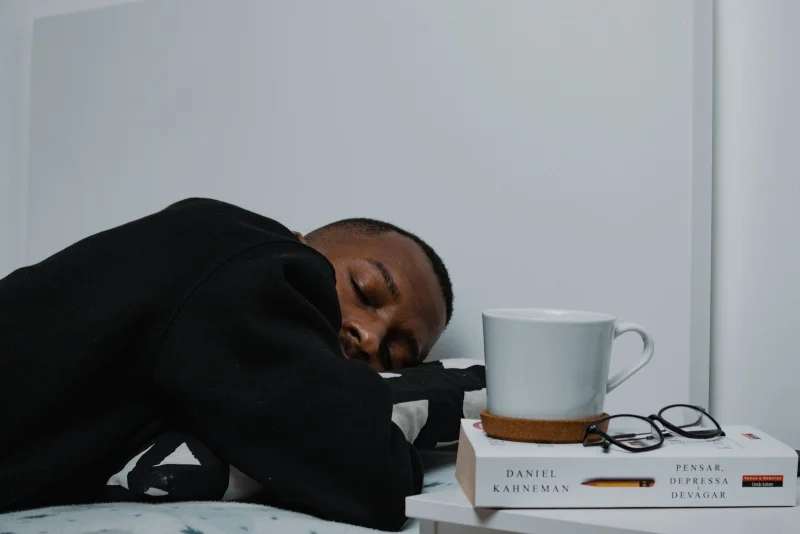
Teenagers need more sleep than adults — not as a preference or bad habit, but because their circadian rhythms are biologically shifted toward later sleep and wake times in ways that make early school start times a genuine public-health issue
The previous articles on this site covered sleep debt, chronotypes and circadian rhythms, and shift work. This article addresses sleep in adolescence — why teenagers' sleep patterns aren't laziness, what the neuroscience of puberty-related circadian shifts shows, and what the evidence says about school start times.
The biological shift that happens at puberty
At puberty, human circadian timing shifts later — this isn't a cultural preference, a willpower failure, or the result of screens and social media (though those can worsen it). It's a documented biological phenomenon tied to puberty itself.
The mechanism: the previous chronotypes article covered how the circadian system is driven by a pacemaker in the suprachiasmatic nucleus (SCN) of the hypothalamus, calibrated by light. During puberty, the timing of melatonin secretion — the hormone that signals "prepare for sleep" — shifts to later in the evening compared to prepubescent children and adults. This means the biological drive to fall asleep doesn't arrive until later, and the biological drive to wake up doesn't emerge until later in the morning.
This shift is a consistent finding across cultures, which argues against purely environmental explanations. Studies measuring circadian phase markers (melatonin onset, core body temperature rhythms) in adolescents document the shift independent of behavior. It's not that teenagers choose to stay up later; their biology is telling them to.
The shift peaks in late adolescence (roughly ages 19-21 by most research estimates) and then gradually moves earlier through adulthood — explaining why many adults recall being night owls as teenagers and becoming earlier risers as they aged.
Sleep duration requirements: adolescents need more, not less
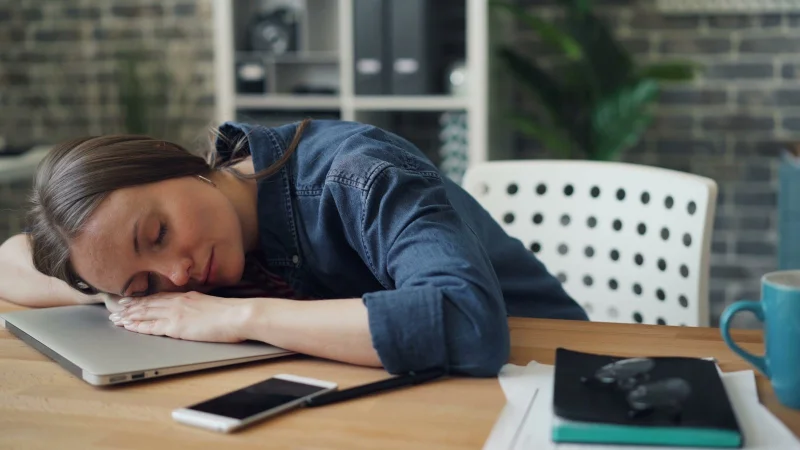
The consensus recommendation for teenagers (14-17 years) is 8-10 hours of sleep per night — more than the 7-9 hours typically recommended for adults. This isn't arbitrary — adolescence is a period of significant neurological development. The prefrontal cortex (responsible for judgment, impulse control, and executive function) continues developing through the mid-20s, and sleep is critical to this process.
The consequence of inadequate adolescent sleep goes beyond tiredness:
- Impaired memory consolidation (sleep is when the day's learning is consolidated)
- Reduced executive function and impulse control
- Increased emotional reactivity
- Higher rates of depression and anxiety (chronic sleep deprivation both causes and worsens mood disorders)
- Metabolic effects (sleep deprivation affects insulin sensitivity and hunger hormone regulation)
- Road safety: adolescent drivers who are sleep-deprived are at significantly higher risk of accidents
School start times: the public health question
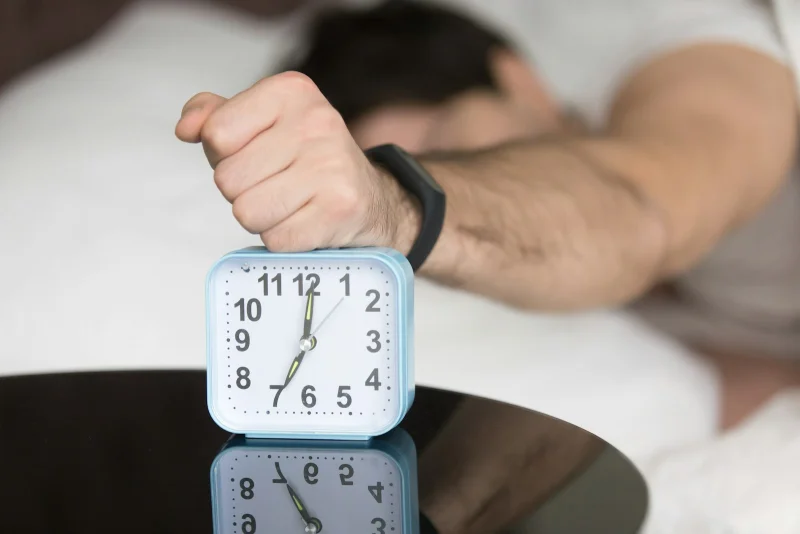
Many secondary schools start at 7:00-8:00 AM — times that require teenagers to wake at 5:30-6:30 AM. Given the biological circadian delay during adolescence, this is equivalent to asking an adult to consistently perform at their best at 3:00-4:00 AM.
The American Academy of Pediatrics, the American Academy of Sleep Medicine, the CDC, and equivalent bodies in other countries have all made formal recommendations for middle and high school start times to move to 8:30 AM or later, based on accumulated evidence that earlier start times cause chronic sleep deprivation in adolescents.
What happens when schools move to later start times:
- Students get more sleep (they don't simply shift bedtime later to compensate — their biological morning wake-drive is the binding constraint)
- Academic performance improves
- Mental health outcomes improve
- Rates of vehicle accidents among teen drivers decrease
The barriers to implementation are logistical rather than scientific — bus schedules, after-school activities, childcare for younger siblings, parent work schedules — which is why start times have been slow to change despite strong evidence.
What this means for sleep calculator use in teenagers
A sleep calculator that recommends "wake at 6:30 AM, sleep at 10:30 PM" for 8 hours may be accurately calculating the arithmetic of an 8-hour sleep window — but if the teenager's biology isn't ready for sleep at 10:30 PM due to circadian delay, the actual result is lying awake until midnight and getting 6.5 hours — not 8.
For adolescents using sleep calculators:
Work from the actual sleep onset time, not the intended bedtime — if experience shows falling asleep takes an hour after lying down, account for that.
On weekends (when there's no external alarm forcing an early wake), note the natural wake time — for many teenagers, this is 9:00-10:00 AM or later. This reveals the actual circadian preference and gives a better benchmark for what sleep duration is achievable.
The ideal is working backward from a desired wake time to find a bedtime that allows achieving required hours — but "required wake time" for school is often so early that hitting adequate sleep hours requires a sleep onset time that's biologically difficult to achieve.
Light management: the practical lever available to teenagers
The previous chronotypes article covered light's role in setting the circadian clock. For adolescents who must wake early for school, the most actionable intervention is morning light exposure immediately after waking — this provides a "phase advance" signal to the circadian system, nudging the biological clock earlier over time.
Conversely, bright light (including blue-light-rich screens) in the evening delays the circadian clock further — worsening the late-shift problem. The evidence for blue-light-filtering glasses is weaker than often claimed (dimming overall light intensity matters more than blue light specifically), but reducing bright light exposure in the 1-2 hours before intended bedtime is a consistent sleep-hygiene recommendation with evidence behind it.
How to use the Sleep Calculator on sadiqbd.com
- For teenagers: enter your actual sleep onset time (not intended bedtime — the time you typically fall asleep, not the time you get into bed) and required wake time — the result shows how many sleep cycles you're actually achieving
- If the result is consistently below 8 hours: this is a sleep debt accumulation situation — the previous article covered why catching up on weekends doesn't fully repay this; the underlying issue is either the sleep window or the timing mismatch
- Use weekend data as a reference: on days without an alarm, when does natural waking occur? This reveals baseline sleep need and circadian preference more accurately than weekday data constrained by external wake times
Frequently Asked Questions
If teenagers' circadian shifts are biological, is there anything that can actually help short of changing school start times? Partially. Morning bright light exposure is the most evidence-backed behavioral intervention — going outside immediately after waking, or using a bright light therapy lamp, provides the strongest signal for phase advancing. Consistent wake times (including weekends, which most teenagers find difficult) help anchor the clock. Reducing evening light is helpful but has limited effect when morning wake times are set by external constraints. These interventions can help at the margins, but the evidence is clear that they don't fully compensate for the biological mismatch created by early school start times — they're partial mitigation, not a solution.
Is the Sleep Calculator free? Yes — completely free, no sign-up required.
Try the Sleep Calculator free at sadiqbd.com — find your optimal bedtime and wake time based on sleep cycle timing.