Deep dives into tools,
techniques & the web.
Practical guides covering developer tools, health metrics, SEO, converters and more — written to be actually useful.
✦ AI-powered — understands natural language

Your List Still Has Duplicates After Removing Duplicates

HTML Encoding Doesn't Stop XSS in JavaScript Context — Why CSP Nonces Are the Missing Second Layer
HTML encoding converts < to < — but it can't protect against XSS in JavaScript contexts, where the browser parses script blocks before HTML encoding applies. Content Security Policy blocks injected scripts at the browser level, using nonces (random per-request values) or hashes to allow only legitimate inline scripts. Here's why both layers are required, how CSP nonces work, and what violation reports reveal about attacker probing.

Bufferbloat — Why Your Fast Connection Feels Slow and How Ping Under Load Reveals the Problem
Bufferbloat — oversized network buffers that add 300-800ms of latency during congestion — explains why 100 Mbps connections feel laggy during video calls. Standard ping tests miss it entirely because they test idle latency. Here's how to detect bufferbloat with a loaded ping test, why CoDel and CAKE algorithms solve it, and why DOCSIS cable connections are particularly susceptible during large uploads.

Why Official Fuel Economy Figures Were 40% Optimistic — NEDC, WLTP, and What Lab Tests Still Don't Capture
The NEDC fuel economy test was so widely gamed that the gap between official figures and real-world consumption reached 40% before WLTP replaced it. Here's how NEDC, WLTP, and EPA test cycles differ, what WLTP still doesn't capture (AC, cold start, >131 km/h driving), why UK and US mpg figures differ even beyond test cycle differences, and the L/100km vs MPG inverse relationship that creates perceptual distortions.

What Port Scanning Means in a Zero Trust Network — Microsegmentation, mTLS, and Kubernetes Exposure
Zero Trust networking changes what open internal ports mean — in a perimeter model, internal ports are assumed safe; in Zero Trust, every service must authenticate every connection regardless of network location. Here's how microsegmentation makes port scanning a policy verification tool, why service mesh mTLS decouples open ports from accessible services, and what Kubernetes port exposure looks like from an external scanner.

The Duck Curve, Grid Inertia, and Why Power Quality Is a Different Problem From Power Quantity
The duck curve — the dramatic midday dip and evening ramp that high solar penetration creates in net electrical demand — is one of the core grid stability challenges of the renewable energy transition. Here's what power quality actually means (voltage regulation, frequency stability, harmonic distortion), why grid-scale batteries are valued for power capacity (MW) not energy capacity (MWh), and how declining grid inertia from solar and wind threatens frequency response.

Why Fracking Needs 70 MPa and Food Pasteurisation Needs 600 MPa — Industrial Pressure Engineering Explained
Hydraulic fracturing injects water at 40-70 MPa (6,000-10,000 PSI) — pressures that must overcome 75-90 MPa of lithostatic stress from rock weight above. Here's a pressure scale from car tyres to the Mariana Trench to fracking to diamond anvil cells, supercritical CO₂ and water pressure thresholds, why aircraft hydraulics standardised at 3,000 PSI, and food High-Pressure Processing at 600 MPa (equivalent to 59 km ocean depth).

Senior Citizen FD Premiums, Tax-Saver Trade-Offs, and NRE vs NRO — How to Choose the Right Fixed Deposit
The 0.25-0.50% senior citizen FD premium isn't charity — it reflects banks competing for a high-balance, high-retention depositor segment. Here's why the Section 80C tax-saver FD sometimes loses to a regular FD at a higher rate once you account for the 5-year lock-in, how to correctly compare "special tenure" FDs at unusual maturities, and why NRE FDs have been particularly attractive for NRIs when Indian rates exceed foreign deposit rates.
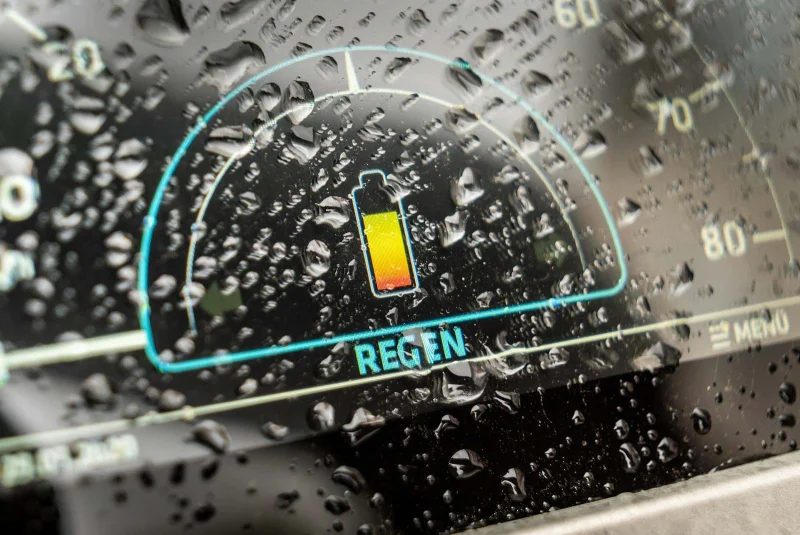
Why Battery EVs Use 3× Less Energy Than Hydrogen Fuel Cell Cars — Well-to-Wheel Efficiency and Energy Density Explained
Hydrogen fuel cell vehicles require 3× more renewable electricity per kilometre than battery EVs — not because the vehicles are worse, but because electrolysis → compression → fuel cell conversion chain loses efficiency at each step. Here's the full well-to-wheel efficiency comparison, why hydrogen's 120 MJ/kg energy density is undercut by its terrible volumetric density at 700 bar, and the BTU-to-kW conversion that makes US and European appliance ratings incomparable without conversion.

Why Your Bank Extends the Loan Instead of Raising Your EMI — Variable Rate Mechanics and the Prepayment Decision
Floating rate loans that adjust tenure instead of EMI on a rate rise can extend your mortgage by 7+ years — costing ₹35+ lakh in additional payments — while keeping your monthly amount unchanged. Here's how the two rate-change adjustment mechanisms work (EMI adjustment vs tenure extension), why prepayment in the first year saves 3× more than the same amount in year 15, and India's RBI rules prohibiting prepayment charges on floating-rate home loans.

Why Your 40-Week Due Date Is Actually 38 Weeks of Pregnancy — Ultrasound Dating, Naegele's Rule, and When Induction Is Recommended
A 40-week pregnancy is actually ~38 weeks of fetal development — gestational age is counted from 2 weeks before fertilisation. First-trimester ultrasound (±5 days accuracy) is more accurate than LMP dating for anyone with irregular cycles. Here's why the due date is a median with an asymmetric range, what the ARRIVE trial says about 39-week induction, and why gestational age accuracy matters most in preterm delivery decisions.

Why Legal Deadlines Are Harder to Calculate Than They Appear — Service Dates, Day Counting Rules, and Limitation Periods
Legal deadlines depend on whether "day 0" (the triggering event) is included or excluded from the count, which direction weekend/holiday adjustment goes, and when "service" is deemed to have occurred by method (first-class post adds 2 business days before the clock starts). Here's the CPR and US Federal Rules counting conventions, why posting a response on day 14 can still be late, and how limitation periods interact with the "date of knowledge" extension.

Should You Open a Long or Short RD Right Now? Rate Lock-In, RBI Policy, and the Laddering Strategy
RD interest rates are fixed at opening and don't change with RBI rate moves — which means the tenure decision is really a rate-direction bet. In a rising rate environment, shorter tenures preserve flexibility to re-invest at higher rates; in a falling environment, longer tenures lock in peak rates. Here's how RBI monetary policy transmits to bank deposit rates, the RD laddering strategy for both flexibility and rate optimisation, and premature withdrawal penalty mechanics.
