Deep dives into tools,
techniques & the web.
Practical guides covering developer tools, health metrics, SEO, converters and more — written to be actually useful.
✦ AI-powered — understands natural language

Your List Still Has Duplicates After Removing Duplicates

Why Caffeine Causes a Crash — Adenosine, the Two-Process Sleep Model, and the Science of Strategic Napping
Caffeine blocks adenosine receptors but doesn't clear the accumulated adenosine — when it's metabolised, adenosine floods the now-unblocked receptors, causing a crash proportional to the sleep debt built up while caffeine was present. Here's the two-process model of sleep (adenosine pressure plus the circadian clock), how the SCN's 24-hour molecular oscillation works, why SWS rebound is prioritised over REM in recovery sleep, and the biomechanics behind the "nappuccino" being more effective than either caffeine or napping alone.

Why Reverse DNS Alone Never Confirms or Denies a Threat — Residential Proxies, Reliability Decay, and SOC Triage
No serious threat intelligence platform relies on reverse DNS alone — residential proxy networks now produce PTR records indistinguishable from genuine residential ISP connections, defeating the simple "datacenter IP = higher risk" heuristic. Here's how reverse DNS combines with other signals in IP reputation scoring, why reverse DNS data decays in forensic reliability over weeks and months, and why FCrDNS doesn't protect against attackers who legitimately own a deceptively-named domain.

Two Retirees, Same Average Return, Completely Different Outcomes — Sequence of Returns Risk Explained
Two retirees with identical average 7% returns over 25 years can have dramatically different outcomes purely based on when the bad years occurred — withdrawing during a market decline permanently removes capital that can never participate in the eventual recovery. Here's the mathematics of why sequence matters more than average, the "retirement red zone" concept, the bucket strategy that protects near-term spending from market timing, and how annuitisation eliminates sequence risk entirely for essential expenses.

PCR Duplicates, Git's Content Hashing, and Cross-Language Plagiarism — How "Duplicate" Means Something Different in Every Technical Domain
PCR duplicates in DNA sequencing aren't defined by identical sequence text — they're defined by identical mapping position, because sequencing errors mean true duplicates may differ by a single base. Here's how Git's content-addressable storage deduplicates by exact SHA hash, why CMS media libraries need perceptual hashing to catch visually-identical-but-byte-different logo uploads, and why cross-lingual plagiarism detection requires semantic embeddings rather than text matching.

Regex Can't Parse Nested Structures — When to Switch to Parser Combinators and Why
Regular expressions cannot formally match arbitrarily nested structures like balanced parentheses or nested JSON — this is a mathematical limitation, not an engine deficiency. Here's the five specific signals that indicate you've outgrown regex, how parser combinators recursively compose small parsing functions, and why "regex JSON extractors" only work for simple flat cases.

A Bathroom Scale Measures Force, Not Mass — Why Your "Weight" Changes in Elevators, on the Moon, and in Space
A bathroom scale measures the normal force the floor exerts back on you — not your mass directly — which is why the same scale would misread your weight on the Moon by a factor of 6. Here's why elevators make you feel heavier or lighter while your mass never changes, why astronauts are in continuous free-fall rather than "zero gravity," and why weightless objects still have full inertia and can still injure you.

Why You Should Never Remove a 301 Redirect — Maintenance, Chain Accumulation, and Latency Impact Over Time
301 redirects from URLs with meaningful inbound links should stay active indefinitely — removing them after "Google processes them" breaks all external links pointing to the old URL. Here's why redirect chains accumulate silently through multiple migrations, how redirect loop sources (HTTPS + WWW conflicts, CDN-origin conflicts) form, the latency impact of each additional redirect hop on Core Web Vitals, and when to use 308 instead of 301 for API method preservation.

Why API Key Rotation Is Harder Than It Should Be — Zero-Downtime Rotation, Secure Distribution, and the Permanent Git History Problem
API key rotation is painful because most systems treat keys as static configuration — but rotation is the primary defence against undetected compromise. Here's the five-stage key lifecycle, why email and Slack are wrong distribution channels, the zero-downtime rotation sequence (generate new key, distribute, deploy, verify, then revoke old), why a Git-committed key is permanently compromised even if deleted from the latest version, and the secret scanning bots that find committed keys within seconds of push.

The 300-Year Unbreakable Cipher That Got Broken — Vigenère, Enigma, and What Every "Unbreakable" Cipher Has in Common
The Vigenère cipher was unbreakable for 300 years — until the Kasiski test revealed that repeated keywords create periodic patterns detectable by measuring distances between repeated ciphertext sequences. Enigma failed not through mathematical weakness but through operator protocol flaws (predictable message formats, the reflector's no-self-encryption constraint). The one-time pad is provably unbreakable but impractical. Here's what each historical failure teaches about what "secure" actually means.

GraphQL's Introspection Query Is an Attacker's Best Friend — Batching, Nested Query DoS, and Persisted Queries
GraphQL's introspection query exposes your complete schema — every type, field, and relationship — to anyone who can reach the endpoint, making it the most powerful reconnaissance tool an attacker can use against a GraphQL API. Here's batching attacks that bypass rate limiting, deeply nested queries causing 100^5 database lookups, persisted queries as a security pattern, and how to test GraphQL endpoints with a REST API checker.

Open Graph Isn't the Same on Every Platform — LinkedIn, WhatsApp, Slack, and Discord Each Have Their Own Rules
LinkedIn's Post Inspector forces cache refresh like Facebook's Sharing Debugger — but they're separate tools, LinkedIn caches even more aggressively, and LinkedIn prefers og:image:secure_url over og:image. Here's platform-specific Open Graph differences: WhatsApp's small preview size and no force-refresh tool, Slack's unfurl API for custom app previews, Discord's og:video for inline playback, and Teams Adaptive Cards for rich integrations.
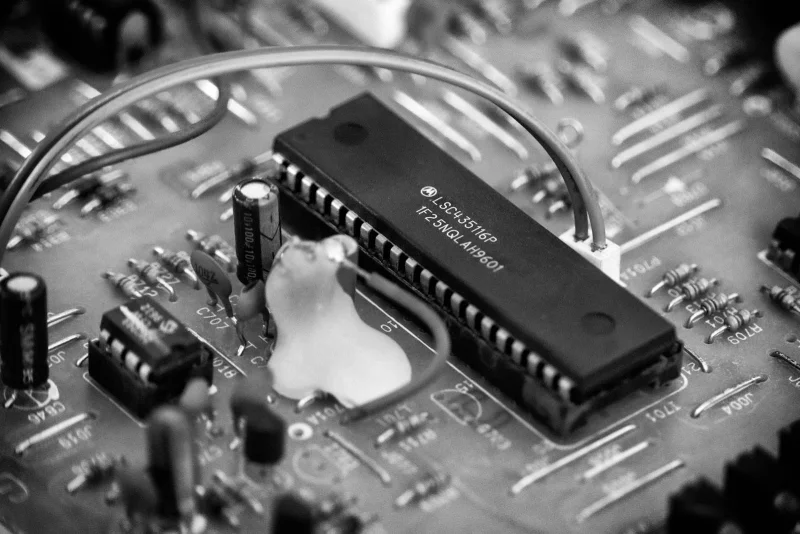
Why Your RTC Chip Returns 89 When the Time Is 59 — BCD, Gray Code, and Other Number Encodings in Modern Hardware
Binary-Coded Decimal (BCD) encodes each decimal digit as a 4-bit group — which is why real-time clock chips return 0x59 to mean 59 seconds (not 89), and why hardware with BCD limits constrains values to 0-99 rather than 0-255. Here's BCD in RTC hardware and financial calculations, Gray code's one-bit-change property that prevents rotary encoder errors, and why TCP checksums use one's complement arithmetic.
