"Drink 8 glasses of water a day" is advice with surprisingly little evidence behind it
The 8×8 rule — 8 glasses of 8 ounces each, totalling about 2 litres — is so widely repeated that most people assume it's a medical consensus. It isn't. The origin is murky; the evidence for the specific number is thin; and for most healthy adults in temperate climates, the body's thirst mechanism does a reasonable job of signalling hydration needs without any counting.
That doesn't mean hydration doesn't matter — it clearly does. It means the rigid formula matters less than the factors that genuinely affect how much fluid you need.
Where the "8 glasses" rule came from
The most commonly cited origin is a 1945 recommendation from the US Food and Nutrition Board, which suggested that adults consume roughly 2.5 litres of water per day. The recommendation included a note that most of this quantity was contained in prepared foods — a detail that got dropped somewhere along the way as the guideline was repeated and simplified.
In 2002, Heinz Valtin published a review in the American Journal of Physiology specifically examining the evidence for the 8×8 rule. His conclusion: "there is no scientific evidence whatsoever" for 8×8 for healthy adults in temperate climates. The current evidence base for any specific universal hydration target remains limited.
How the body regulates hydration
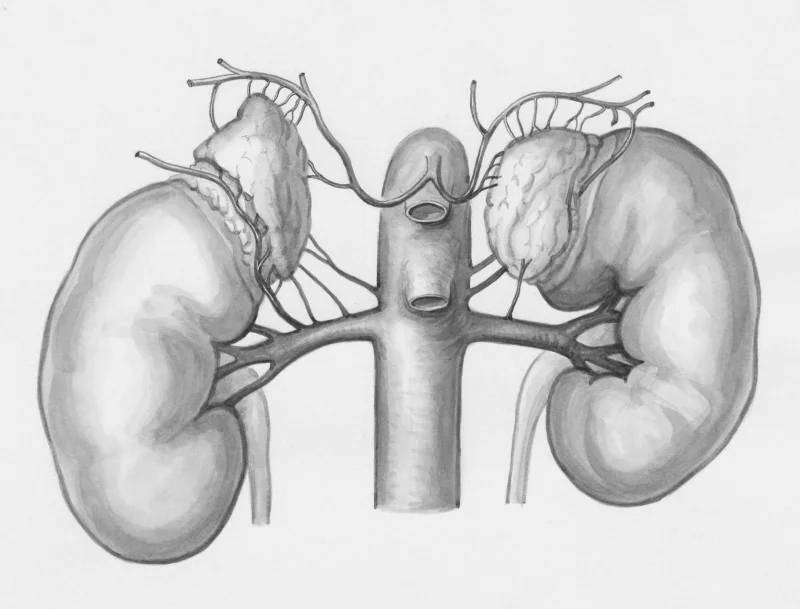
Your kidneys are exceptional osmoregulators. When blood osmolality rises (blood becomes more concentrated), the hypothalamus detects it and triggers thirst. It also signals the posterior pituitary to release antidiuretic hormone (ADH), which causes the kidneys to reabsorb more water and produce more concentrated urine.
When you're well-hydrated, ADH secretion decreases, urine becomes more dilute, and any excess water is excreted. This feedback loop operates continuously and responds to fluid intake within hours.
The system is sensitive enough that most healthy, non-elderly adults with access to water and functioning thirst signals will hydrate adequately through normal drinking patterns without counting glasses. The primary exceptions are conditions that disrupt this regulation — intense exercise, extreme heat, illness with fever or vomiting, certain medications, and ageing.
What actually affects how much water you need
Body weight: larger bodies have more fluid compartments to maintain. A 100kg person needs more water than a 55kg person. Most personalised hydration calculators use a per-kilogram formula — roughly 30–35ml/kg of bodyweight as a baseline for resting adults in moderate conditions.
Physical activity: exercise causes fluid loss through sweat at rates of 0.5–2 litres per hour depending on intensity, body size, and conditions. High-intensity exercise in heat can produce sweat rates exceeding 2 litres/hour. Fluid intake before, during, and after exercise needs to replace this loss.
Ambient temperature: heat significantly increases perspiration even at rest. In hot climates or occupational heat exposure, baseline fluid requirements can increase by 1–2 litres per day above temperate-climate needs.
Diet composition: substantial water content comes from food rather than beverages. Fruits and vegetables are 85–95% water by weight. A diet rich in fresh produce contributes 0.5–1 litre of water per day. Conversely, diets high in salt, protein, or processed food increase renal solute load and thus water requirements.
Pregnancy and breastfeeding: fluid requirements increase meaningfully. Recommendations generally suggest an additional 300ml/day during pregnancy and 500–700ml/day during breastfeeding.
Altitude: at high altitude, respiratory water losses increase (breathing rate rises; air is drier). Mountaineers at altitude need substantially more fluid than at sea level.
Caffeine and alcohol: both have mild diuretic effects. Moderate caffeine consumption (2–3 cups of coffee) doesn't produce net dehydration in habituated consumers, but high intake increases urine output. Alcohol has a stronger diuretic effect.
Urine colour: the practical hydration indicator
Urine colour is a validated, practical indicator of hydration status:
| Colour | Hydration status | Action |
|---|---|---|
| Pale straw / pale yellow | Well hydrated | Normal |
| Yellow | Adequate hydration | Normal |
| Dark yellow | Mild dehydration | Drink water |
| Amber / honey | Dehydrated | Drink water promptly |
| Brown | Severely dehydrated or possible medical issue | Seek guidance |
| Colourless | Over-hydrated (possible hyponatraemia risk) | Reduce intake |
The first morning void is typically more concentrated — this is normal. The urine check is most informative during the day when intake varies.
The exception: vitamins (particularly riboflavin/B2 in supplements) can produce bright yellow urine regardless of hydration status. Certain medications and foods (beetroot) also affect colour.
Signs of actual dehydration
Mild dehydration (1–2% of body weight in fluid loss) produces:
- Thirst
- Slightly darker urine
- Mild headache in some people
- Reduced concentration and mood in some studies
Moderate dehydration (2–5%):
- More pronounced thirst
- Dry mouth
- Reduced urine output
- Fatigue, headache, irritability
- Measurable cognitive performance reduction
Severe dehydration (5%+):
- Dizziness, rapid heartbeat
- Very dark urine or none
- Confusion
- Requires medical attention if severe
For most people in everyday conditions, thirst is a reliable enough signal that dehydration severe enough to impair cognition is uncommon. The concern about "mild chronic dehydration" impairing performance is real but frequently overstated — and generally applies to situations where thirst is ignored or access to water is restricted.
Over-hydration: the underappreciated risk
Drinking far more water than kidneys can excrete (maximum ~1 litre/hour) dilutes blood sodium, producing hyponatraemia. Mild hyponatraemia causes nausea and headache; severe hyponatraemia causes seizures and is fatal.
This is uncommon in everyday life but is documented in:
- Endurance athletes who drink too aggressively (particularly in shorter races where sweat loss is lower but drinking is encouraged)
- People following "detox" protocols involving extreme water consumption
- Certain psychiatric conditions (psychogenic polydipsia)
The clear urine target of "drink until urine is colourless" is more aggressive than necessary and can push some people toward over-hydration. Pale yellow — not clear — is the well-hydrated target.
How to use the Water Intake Calculator on sadiqbd.com
- Enter your weight — the primary driver of baseline fluid needs
- Select your activity level — exercise significantly increases requirements
- Select your climate — hot conditions increase needs
- Read your estimated daily target — personalised to your inputs
Use the result as a reasonable daily target, not a rigid prescription. Thirst, urine colour, and how you feel are real-time feedback that complements the calculator.
Frequently Asked Questions
Do coffee and tea count toward daily fluid intake? Yes — despite the mild diuretic effect of caffeine, the net fluid contribution of coffee and tea is positive. Research consistently shows that habitual coffee and tea consumers aren't dehydrated compared to non-consumers. Plain water, coffee, tea, milk, and most beverages count toward daily fluid intake. High-sugar or high-alcohol beverages are less efficient but still contribute fluid.
Does drinking more water help with weight loss? Modestly and indirectly. Drinking water before meals is associated with reduced food intake in some studies. Replacing caloric beverages (juice, soda) with water reduces calorie intake. Cold water may slightly increase metabolic rate as the body warms it (by approximately 8–12 calories per 500ml — a negligible effect). Water isn't a weight loss intervention in itself.
Should I drink water even when I'm not thirsty? In most everyday conditions, no — the thirst mechanism is adequate. During intense exercise, thirst may lag behind fluid loss, so planned drinking during long workouts is reasonable. Older adults (particularly over 65) have reduced thirst sensitivity and benefit from scheduled drinking rather than relying on thirst alone.
Is the Water Intake Calculator free? Yes — completely free, no sign-up required.
The 8-glasses rule is a reasonable rough target for many adults in moderate conditions — it's not harmful advice. But personalised requirements vary by weight, activity, climate, and diet, and the body's own signalling is a legitimate guide when thirst and urine colour are monitored.
Try the Water Intake Calculator free at sadiqbd.com — find your personalised daily hydration target based on your weight, activity level, and climate.