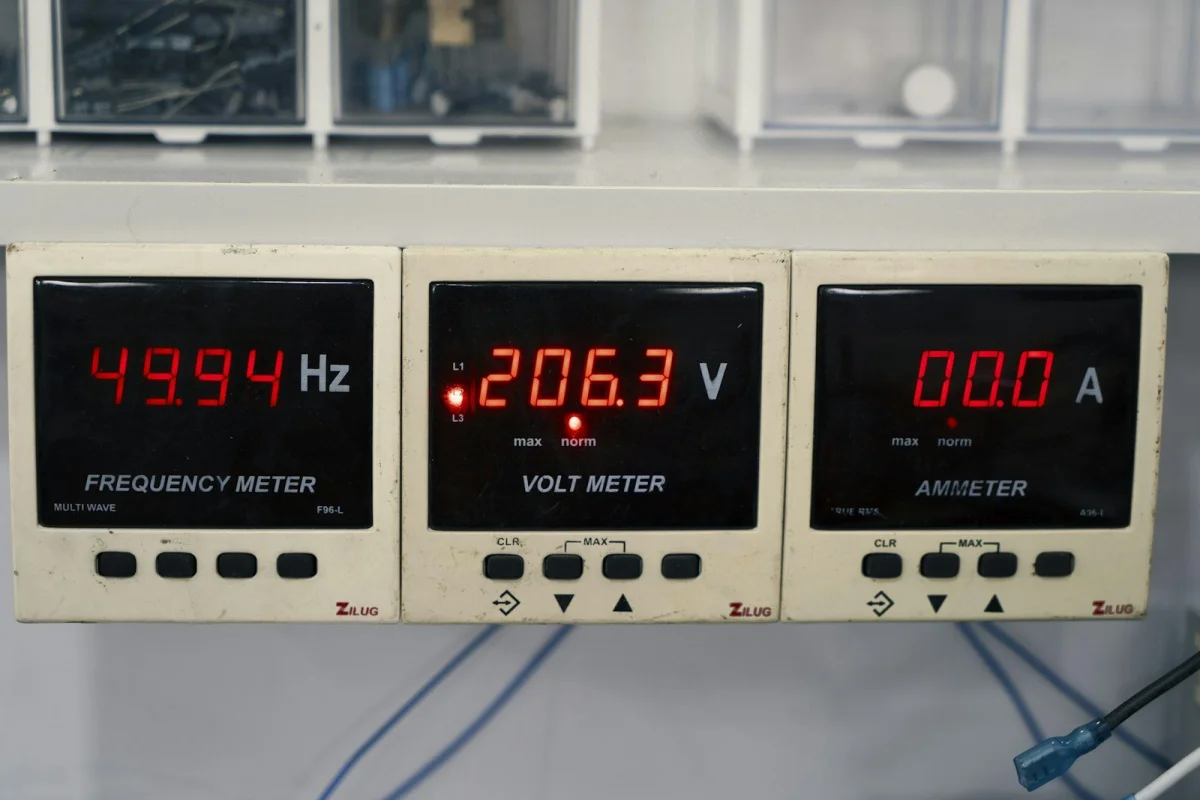
Frequency shows up in more places than most people expect
You probably know frequency from music and radio — 440 Hz is concert A, FM radio broadcasts in the megahertz range. But frequency is a fundamental measurement in electronics, signal processing, networking, physics, and mechanical engineering too. A CPU runs at gigahertz. Power grids operate at 50 or 60 Hz. Ultrasound machines use megahertz. A guitar string vibrates at hundreds of hertz.
Across these contexts, the units scale enormously — from millihertz for very slow oscillations to terahertz for optical frequencies. A frequency converter handles any conversion in this range instantly.
Frequency Units Explained
Frequency measures how many times something repeats per second. The base unit is the hertz (Hz) — one cycle per second.
| Unit | Abbreviation | Equivalent |
|---|---|---|
| Millihertz | mHz | 0.001 Hz |
| Hertz | Hz | 1 cycle/second |
| Kilohertz | kHz | 1,000 Hz |
| Megahertz | MHz | 1,000,000 Hz |
| Gigahertz | GHz | 1,000,000,000 Hz |
| Terahertz | THz | 1,000,000,000,000 Hz |
Beyond hertz, frequency is also described in related units:
- RPM (revolutions per minute) — used for motors, engines, hard drives, fans
- Radians per second (rad/s) — used in physics and control systems; 1 Hz = 2π rad/s
- Cycles per minute (CPM) — used in some industrial and medical contexts
How to Use the Frequency Converter on sadiqbd.com
- Enter the frequency value — the number you want to convert.
- Select the source unit — Hz, kHz, MHz, GHz, RPM, etc.
- Select the target unit — the unit you need.
- Read the result — instant conversion.
Real-World Examples
Audio and music
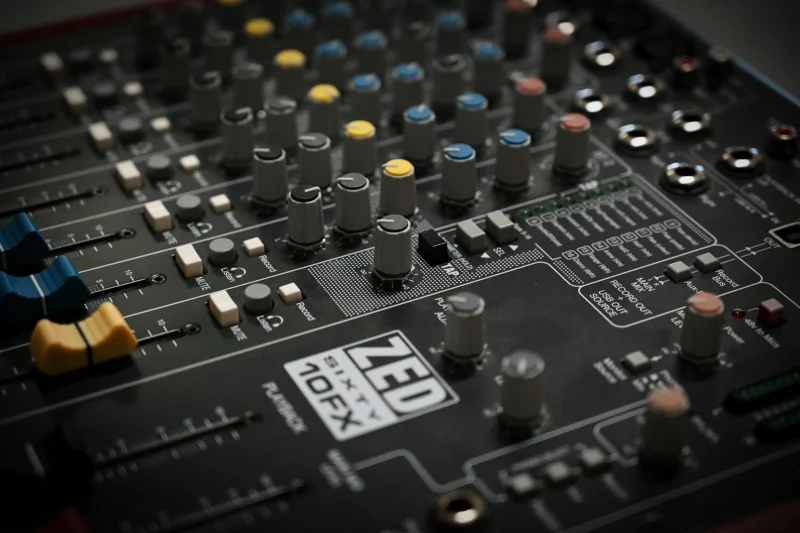
Concert pitch A4 = 440 Hz. Middle C (C4) = 261.63 Hz. These are in the audible frequency range, which runs from about 20 Hz to 20,000 Hz (20 kHz) for healthy human hearing.
A sound engineer working with a digital audio workstation at 48 kHz sample rate: 48 kHz = 48,000 Hz. The Nyquist theorem says the highest reproducible frequency is half the sample rate — 24,000 Hz — which covers the full human hearing range with room to spare.
Radio and wireless communication
FM radio in Bangladesh broadcasts in the 88–108 MHz range. Converting a specific station frequency, say 89.6 MHz, to Hz:
89.6 MHz = 89,600,000 Hz = 89.6 million cycles per second
WiFi operates at 2.4 GHz and 5 GHz. In Hz: 2.4 × 10⁹ Hz and 5 × 10⁹ Hz. The higher frequency (5 GHz) carries more data per second but has shorter range — a direct consequence of frequency's relationship with wavelength.
Computer processors
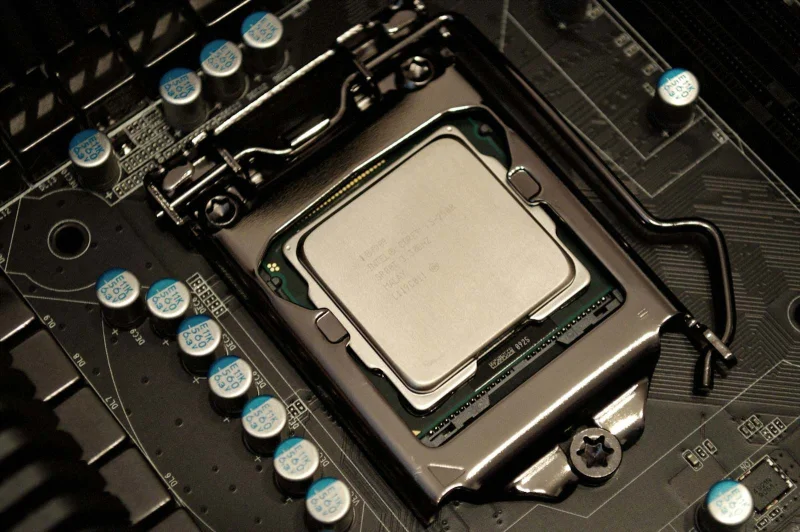
A CPU rated at 3.6 GHz runs at: 3.6 GHz = 3,600 MHz = 3,600,000,000 Hz = 3.6 billion cycles per second
Each "cycle" represents one fundamental clock tick during which the processor can complete basic operations. Modern CPUs execute multiple instructions per cycle, but the clock frequency sets the upper bound on execution speed.
Motor speed conversion
An industrial motor spins at 1,450 RPM. Converting to hertz (cycles per second): 1,450 RPM ÷ 60 = 24.17 Hz
In radians per second: 24.17 × 2π = 151.8 rad/s
These conversions matter in motor control, where speed regulators may work in Hz or rad/s depending on the controller design.
Power grid frequency
Bangladesh's power grid operates at 50 Hz — 50 complete AC cycles per second. The US uses 60 Hz. This is why electrical equipment rated for 50 Hz can sometimes behave differently on a 60 Hz supply — motors run slightly faster, some timers go out of sync, and certain transformers may overheat.
50 Hz in RPM context: a synchronous motor on 50 Hz runs at 3,000 RPM (for a 2-pole motor) or 1,500 RPM (4-pole). This is why you'll see those exact speeds on many industrial motor nameplates.
Frequency in Signal Processing
For developers and engineers working with signals:
Sampling rate and Nyquist. The Nyquist-Shannon theorem states that to accurately capture a signal, the sampling rate must be at least twice the highest frequency in the signal. Audio CDs sample at 44.1 kHz, capturing up to 22.05 kHz — just above the human hearing limit.
Bandwidth. The range of frequencies a channel can carry. A 20 MHz bandwidth channel can theoretically carry signals up to 20 MHz. Higher bandwidth = more data per second.
Carrier frequency vs. signal frequency. In radio communication, the information signal (audio, data) is modulated onto a much higher carrier frequency (MHz or GHz range) for transmission. The converter helps when you need to translate between the two.
Tips for Working With Frequency
Keep track of scale. MHz and GHz differ by 1,000 — an easy error when typing specs. Double-check that your unit selection matches the context (audio = Hz/kHz; radio = MHz/GHz; processors = GHz).
RPM to Hz: always divide by 60. RPM is cycles per minute; Hz is cycles per second. Divide RPM by 60 for Hz. A 3,000 RPM motor runs at 50 Hz. Multiply Hz by 60 for RPM.
Radians per second vs. hertz. 1 Hz = 2π rad/s ≈ 6.283 rad/s. If a formula uses ω (angular frequency in rad/s) and you have frequency in Hz, multiply by 2π before plugging in.
50 Hz vs. 60 Hz in electronics. Most modern electronics handle both, but always check. Sensitive equipment like certain audio gear, medical devices, and precision timing instruments may behave differently between 50 and 60 Hz supplies.
Frequently Asked Questions
What frequency is visible light? Visible light has frequencies from about 430 THz (red) to 770 THz (violet). In wavelength, that's 380–700 nanometres. These are electromagnetic frequencies, measured in terahertz — way above radio and microwave frequencies.
What's the difference between frequency and wavelength? They're inversely related: wavelength = speed of light ÷ frequency (for electromagnetic waves). Higher frequency = shorter wavelength. Radio waves have long wavelengths; X-rays have very short wavelengths.
Why does Bangladesh use 50 Hz for its power grid? Bangladesh, like most of Asia, Europe, and Africa, uses 50 Hz. The US, Canada, and parts of Latin America use 60 Hz. The difference dates to early 20th century electrification decisions and has no significant technical advantage either way — 50 Hz transmission is marginally more efficient over long distances, but the difference is minor.
What is 1 GHz in MHz? 1 GHz = 1,000 MHz. So a 2.4 GHz WiFi band = 2,400 MHz.
Is the frequency converter free? Yes — completely free, no sign-up required.
Frequency is one of those measurements that spans an extraordinary range — from the 0.00001 Hz of geological cycles to the 10²⁴ Hz of gamma rays. The converter handles the full spectrum, making unit translation instant whether you're working on audio, radio, computing, or engineering.
Try the Frequency Converter free at sadiqbd.com — instant conversion between Hz, kHz, MHz, GHz, RPM, and more.