Frequency Converter
Articles, guides, and in-depth tips for the Frequency Converter — everything you need to get the most out of it.
✦ AI-powered — understands natural language

Why Wheels Spin Backwards on Film: Aliasing and Nyquist

Resonance, Natural Frequency, and Why Bridges Collapse When Soldiers March in Step
Every physical object has a natural frequency at which it vibrates most easily — and when an external force matches that frequency, energy accumulates until something gives. Here's why the Tacoma Narrows Bridge oscillated itself to destruction, why soldiers break step crossing bridges, how MRI machines exploit hydrogen resonance, and why wine glasses shatter at the right soprano note.

Why Every Note on a Piano Is Slightly Out of Tune — Equal Temperament, the Pythagorean Comma, and Frequency Ratios
Equal temperament — the tuning system used by every modern piano and electronic tuner — is a mathematical compromise that makes all 12 keys equally slightly out of tune. Here's why pure integer-ratio intervals (like the 3:2 perfect fifth) can't fit in 12 notes without a gap called the Pythagorean comma, how equal temperament distributes that error evenly (making each fifth 0.745 Hz flat from pure), and why string players naturally drift toward pure intervals while pianists can't.
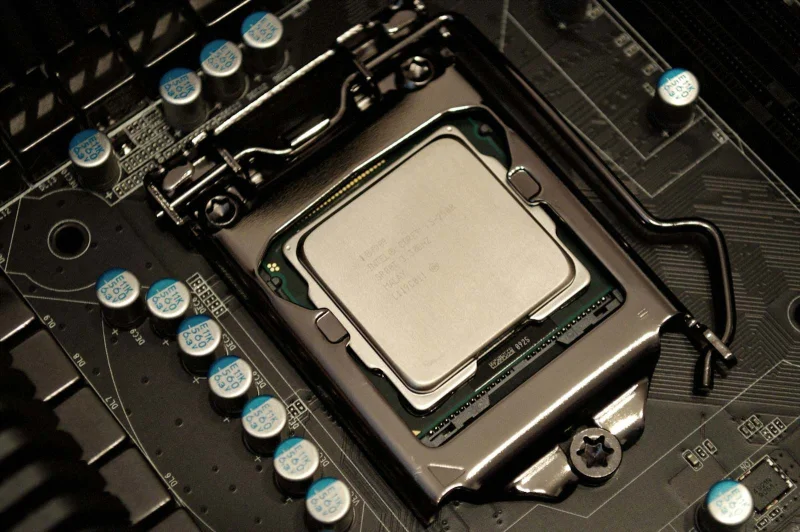
CPU Clock Speed (GHz) vs Actual Performance: Why a 3.5 GHz Chip Can Beat a 5.0 GHz Chip
A "5.0 GHz" processor and a "3.5 GHz" processor — and the 3.5 GHz one can be faster for many real workloads, because GHz measures cycles per second, not work accomplished per cycle, and "work per cycle" (IPC) varies enormously between processor designs. Here's why GHz comparisons were more meaningful historically (within same-generation architectures), why core count adds a second dimension GHz doesn't capture, and why benchmarks matter far more than any single specification.
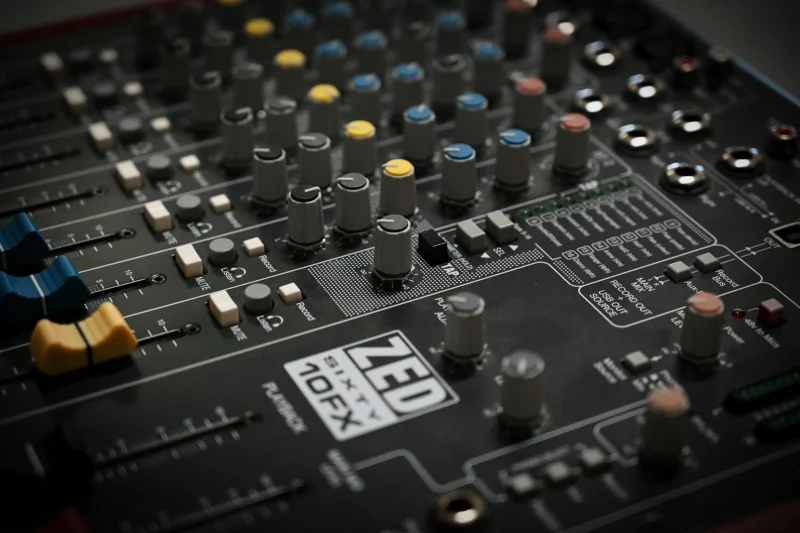
Music and Frequency: Concert A440, Harmonics, the Nyquist Theorem, and How Digital Audio Works
Concert A is 440 Hz because of a 1939 ISO standard. Here's how equal temperament maps notes to frequencies, why instruments at the same pitch sound different (harmonics and timbre), the Nyquist theorem that determines why CD audio samples at 44.1 kHz, and why different historical periods tuned differently.
The Electromagnetic Spectrum: Why 5G, WiFi, X-Rays, and Radio Waves Are All the Same Thing
Radio waves, WiFi, visible light, X-rays, and gamma rays are all the same phenomenon at different frequencies. Here's the full electromagnetic spectrum, why 5G uses higher frequencies than 4G, what WiFi bands mean, and why ionising radiation is dangerous when radio waves aren't.
Frequency Converter — From Audio Hz to WiFi GHz: All Frequencies Explained
Learn the full frequency spectrum from heartbeats to visible light, why 50 Hz vs 60 Hz matters for motors, how WiFi frequency affects range, and how to convert any frequency with a free converter tool.
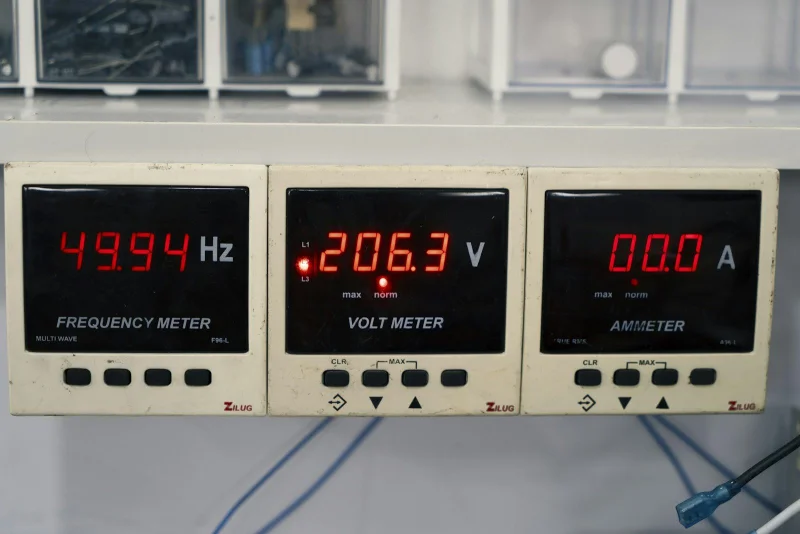
Frequency Converter — Hz, kHz, MHz, GHz & RPM Explained
Learn how frequency units like Hz, kHz, MHz, GHz, and RPM relate to each other, with real examples from audio, radio, computing, and motor engineering — plus a free frequency converter.
