Deep dives into tools,
techniques & the web.
Practical guides covering developer tools, health metrics, SEO, converters and more — written to be actually useful.
✦ AI-powered — understands natural language

Your List Still Has Duplicates After Removing Duplicates

ROT13 in Puzzle Design: Why Escape Rooms and ARGs Use a Cipher That's Deliberately Not Secure
ROT13 in an escape room or puzzle hunt isn't there for security — it's there because recognizing "this is a substitution cipher" IS the puzzle, and decoding it afterward is trivial by design. Here's how puzzle designers use ROT13 as a "calibration" cipher, why shift-amount discovery becomes its own puzzle layer, and ROT13's self-inverse property for spoiler-text use.
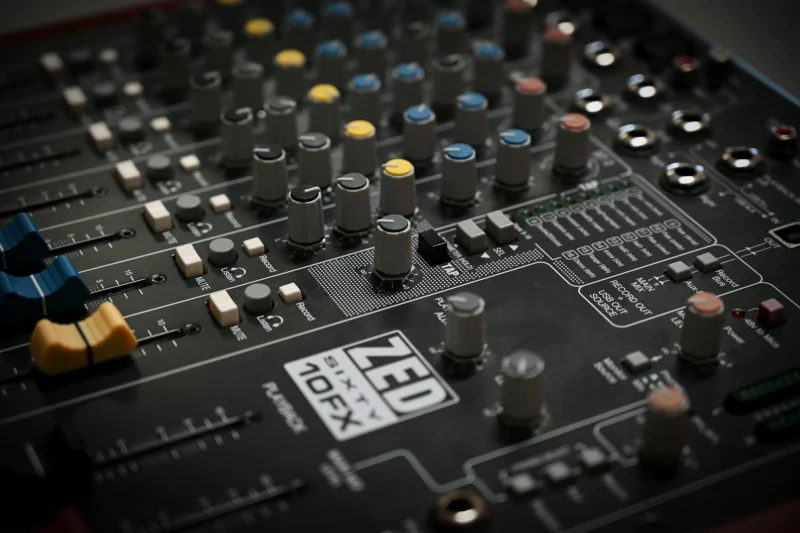
Music and Frequency: Concert A440, Harmonics, the Nyquist Theorem, and How Digital Audio Works
Concert A is 440 Hz because of a 1939 ISO standard. Here's how equal temperament maps notes to frequencies, why instruments at the same pitch sound different (harmonics and timbre), the Nyquist theorem that determines why CD audio samples at 44.1 kHz, and why different historical periods tuned differently.

Morse Code Isn't History: SOS, Aviation Navigation Beacons, and Why Amateur Radio Operators Still Choose CW
SOS — three dots, three dashes, three dots — wasn't chosen for "Save Our Souls." It was chosen because that specific rhythm is virtually impossible to mistake for anything else, even under terrible signal conditions, and works via radio, light, or sound. Here's why Morse code remains actively used today in aviation navigation beacon identifiers and amateur radio CW operation — not as history, but for genuine technical advantages.

Beyond a Single Traceroute: MTR, Asymmetric Routing, and Diagnosing Intermittent Network Issues
A single traceroute that "looks fine" doesn't rule out intermittent problems — and the path it shows is only the outbound direction, while routing is frequently asymmetric. Here's how MTR's continuous measurement reveals intermittent loss that single snapshots miss, why a hop showing loss often isn't "the problem" (ICMP rate-limiting), and how to localize issues to your network, the path, or the destination.

NAT and Port Forwarding for Home Networks: Why "Filtered" Doesn't Mean "Firewalled"
Most home network ports show "filtered" from the internet — not because of a configured firewall, but as a side effect of how NAT works: incoming connections without an existing mapping have nowhere to go. Here's the open/closed/filtered distinction, how NAT creates this effect, why port forwarding and UPnP change it, and the CGNAT limitation that can make port forwarding fail entirely.

Food Calories, Thermic Effect, and Why the Label Isn't the Whole Story
Food calorie labels use Atwater values from the 1890s and don't account for the thermic effect of food, the difference between raw and cooked, or gut microbiome variation. Here's what food calories actually measure, why protein delivers fewer net calories than the label suggests, and why individual calorie extraction varies.

Redirect Chains and Loops: How Years of Migrations Quietly Stack Redirects — and How to Flatten Them
A redirect chain often isn't deliberately created — it accumulates through years of independent, individually-reasonable migrations, each adding one more hop without anyone updating the original redirect. Here's why accumulated hops risk search engines failing to fully traverse a chain, the "flattening" fix, and the common CDN-to-origin protocol mismatch that causes HTTPS redirect loops.

Practical JSON Diff Workflows: Debugging APIs, Finding Config Drift, and Verifying Migrations
The most common reason to reach for a JSON diff tool is "something changed and I need to know exactly what, fast." Here's four practical workflows: diagnosing API response changes, finding configuration drift between environments, verifying data migrations changed only what was intended, and triaging failing test assertions where the actual difference is buried in a large JSON structure.

Reverse DNS for IPv4 vs IPv6: Why ip6.arpa Delegation Works So Differently from in-addr.arpa
IPv4 and IPv6 reverse DNS use the same in-addr.arpa/ip6.arpa concept — but IPv6's vastly larger address space means most addresses simply don't have PTR records, by practical necessity rather than oversight. Here's how each zone's delegation works, who controls PTR record configuration, and why "no PTR record" is a much more common and unremarkable result for IPv6.

Intermittent Fasting and Meal Timing: Does When You Eat Actually Matter?
Intermittent fasting's weight loss effect appears to come largely from spontaneous calorie reduction, not a separate metabolic pathway — but circadian research suggests eating earlier in the day may benefit glucose tolerance independent of weight. Here's what controlled trials actually show about meal timing, autophagy claims in context, and who IF tends to suit.

Kitchen Temperature: Oven Calibration, Safe Internal Temperatures, and Why Your Oven Lies to You
Consumer ovens can run 10–30°C off their dial setting. Colour and time are indicators; internal temperature is the only reliable doneness test. Here's gas mark to Celsius conversion, food safety internal temperatures, the difference between thermometer types, and why burgers and whole cuts have different safety rules.

Extreme Temperatures: From Blast Furnaces to Quantum Computers to Stellar Classification
Gas turbine blades operate above their own melting point, cooled by internal airflow. Quantum computers run at 15 millikelvin — colder than outer space. Here's industrial thermocouples and pyrometer accuracy, extreme industrial temperatures, cryogenic applications, and how stellar surface temperature determines star colour.