The menstrual cycle is a vital sign — and most people don't treat it as one
In 2015, the American College of Obstetricians and Gynecologists published a committee opinion designating menstrual cycle patterns as a fifth vital sign in adolescents. The reasoning: cycle regularity, length, and symptoms provide meaningful information about hormonal health, nutrition status, metabolic function, and stress — information that can surface health issues years before other tests would detect them.
Yet most period tracking focuses purely on predicting the next period date. That's useful, but it's a fraction of what cycle data can tell you.
What a normal cycle looks like — and the range that's actually normal
The textbook "28-day cycle" is an average, not a standard. The clinically normal range is wide:
- Cycle length: 21–35 days (measured from the first day of one period to the first day of the next)
- Period duration: 2–7 days
- Blood flow: 5–80mL total per cycle (the average is around 35mL; most women can't accurately estimate their blood loss)
- Cycle length variation: variation of up to 7–9 days cycle-to-cycle is normal; greater variation warrants investigation
Cycles shorter than 21 days or longer than 35 days consistently are clinically irregular. Cycles within the normal range can still vary meaningfully month to month — that variation itself carries information.
The four phases and what happens in each
Phase 1: Menstruation (days 1–5, roughly)
The uterine lining sheds. Estrogen and progesterone are at their lowest. FSH (follicle-stimulating hormone) begins rising, initiating follicle development for the next cycle. Many people experience lower energy and mood in this phase — consistent with the hormonal environment.
Phase 2: Follicular phase (days 1–13, overlapping with menstruation)
FSH stimulates several follicles to develop; typically one becomes dominant. Rising estrogen rebuilds the uterine lining and produces increasing energy, improved mood, and higher pain tolerance. Estrogen peaks just before ovulation. Many people report feeling their best in the late follicular phase.
Phase 3: Ovulation (around day 14 in a 28-day cycle; varies significantly)
LH (luteinising hormone) surges, triggering release of the egg from the dominant follicle. The fertile window spans roughly 5 days before ovulation plus ovulation day itself — sperm can survive 3–5 days, and the egg survives 12–24 hours. Basal body temperature rises 0.2–0.5°C after ovulation and stays elevated through the luteal phase.
Ovulation isn't always on day 14. In a 35-day cycle, it might be around day 21. Tracking must account for individual cycle length.
Phase 4: Luteal phase (days 15–28, roughly)
The empty follicle becomes the corpus luteum, secreting progesterone. Progesterone rises and then falls if fertilisation doesn't occur. The uterine lining maintains itself under progesterone support, then sheds when progesterone drops. The late luteal phase is when PMS symptoms occur — related to falling progesterone and estrogen.
What cycle changes can signal
Stress — the primary cycle disruptor
Psychological or physiological stress activates the HPA axis, elevating cortisol. High cortisol suppresses GnRH (gonadotropin-releasing hormone), which in turn reduces LH and FSH secretion. This can:
- Delay or prevent ovulation
- Shorten or lengthen cycle length
- In extreme cases, suppress menstruation entirely (stress-related amenorrhea)
Acute stress (exam week, a difficult work period) often causes a one-off delayed or missed period. Chronic stress can produce consistent cycle irregularity.
Under-eating and low body weight
Energy availability below a threshold relative to lean body mass — commonly called Relative Energy Deficiency in Sport (RED-S), previously Female Athlete Triad — suppresses the hypothalamic pulse generator that drives LH and FSH. Cycles become irregular or absent. This is seen in athletes, in eating disorder recovery, and in people experiencing significant unintentional weight loss.
A missing period in the context of low body weight or intensive exercise is a red flag that deserves clinical attention — it's not merely an inconvenience but evidence of hormonal disruption with long-term bone health implications.
Thyroid dysfunction
Both hypothyroidism and hyperthyroidism affect cycle regularity. Hypothyroidism is associated with heavier, longer periods; hyperthyroidism with lighter, shorter cycles or amenorrhea. A thyroid panel is worth requesting if significant cycle changes occur without another obvious cause.
PCOS indicators
Polycystic ovary syndrome (PCOS) is one of the most common endocrine disorders in people with ovaries, affecting roughly 8–13% globally. Key markers:
- Irregular cycles (>35 days or <21 days consistently, or fewer than 8 cycles per year)
- Elevated androgens (testosterone) — often expressed as acne, excess body hair (hirsutism), or scalp hair thinning
- Ultrasound finding of multiple small follicles ("polycystic" appearance)
PCOS doesn't always present with all three features. Irregular cycles plus either clinical or biochemical androgen excess is sufficient for a diagnosis under the Rotterdam criteria. It's frequently underdiagnosed — an irregular cycle that persists for more than 3 months is worth investigating.
Perimenopause
In the years approaching menopause (perimenopause, typically beginning in the mid-40s), cycles become irregular — sometimes shorter, sometimes longer, sometimes skipping months. Cycle length variability is one of the earliest perimenopausal signals. Understanding this context helps distinguish normal perimenopausal changes from pathology.
Tracking beyond prediction: what to log
Predicting the next period date requires only cycle start dates. Health monitoring benefits from more detail:
- Flow volume: light/medium/heavy — changes in flow (heavier than usual, or very light) can indicate fibroid development, thyroid issues, or hormonal shifts
- Spotting: any bleeding outside the main period
- Cycle length: track consistently; identify the trend
- Symptoms: cramping severity, mood changes, energy level, bloating, breast tenderness — logged over several cycles, patterns become visible
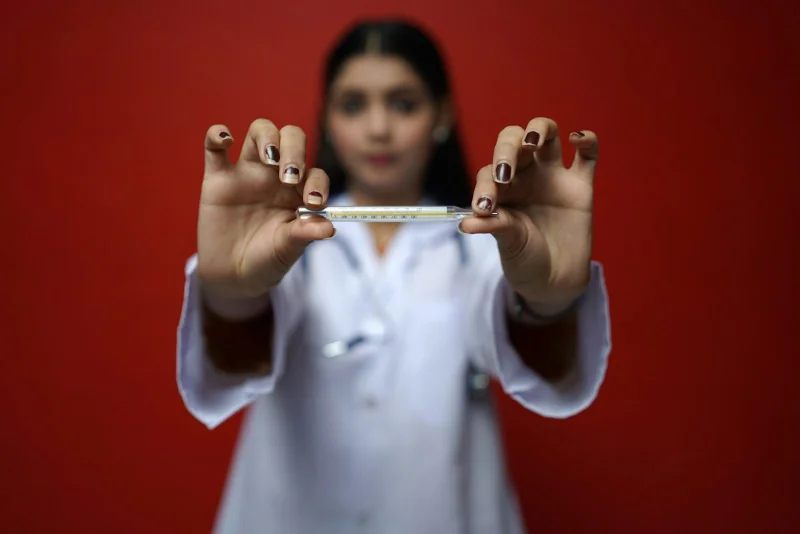
- Basal body temperature (BBT): measured immediately on waking, reveals ovulation timing (temperature rise confirms ovulation has occurred)
- Cervical mucus: texture changes through the cycle indicate estrogen levels and approaching ovulation
How to use the Period Calculator on sadiqbd.com
- Enter your last period start date
- Enter your average cycle length — if unsure, use 28 days initially and update as you track
- Enter your average period duration
- Read the predictions — next several period dates, ovulation estimate, fertile window
The fertile window and ovulation prediction are estimates based on average cycle patterns. For contraception or conception planning, combine calculator predictions with BBT tracking and/or LH surge testing strips for confirmation.
Frequently Asked Questions
How many cycles should I track before the predictions are reliable? Three to six cycles give a meaningful picture of your personal average and variation. A single cycle observation is too noisy for reliable prediction.
Is it normal for cycles to vary between months? Yes — variation of up to 7–9 days between cycles is within the normal range. Variation greater than this consistently, or sudden changes from an established pattern, are worth discussing with a GP.
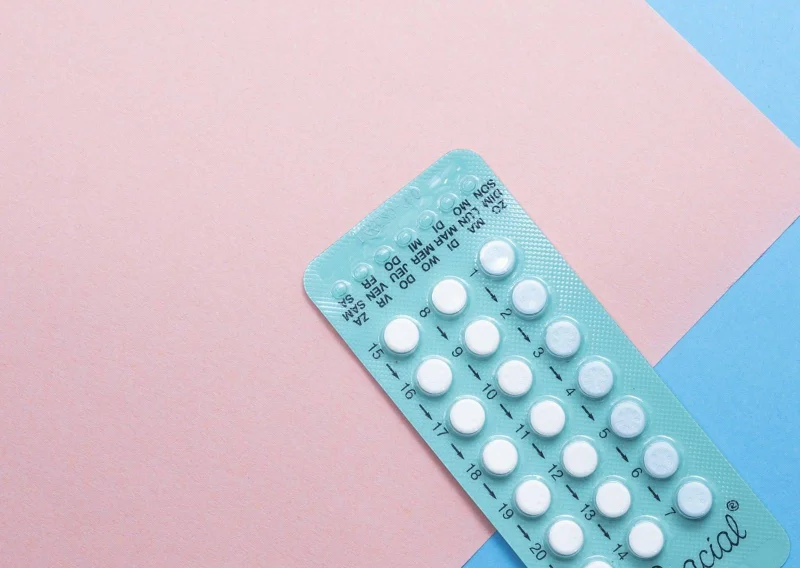
Can I use the Period Calculator for contraception? Cycle calculators identify the statistically likely fertile window, but they're not a validated contraception method on their own. The fertility awareness method (FAM) using multiple fertility signals (BBT + cervical mucus + LH testing) has a lower failure rate when used consistently, but still higher than barrier or hormonal methods. Consult a healthcare provider for contraception guidance.
Is the Period Calculator free? Yes — completely free, no sign-up required.
The menstrual cycle is one of the most information-dense regular biological events in the body. Tracking it consistently reveals patterns that reflect overall health — stress, nutrition, thyroid function, and reproductive hormonal status — long before symptoms prompt a GP visit.
Try the Period Calculator free at sadiqbd.com — predict your next period, ovulation, and fertile window from your cycle history.