Fertility awareness is older than hormonal contraception — and modern evidence-based methods are more effective than most people assume
The rhythm method has a deserved reputation for unreliability. Studies on calendar-based approaches (where the fertile window is estimated from past cycle lengths alone) show failure rates of 14–47 per 100 women per year with typical use. But modern fertility awareness-based methods (FAMs) are substantially different — they use multiple biomarkers simultaneously and, when taught and used correctly, achieve effectiveness rates comparable to some hormonal methods.
Understanding the difference matters both for people seeking contraception without hormones and for people trying to conceive.
How modern FAMs differ from the calendar method
The calendar method (Ogino-Knaus method, 1930s): predicts the fertile window based solely on past cycle lengths. Assumes ovulation occurs 14 days before menstruation and that cycles will follow historical patterns. Problems: ovulation timing varies significantly between cycles even in regular cycles; illness, stress, and travel can shift ovulation unpredictably; the calendar only predicts based on past data.
The cervical mucus method (Billings method): observes daily cervical mucus to identify the fertile window. Mucus changes characteristically through the cycle — from none or sticky/dry after menstruation to increasingly clear, slippery, and stretchy (resembling egg whites) around ovulation, then returning to sticky/dry. Peak mucus = highest fertility. No ovulation = no stretchy mucus. Effectiveness with correct use: 97–99% per year.
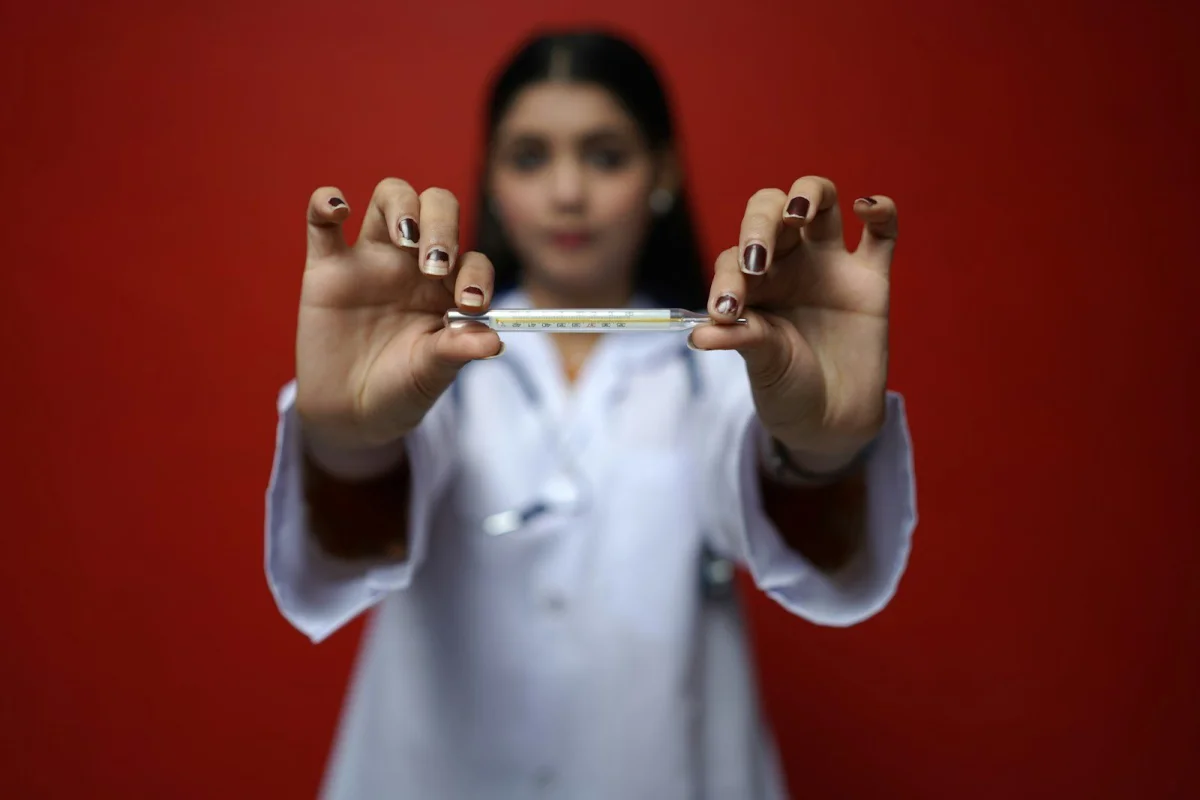
The basal body temperature (BBT) method: measures temperature first thing each morning. After ovulation, progesterone causes a sustained temperature rise of 0.2–0.5°C (the thermal shift) that persists until the next menstruation. BBT confirms that ovulation has occurred — useful for pregnancy planning, less useful alone for avoiding conception (since temperature rises after ovulation, which is already too late to avoid the most fertile time).
The symptothermal method (STM): combines cervical mucus observation with BBT temperature tracking. The double-check system makes it more reliable than either method alone. When both markers are correctly interpreted and conservative rules applied, the Pearl Index (failures per 100 women per year with perfect use) is approximately 0.4–1.8 — comparable to hormonal methods.
The effectiveness hierarchy in contraception
Contraceptive effectiveness is typically measured in two ways:
- Perfect use: method used correctly every time according to instructions
- Typical use: includes human error, inconsistent use, and method failure
| Method | Perfect use failure rate | Typical use failure rate |
|---|---|---|
| Copper IUD (Paragard) | 0.6% | 0.8% |
| Hormonal IUD (Mirena) | 0.1–0.2% | 0.1–0.2% |
| Implant (Nexplanon) | 0.05% | 0.05% |
| Combined pill | 0.3% | 7–9% |
| Progestin-only pill | 0.3% | 7–9% |
| Condom (male) | 2% | 13–18% |
| STM (with correct instruction) | 0.4–2% | 10–20% |
| Calendar method alone | ~5% | 14–47% |
| No method | 85% | 85% |
The large gap between perfect and typical use for STM reflects the instruction, consistency, and interpretation requirement. Methods that are less user-dependent (IUDs, implants) have smaller gaps between perfect and typical use.
Natural Cycles: the digital fertility monitor
Natural Cycles is an algorithm-based contraceptive app that received FDA clearance in 2018 and CE marking in Europe. It's the first digital contraceptive to receive regulatory approval as a contraceptive device (not just a wellness app).
The app uses BBT measurements (and optionally LH test strips) to determine daily fertility status (green/red days). The algorithm learns the user's individual cycle patterns over time.
Published effectiveness data (Pearl Index):
- Perfect use: approximately 1.8 failures per 100 women per year
- Typical use (including user non-compliance and algorithm errors): approximately 6.5–9 per 100 women per year
Independent analysis has found higher typical use failure rates in real-world use than in the company-funded studies. The app is effective for women with regular cycles who are highly motivated and consistent in measurement. It is less appropriate for women with very irregular cycles, shift workers with inconsistent sleep schedules (which affects BBT), or those who cannot commit to daily measurement.
Cycle tracking for conception
The same cycle tracking principles that inform contraception also inform conception timing:
Fertile window: an egg is viable for 12–24 hours after ovulation. Sperm can survive 3–5 days in favourable cervical mucus. The fertile window therefore spans approximately 5–6 days before ovulation to 1 day after.
LH testing: urine-based LH (luteinising hormone) surge tests detect the hormone surge that triggers ovulation 24–36 hours before it occurs. Provides a more precise fertile window than mucus observation alone. OPK strips detect the LH peak; positive strip = ovulation expected within 24–36 hours.
BBT + LH + mucus combination: the most information-dense approach for conception. LH surge identifies the approaching peak fertility; mucus confirms favourable cervical environment; BBT confirms ovulation occurred (temperature rise appears 24–48 hours after ovulation).
The copper IUD as emergency contraception
The copper IUD (Paragard) is the most effective emergency contraceptive available — over 99% effective if inserted within 5 days of unprotected intercourse, substantially more effective than levonorgestrel (Plan B) or ulipristal acetate (Ella) pills.
It then continues providing highly effective ongoing contraception for up to 10–12 years.
How to use the Period Calculator on sadiqbd.com
- Enter last period start date and average cycle length
- Read the fertile window estimate — approximate days when conception is most likely
- Note the limitations: the calculator estimates based on average ovulation timing; actual ovulation timing varies and is more accurately detected by mucus observation, LH testing, or BBT tracking
For contraceptive purposes: the calculator's fertile window is an estimate, not a precise prescription. FAMs used for contraception require proper instruction from a trained practitioner or certified app.
Frequently Asked Questions
Is fertility awareness-based contraception suitable for everyone? FAMs work best for people with relatively regular cycles (21–35 days consistently), who can commit to daily observation/measurement, and for whom a pregnancy, while unintended, would not be catastrophic if the method failed. They require more ongoing engagement than set-and-forget methods (IUDs, implants) and have higher typical use failure rates.
Can cycle tracking apps tell me when I'll ovulate? Most consumer period tracking apps predict ovulation based on cycle length averages — essentially a digital calendar method. This is substantially less accurate than real-time biomarker tracking (mucus + temperature). For family planning, treat predicted ovulation dates as estimates requiring confirmation from actual biomarkers.
Is the Period Calculator free? Yes — completely free, no sign-up required.
Modern fertility awareness methods, properly taught and consistently used, achieve effectiveness rates that make them a genuine contraceptive option — not the unreliable calendar method of previous generations.
Try the Period Calculator free at sadiqbd.com — predict your next period, fertile window, and estimated ovulation from your cycle history.