Tola, tael, and grain — the traditional weight units used in South Asian, East Asian, and historical European contexts — are not merely curiosities but are still actively used in gold and silver markets, pharmacology, and legal metrology, and understanding their persistence reveals how weight standards become embedded in commercial practice long after they're officially superseded
Most weight unit systems look like simple historical accidents from the outside — the pound exists because of a Roman unit that got corrupted by Anglo-Saxon usage and standardised inconsistently across England for centuries. But each unit's survival or disappearance reveals something about the commercial, pharmaceutical, or agricultural practice it was optimised for. Some units persist not from inertia but because they're genuinely better suited to their specific domain.
Tola: India's gold standard that metric never replaced
The tola (also spelled tole) was the traditional unit for weighing gold and silver across the Indian subcontinent, derived from the weight of a silver rupee coin:
One tola = 11.6638038 grams (exact metric equivalent, fixed when India metricated)
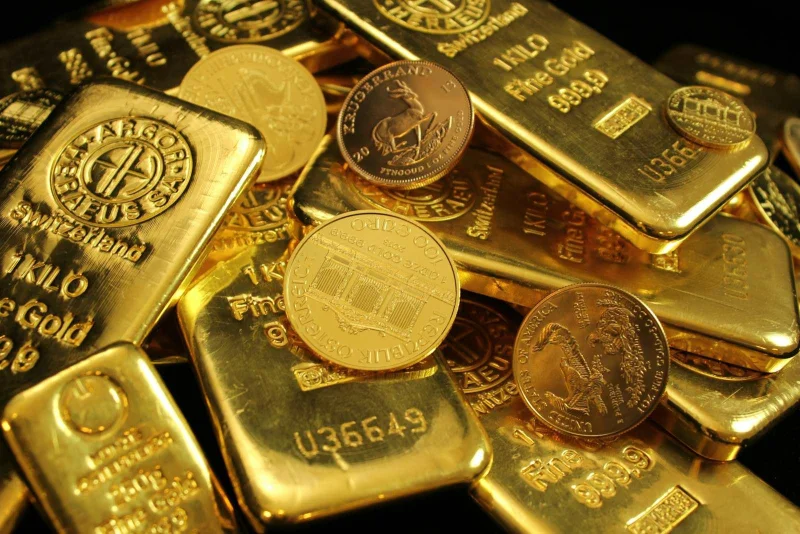
Why tola persists in precious metal markets: the Indian retail gold market — the world's second largest consumer of gold — continues to price and sell gold by the tola despite official metrication. A 10-gram gold bar sells alongside a 1-tola (11.664g) gold bar in Indian jewellery shops. The Dubai and Gulf gold markets similarly price gold in tola because of the large South Asian diaspora in the region.
Tola-based gold pricing: when gold is at $2,000 per troy ounce, the tola price is approximately $750 (since 1 troy ounce = 31.1034768g, and 1 tola = 11.6638g: $2,000 × 11.6638/31.1034 ≈ $750).
The tola in Pakistan and Bangladesh: officially superseded by metric units but still used colloquially in property measurement (the tola was historically used for small quantities of farmland in Bengal) and in traditional jewellery markets.
Grain: the smallest traditional weight unit that survived into modern pharmacy
The grain — originally calibrated against a grain of barley — is one of the oldest standardised weight units in continuous use:
One grain = 64.7989 mg (exactly 0.06479891 grams)
Where grain persists today:
Pharmaceutical dosing: aspirin is commonly sold as "325 mg" but is historically described as "5 grains" — 5 × 64.8 mg = 324 mg. Many traditional drug doses are expressed in grains in older formularies, and pharmacists still occasionally encounter grain-based prescriptions.
Ammunition (ballistics): bullet weight is universally expressed in grains in the ballistics community, regardless of metric use in other contexts. A "55 grain" .223 rifle bullet weighs 55 × 0.0648g = 3.56g. Powder charges are also in grains.
Archery: arrow weight and shaft specifications use grains per inch (GPI).
Gold and precious metals: the grain is used in very small precious metal weights (less commonly than troy ounces or grams but still present in some specialist contexts).
Troy vs avoirdupois: the coexisting weight systems
Two different pound definitions coexist in English-speaking markets:
Avoirdupois pound (the "common" pound): 453.592 grams. Used for everyday weighing — body weight, food, postal packages, bulk commodities.
Troy pound: 373.242 grams. Used for precious metals and gemstones.
The difference: an avoirdupois pound is heavier than a troy pound, but a troy ounce is heavier than an avoirdupois ounce:
- Avoirdupois ounce: 28.3495g (16 to the avoirdupois pound)
- Troy ounce: 31.1035g (12 to the troy pound)
Why this matters practically: when a financial newscaster says "gold is at $2,000 per ounce," that ounce is a troy ounce (31.1g), not the avoirdupois ounce (28.3g) you'd use to weigh flour. The 10% size difference creates a significant misunderstanding for people not familiar with the distinction.
The troy pennyweight: 1/20 of a troy ounce = 1.555 grams. Used by jewellers for small gold measurements. A "10 pennyweight" gold chain weighs 15.55 grams.
Stone: the UK unit that never metricated in practice
The stone (14 avoirdupois pounds = 6.35029 kg) remains the primary unit for expressing human body weight in everyday British usage — despite official UK metrication policy, NHS weight charts displaying both, and generations of school children taught metric.
Why stone persists for body weight:
- The range of human body weights produces "comfortable" numbers in stone (8 stone to 20 stone) compared to kilograms (51 kg to 127 kg) — the stone range is more intuitive to many British people
- A doctor saying "you should lose about half a stone" conveys a concrete, moderate goal better than "you should lose about 3.2 kilograms"
- The cultural embedding runs across all age groups, not just older generations
The NHS and clinical context: UK clinical medicine uses kilograms for drug dosing calculations, BMI calculation, and clinical records (because medication doses are calculated in mg/kg, and no one calculates in mg/stone). But when clinicians discuss weight goals with patients, stone is typically used to aid comprehension.
The unit dual-literacy in the UK: most British adults can interpret both "85 kg" and "13 stone 5 lbs" — one of the few countries where true unit bilingualism in a practical sense is common.
Metric tonne vs short ton vs long ton: the three tonnes nobody can keep straight
Three "ton" units exist simultaneously:
Metric tonne (tonne): 1,000 kg = 2,204.62 lb. The SI unit, used internationally, in science, and in shipping.
Short ton (US ton): 2,000 lb = 907.185 kg. Standard in the US for bulk commodities, construction, waste, and many industrial contexts.
Long ton (imperial ton): 2,240 lb = 1,016.05 kg. Historical UK standard, still used in some naval contexts (displacement tonnage of ships uses long tons in some historical and UK Royal Navy contexts).
Why the confusion matters: US natural resources reports cite coal, steel, and agricultural production in short tons. International trade statistics often use metric tonnes. A "2 million ton" figure in one report and a "2 million tonne" figure in another — with no context — may be describing quantities that differ by 10%.
The ambiguity in common usage: in everyday US speech, "ton" almost always means short ton. In international scientific and trade contexts, "tonne" (with the 'e') signals metric. In the UK, "tonne" has largely replaced "ton" in professional contexts.
How to use the Weight Converter on sadiqbd.com
- For precious metal calculations: convert between troy ounces (financial market prices), grams (international scale), and tola (Indian and Gulf market) — verifying that the same physical quantity of gold is being compared across different market price quotes
- For pharmaceutical contexts: convert between grains (older prescription formats or US pharmacy) and milligrams (SI units) — 1 grain = 64.8 mg, 5 grains = 324 mg (approximately the standard 325 mg aspirin tablet)
- For international trade: explicitly confirm whether a "ton" figure is short ton (US, 907 kg), metric tonne (1,000 kg), or long ton (UK, 1,016 kg) before converting — and use the converter to show how significantly the three definitions differ for the same commodity quantity
Frequently Asked Questions
Why hasn't the UK fully replaced stone with kilograms for body weight, despite metrication in almost every other context? Because body weight in stone was embedded in daily life for generations before any metrication effort, and the cultural inertia of how people think about their own weight is extraordinarily resistant to top-down standardisation. The UK's metrication process was largely voluntary for consumer goods and progressive rather than mandated in everyday speech. Officialdom (the NHS, schools, official documentation) uses kilograms, but private individuals express their own weight in stone — a private measurement that was never subject to any external enforcement. This mirrors the US situation with temperature: Fahrenheit remains the everyday unit for weather and personal experience despite Celsius being internationally standard, because that's how generations of Americans have internalised what "cold" and "hot" feel like numerically. Changing a deeply personal measurement requires the next generation to grow up without the old unit — which in both cases is happening slowly.
Is the Weight Converter free? Yes — completely free, no sign-up required.
Try the Weight Converter free at sadiqbd.com — convert between kilograms, pounds, ounces, stone, metric tonnes, troy ounces, tola, grain, and more.