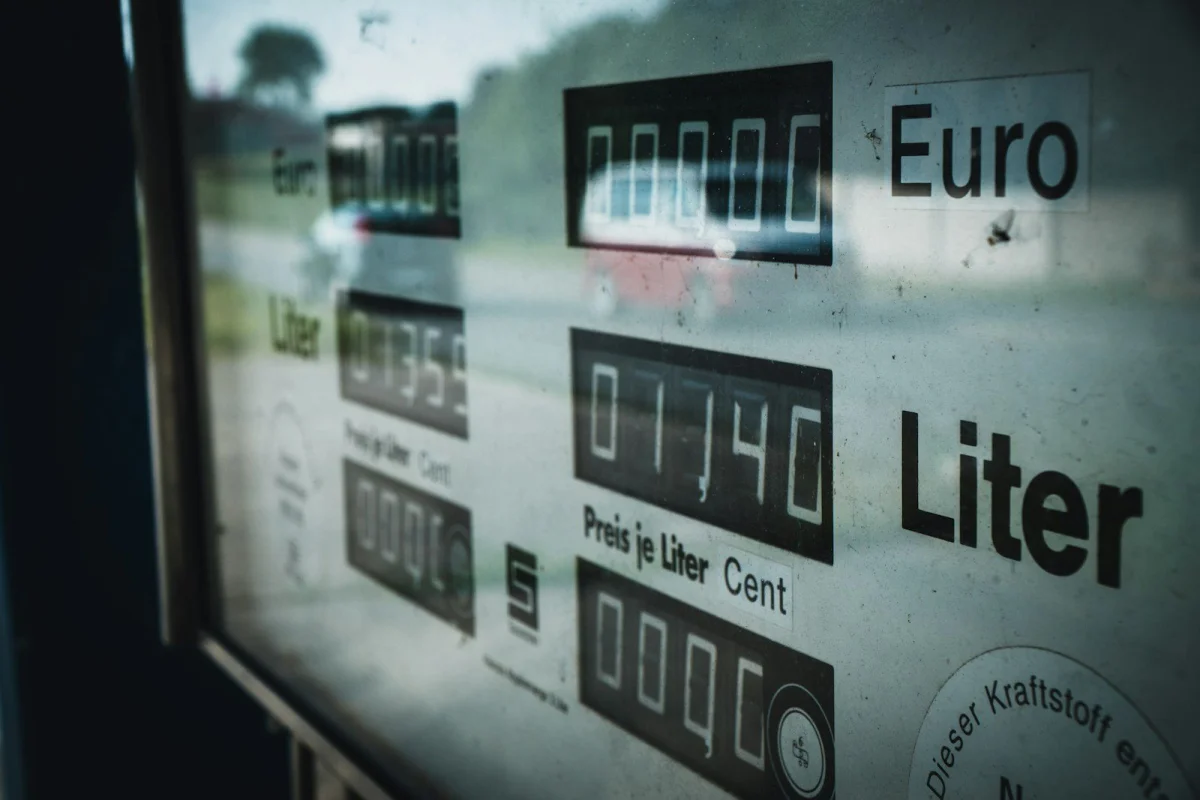
The fuel efficiency number on a car spec sheet is almost never what you'll actually get
Every car manufacturer tests fuel consumption under controlled laboratory conditions — specific speed cycles, stable temperature, no air conditioning, no passengers, optimal tyre pressure. The resulting figure looks good on a brochure. Real-world driving — traffic, hills, AC blasting, full car — typically uses 15–30% more fuel.
Understanding fuel economy units is the first step to comparing honestly. Converting between MPG, L/100km, and km/L correctly reveals whether the car you're evaluating is actually efficient — and whether the competing model being quoted in different units is better or worse.
Three Ways to Express the Same Thing
Fuel economy measures how far a vehicle travels on a given amount of fuel. Three measurement systems dominate:
L/100km (litres per 100 kilometres) Used in Europe, Australia, Canada, and most metric countries. Lower is better — fewer litres burned per 100km driven.
km/L (kilometres per litre) Used in South Asia, Japan, and Latin America. Higher is better — more distance per litre.
MPG (miles per gallon) Used in the US (US MPG) and UK (Imperial MPG). Higher is better. The catch: US and UK gallons differ significantly.
- US gallon = 3.785 litres
- UK (Imperial) gallon = 4.546 litres
A car rated at 40 UK MPG and 40 US MPG are NOT equally efficient. The UK car is about 20% more fuel-efficient.
The Conversion Relationships
km/L to L/100km: L/100km = 100 ÷ km/L L/100km to km/L: km/L = 100 ÷ L/100km US MPG to L/100km: L/100km = 235.21 ÷ MPG L/100km to US MPG: MPG = 235.21 ÷ L/100km km/L to US MPG: MPG = km/L × 2.352 UK MPG to US MPG: US MPG = UK MPG × 0.8327
How to Use the Fuel Economy Converter on sadiqbd.com
- Enter the fuel economy value
- Select the source unit — L/100km, km/L, US MPG, or UK MPG
- Read the equivalent values — all units displayed simultaneously
Comparing Cars Across Markets
Japanese vs. European efficiency comparison
Car A (Japanese spec): 18 km/L Car B (German spec): 5.8 L/100km
Converting both to km/L:
- Car A: 18 km/L
- Car B: 100 ÷ 5.8 = 17.24 km/L
Car A is slightly more efficient. Without the conversion, comparing 18 km/L to 5.8 L/100km is impossible intuitively.
US spec sheet on a Bangladesh market purchase
An American SUV review quotes 28 MPG highway. Bangladesh roads, city driving, heavy traffic?
28 US MPG = 100 ÷ (235.21 ÷ 28) = 100 ÷ 8.4 = 11.9 km/L (highway, US conditions)
Real-world in Dhaka city traffic: expect 25–35% worse → approximately 8–9 km/L city.
Annual fuel cost calculation
Your current car does 12 km/L. You drive 20,000 km/year. CNG at ৳43/litre equivalent, petrol at ৳125/litre.
Petrol cost: (20,000 ÷ 12) × 125 = 1,667 litres × ৳125 = ৳2,08,375/year
A new car does 18 km/L on the same fuel: (20,000 ÷ 18) × 125 = 1,111 litres × ৳125 = ৳1,38,875/year
Annual saving: ৳69,500. Over 5 years: ৳3,47,500. That's the fuel cost justification for a more efficient car.
Why Real-World Fuel Economy Differs from Rated Figures
Stop-and-go traffic: Engines burn fuel while stationary and accelerate from zero repeatedly. City driving in Dhaka can cut efficiency by 30–40% compared to highway figures.
Air conditioning: A car's AC system draws 3–5 kW of engine power. In tropical climates where AC runs constantly, this is a significant ongoing load. Factor in 10–15% extra fuel use.
Load: Every extra 100kg of weight costs approximately 3–5% more fuel. A full car uses noticeably more than a solo driver.
Driving style: Aggressive acceleration and late braking can increase fuel consumption by 20–40% compared to smooth, anticipatory driving.
Tyre pressure: Under-inflated tyres increase rolling resistance. Maintaining correct pressure (check the door sticker, not the max on the tyre sidewall) improves fuel economy 0.5–3%.
The True Cost of Fuel Efficiency
When comparing vehicles, efficiency matters primarily as a long-term running cost. A useful calculation: how many years until the fuel savings justify a price premium?
Car A: ৳22,00,000, 14 km/L Car B: ৳26,00,000, 19 km/L
Annual driving: 15,000 km, petrol at ৳125/litre
Car A annual fuel: (15,000 ÷ 14) × 125 = ৳1,33,929 Car B annual fuel: (15,000 ÷ 19) × 125 = ৳98,684 Annual saving: ৳35,245 Price premium: ৳4,00,000 Payback period: ৳4,00,000 ÷ ৳35,245 = 11.4 years
The efficiency premium pays back in about 11 years — reasonable for a car you'll keep 15+ years, marginal if you trade every 5.
Frequently Asked Questions
Why is UK MPG always higher than US MPG for the same car? Because the UK gallon (4.546L) is larger than the US gallon (3.785L). More litres per "gallon" means the car travels more miles per gallon even though the actual fuel consumption rate is identical. 40 UK MPG = 33.3 US MPG.
What's a good fuel economy for a car in Bangladesh? For city driving in Dhaka, 10–14 km/L for petrol cars is typical. Hybrid vehicles achieve 18–22 km/L city. CNG conversions vary but typically achieve 12–16 km/cubic metre equivalent. Over 14 km/L on petrol in city conditions is considered efficient.
Is the fuel economy converter free? Yes — completely free, no sign-up required.
Fuel economy comparisons only make sense when everything is in the same unit. The converter makes every spec sheet comparable in seconds — revealing whether the "efficient" car in a different market's units is actually more efficient than what you're currently driving.
Try the Fuel Economy Converter free at sadiqbd.com — convert between km/L, L/100km, and MPG instantly.