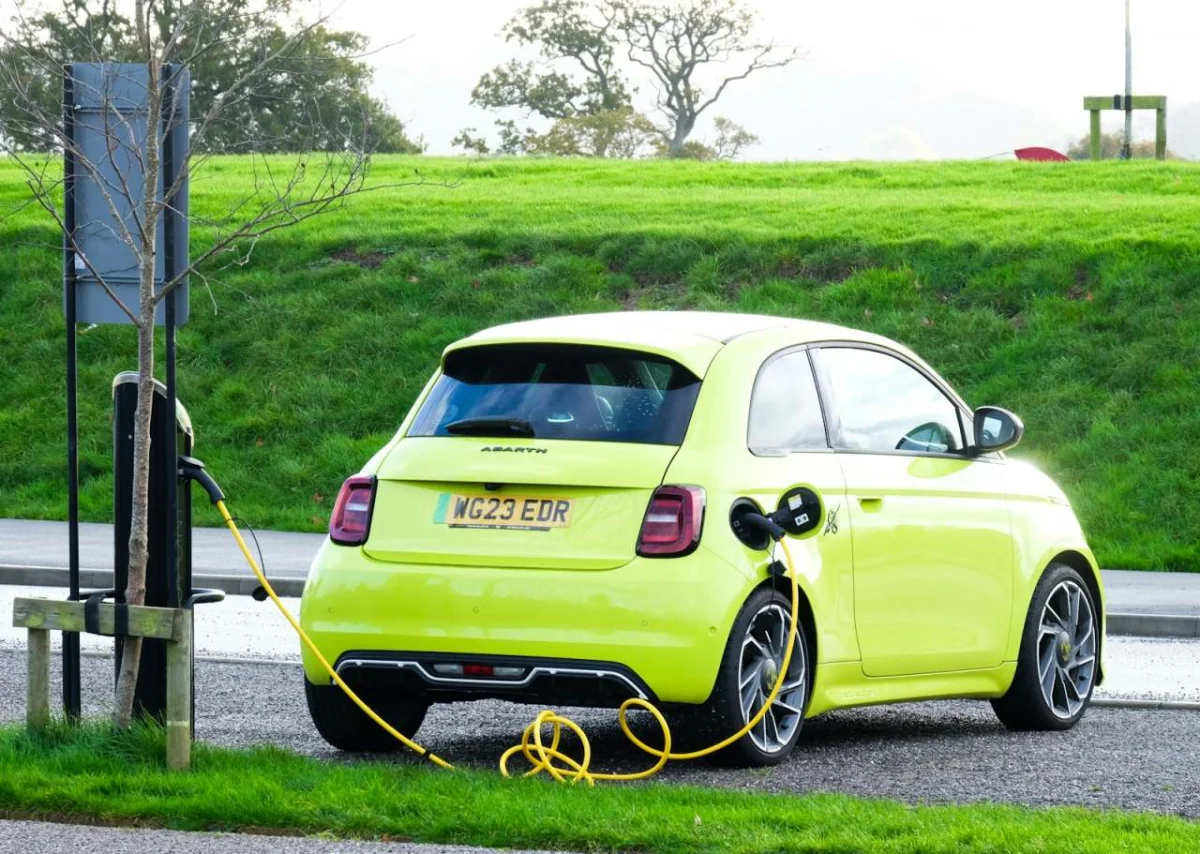
Electric vehicles measure efficiency differently — and the numbers reveal something petrol cars hide
A petrol car is measured in miles per gallon (MPG) or litres per 100km. An EV is measured in miles per kWh or kWh per 100km. The units are different because the energy sources are fundamentally different — and understanding the conversion reveals exactly how much cheaper it is to run an electric vehicle on electricity versus a petrol vehicle on fuel.
EV efficiency metrics
Miles per kWh (mi/kWh): how many miles the vehicle travels per kilowatt-hour of battery energy. Higher is better. Typical range: 3–5 mi/kWh for real-world driving.
kWh per 100km (kWh/100km): how many kilowatt-hours the vehicle consumes per 100km. Lower is better. Typical range: 14–25 kWh/100km.
These are inverse measures of the same thing:
- 4 mi/kWh = 100 ÷ (4 × 1.609) = 15.5 kWh/100km
Example EVs and their efficiency:
| Vehicle | Claimed efficiency | Real-world estimate |
|---|---|---|
| Tesla Model 3 (Long Range) | 19 kWh/100km | 21–24 kWh/100km |
| Volkswagen ID.4 | 22 kWh/100km | 24–28 kWh/100km |
| BMW iX3 | 19.5 kWh/100km | 22–26 kWh/100km |
| Nissan Leaf (40 kWh) | 17 kWh/100km | 18–22 kWh/100km |
| Renault Zoe | 17.7 kWh/100km | 18–23 kWh/100km |
Real-world consumption is higher than claimed due to heating/cooling, higher speeds, and winter battery efficiency losses.
Converting EV running costs to petrol equivalents
To compare apples to apples, convert EV energy consumption to an equivalent fuel consumption:
Petrol energy content: approximately 9.7 kWh per litre (varies slightly by blend).
EV equivalent L/100km = EV kWh/100km ÷ 9.7
For a Tesla Model 3 at 22 kWh/100km: 22 ÷ 9.7 = 2.3 L/100km equivalent
Compare that to a typical petrol sedan at 7–8 L/100km. The EV is roughly 3× more energy-efficient. But "energy-efficient" and "cheaper to run" aren't the same thing — you need to account for the price of the energy.
The real cost comparison: electricity vs. petrol
Home charging scenario (UK):
- Electricity: £0.25/kWh
- EV at 22 kWh/100km: £5.50 per 100km
- Petrol car at 7.5 L/100km at £1.55/litre: £11.63 per 100km
- EV saving: £6.13 per 100km (53% cheaper)
Home charging scenario (US, average):
- Electricity: $0.14/kWh
- EV at 22 kWh/100km (13.7 kWh/62mi): $3.08 per 100km
- Petrol car at 7.5 L/100km (31 MPG) at $3.50/gallon: $5.67 per 100km
- EV saving: $2.59 per 100km (46% cheaper)
Public fast charging (DC fast charger, UK):
- Typical rapid charging rate: £0.65–0.80/kWh
- EV at 22 kWh/100km: £14.30–17.60 per 100km
- This is comparable to or more expensive than petrol
The implication: the economics of EV ownership depend heavily on home charging access. Drivers who charge at home benefit from the full cost advantage. Drivers relying primarily on public fast chargers may see limited savings or even higher fuel costs than petrol.
Range anxiety and real-world range
Advertised EV range is measured under standardised test conditions (WLTP in Europe, EPA in the US). Real-world range is typically 15–25% less than advertised:
Factors that reduce range:
- Temperature: battery chemistry is less efficient in cold weather. A 400km WLTP range car might achieve 280–320km in winter.
- Speed: aerodynamic drag scales with the square of speed. Motorway driving at 130 km/h uses significantly more energy per km than city driving.
- Climate control: heating an EV cabin in winter can consume 3–5 kWh/hour — roughly 20–30% of a vehicle's total energy budget.
- Payload and cargo: additional weight increases energy consumption proportionally.
Practical charging strategy: charge to 80% for daily use (battery management), 100% before long trips. Plan charging stops at DC fast chargers during long journeys at roughly 20–30 minute intervals.
Efficiency of the full energy chain
A fair comparison between EVs and petrol cars considers the full energy chain, not just at the tank or battery:
Petrol car efficiency chain:
- Oil extraction and refining: ~85% efficient
- Fuel transport and distribution: ~97% efficient
- Internal combustion engine: ~20–40% efficient (most energy lost as heat)
- Overall: ~17–33% of crude oil energy reaches the wheels
EV efficiency chain:
- Power plant (gas): ~50–60% efficient; renewable: near 100%
- Grid transmission: ~94% efficient
- Home charger: ~92–95% efficient
- Battery charging: ~92–95% efficient
- EV drivetrain: ~85–90% efficient
- Overall (gas power): ~35–45%; Overall (renewable): ~75–85%
Even when EVs are charged from natural gas power plants, they typically outperform petrol cars in total energy efficiency. Charged from renewables, the advantage is larger.
How to use the Fuel Economy Converter on sadiqbd.com
- Enter your vehicle's fuel consumption — in MPG (US), MPG (UK), L/100km, or km/L
- Convert — see the equivalent in all fuel economy units
- Compare across standards — UK MPG and US MPG measure the same thing in different gallon sizes (US gallon = 3.785L; UK/Imperial gallon = 4.546L), so a car showing 40 MPG (US) is only 33 MPG (UK)
Frequently Asked Questions
Why are US MPG figures lower than UK MPG for the same car? A US gallon is 3.785 litres; a UK (imperial) gallon is 4.546 litres. A car consuming 7.5 L/100km achieves 37.6 MPG (UK) and 31.4 MPG (US). Always check which standard a fuel economy figure uses.
Is EV efficiency measured differently in winter? Official WLTP testing is conducted at 23°C. Some manufacturers also publish cold weather range estimates (0°C or -7°C). The difference can be 20–40% in extreme cold. Check both figures when evaluating range in your climate.
Is the Fuel Economy Converter free? Yes — completely free, no sign-up required.
Understanding EV efficiency metrics opens the honest comparison between electric and petrol running costs. The numbers favour EVs significantly for home chargers — and that advantage grows as electricity tariffs fall with renewable expansion.
Try the Fuel Economy Converter free at sadiqbd.com — convert between MPG, L/100km, km/L, and kWh/100km instantly.