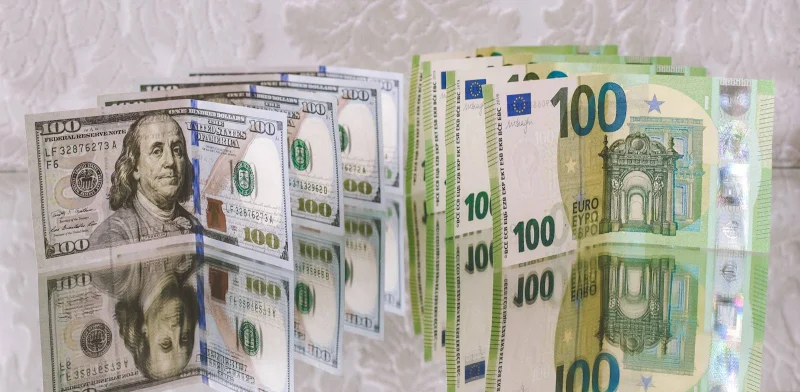
The exchange rate that news sites show — "USD/EUR: 0.92" — is the interbank rate, traded in volumes of millions at a time between major banks. A traveller converting $500 at an airport kiosk and a small business buying €10,000 forward are both working with derivatives of this rate, but the actual rates they pay bear little resemblance to what the news displays
The previous articles on this site covered the mid-market rate and spreads, currency risk and forward contracts, international remittances, and purchasing power parity. This article addresses how different currency exchange contexts produce different effective rates — and why the same interbank rate underlies dramatically different prices depending on the transaction type, volume, and provider.
The interbank market: where the "real" rate exists
The foreign exchange (forex) market is the largest financial market in the world by trading volume — approximately $7 trillion per day in 2022. The interbank market is the wholesale tier: major commercial banks, central banks, and large financial institutions trading currencies directly with each other in very large volumes (typically $1 million minimum transaction).
The "interbank rate" is the rate at which these large institutions trade with each other — it's what financial data providers (Bloomberg, Reuters) publish and what news sites show when displaying "the exchange rate."
Critically, this rate is not available to retail customers. It's the wholesale price at which banks trade with each other — the equivalent of the factory-gate price before retail markup. Retail customers, businesses, and even most smaller financial institutions pay derivative rates based on this, with markup layers applied.
The markup chain: from interbank to retail
A €/£ exchange rate might be 0.85 interbank (banks buy £0.85 per €1 from each other). Here's what different transaction types pay:
Interbank: 0.85 (available to banks, major institutions only)
Currency broker (specialist FX company): 0.8490-0.8498 — a spread of approximately 0.1-0.2%. These companies (Wise, OFX, etc.) operate on thin margins and pass a near-market rate to clients. For a €10,000 transfer, the cost vs mid-market rate is approximately €10-20.
High street bank transfer: 0.83-0.84 — a spread of 1-2%. For €10,000, the premium over mid-market is €100-200 — 10-20× the specialist broker cost.
Travel money/cash exchange (city centre bureau): 0.82-0.84 — varying with provider and location. Online pre-order travel money from major travel money providers is typically better than in-branch.
Airport bureau de change: 0.78-0.82 — the worst rates available, typically 3-7% below mid-market. A £500 exchange at an airport might cost £20-35 more than using a specialist broker.
Hotel/destination exchange: comparable to or worse than airport rates — convenience premium at its maximum.
Why the gap exists: liquidity, risk, and cost
The markup from interbank to retail rates exists for three reasons:
Market-making risk: the bank/provider offering you a rate doesn't know when you'll transact. They need to hold the currency between when they set the rate and when they execute — during which time the market rate may move against them. Wider spreads compensate for this risk.
Transaction costs: processing a €200 exchange has nearly the same fixed cost (compliance, systems, staff) as processing a €20,000 exchange. The percentage spread on small transactions is higher partly to cover these fixed costs.
Profit margin: currency exchange is a revenue source for banks and providers — the spread is the product revenue.
The factors that compress the spread: larger transaction volume (less fixed cost as a percentage), established relationship with the provider, simpler currencies (major pairs have tighter markets than exotic pairs), and competitive provider environment.
Forward contracts: locking a rate for the future
The previous article on currency risk covered forward contracts — agreements to exchange currency at a specified rate on a future date. Forward rates are derived from the current spot rate (the interbank rate) adjusted for the interest rate differential between the two currencies (covered interest rate parity).
A forward rate is not a prediction of where the exchange rate will be. It's a calculated rate based on the cost of "carrying" each currency — holding pounds and paying UK interest rates vs holding euros and earning ECB rates. If UK rates are higher than EU rates, the pound will trade at a forward discount (you'll receive fewer pounds per euro in the forward rate than in the spot rate) because you'd be giving up higher pound interest by holding euros instead.
The forward rate calculation:
Forward Rate = Spot Rate × (1 + domestic interest rate) / (1 + foreign interest rate)
This is a mathematical relationship, not a forecast — if it weren't true, arbitrage would immediately correct it.
Currency futures and options: the financial product layer
Beyond spot and forward transactions, currency risk can be managed through futures (standardized forward contracts traded on exchanges) and options (the right, not obligation, to exchange at a specified rate).
Currency options are particularly relevant for businesses with currency exposure: a company receiving payment in USD in 3 months can buy a put option — the right to sell USD at a specified minimum rate. If the rate improves, the company benefits from the better rate; if it falls, the option guarantees the floor. The option has a premium cost (like insurance), which is the tradeoff against the unlimited downside protection of a forward.
For most small businesses and individuals, the practical choice is between spot exchange (now) and forward contract (locking a future rate) — options and futures are the domain of larger organizations with more complex currency risk profiles.
How to use the Currency Exchange Calculator on sadiqbd.com
- Use the displayed rate as a reference mid-market rate — recognize that actual transaction rates will always deviate from this, with the deviation depending on transaction type and provider
- Compare the tool's rate against your actual transaction: the difference is your effective spread — useful for comparing different providers on the same day for the same currency pair
- For forward rate estimation: the calculator's current rate provides the spot rate input; forward rate calculation requires adding the interest rate differential, which requires knowledge of current risk-free rates in both currencies
Frequently Asked Questions
Why does the rate on the calculator sometimes differ from what my bank shows in real-time? Currency rates update continuously — the forex market operates 24 hours/weekday, and rates shift constantly based on trading flow. The rate displayed by any calculator reflects its data source's last refresh, which may be slightly lagged from real-time. For small transactions (travel money amounts), this lag doesn't materially affect outcomes — the spread you'll pay is likely larger than the rate movement between the calculator's quote and when you transact. For large transactions (significant business FX), real-time rates matter, and specialist FX brokers provide live dealing rates rather than calculator-level estimates.
Is the Currency Exchange Calculator free? Yes — completely free, no sign-up required.
Try the Currency Exchange Calculator free at sadiqbd.com — convert between currencies at current mid-market rates instantly.