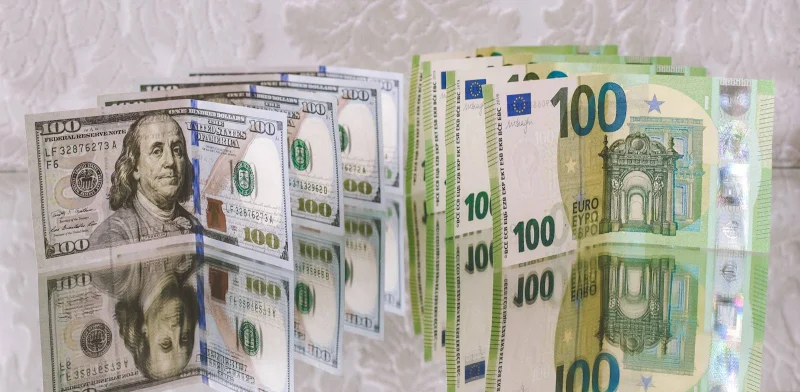
The foreign exchange market trades approximately $7.5 trillion per day, making it by far the largest financial market in the world — yet most individual exchangers participate at the least favourable end of the market, paying spreads and fees that professional traders would consider unacceptably wide
The previous articles on this site covered mid-market rates and the spread, currency risk and forward contracts, international remittances, purchasing power parity, and why the news rate differs from the rate you get. This article addresses the mechanics of currency exchange pricing — specifically how exchange rates are set, what the components of exchange costs are, and how to evaluate any currency exchange option against the actual market rate.
How the interbank rate is formed
The "true" exchange rate that most people refer to as "the exchange rate" is the interbank rate — the rate at which large banks and financial institutions trade currencies with each other. This rate:
- Changes continuously, 24 hours a day, 5.5 days a week (from Sydney Sunday open to New York Friday close)
- Is determined by supply and demand from the world's largest market participants: central banks, commercial banks, hedge funds, corporations managing international exposure
- Is accessible only to institutions trading in large minimum lot sizes (typically $1 million+)
No individual or retail business directly trades at the interbank rate. Every retail exchange — whether a bank, currency bureau, online transfer service, or exchange app — prices from the interbank rate plus a margin.
The three components of exchange cost
Any currency exchange has three potential cost components:
1. The spread (bid-ask spread): the difference between the buy and sell rate for a currency pair. A bank offering EUR/GBP at bid 0.845 and ask 0.860 charges 0.015 in spread. If mid-market is 0.852, both the buyer and seller pay half the spread in effective cost (0.852 - 0.845 = 0.007 for sellers; 0.860 - 0.852 = 0.008 for buyers).
2. Commission or service fee: an explicit flat or percentage fee separate from the spread. Some services have zero spread but charge a commission; others have no explicit commission but embed all cost in the spread.
3. Transfer or delivery fee: for wire transfers and remittances, a separate fee for the transfer mechanism (SWIFT fees, local payment network fees). May be charged to the sender, receiver, or deducted from the transferred amount.
"No commission" marketing from many banks and bureaux means the explicit commission is zero — all cost is hidden in a wider spread. Comparing the offered rate against the mid-market rate reveals the true all-in cost.
How to calculate the true cost of any exchange
Mid-market rate as benchmark:
Step 1: find the current mid-market rate for the currency pair (Google, XE.com, or the tool's rate).
Step 2: compare the offered rate to the mid-market rate. The percentage difference is the spread cost:
Spread cost % = (mid-market rate − offered rate) / mid-market rate × 100
Example: mid-market GBP/USD = 1.2650. Bank offers 1.2300. Spread cost = (1.2650 − 1.2300) / 1.2650 × 100 = 2.77%
Step 3: add any explicit fees. If the bank also charges £8 for a wire transfer on a £500 exchange: Fee cost = 8/500 × 100 = 1.6%
Total all-in cost = 2.77% + 1.6% = 4.37% — on a £500 exchange.
The cheapest providers for large transfers (Wise, Revolut, Currencies Direct) typically charge 0.3-1.0% all-in, while traditional banks commonly charge 3-5%.
The dollar's reserve currency status and exchange dynamics
The US dollar is involved in approximately 88% of all foreign exchange transactions — because most international trade and investment is denominated in dollars, and most non-USD currency pairs are exchanged through dollars as an intermediate currency.
What "dollar reserve status" means practically:
- Oil, gold, and most commodities are priced in USD globally
- International debt is predominantly denominated in USD
- Central banks hold approximately 60% of their foreign reserves in USD
The cross-rate construction: when exchanging Thai Baht (THB) to Norwegian Krone (NOK), most of the market goes THB → USD → NOK, not directly THB → NOK. This is why THB/NOK exchange is often less competitive than THB/USD — liquidity is lower and bid-ask spreads are wider for currency pairs that don't include USD.
The implication for unusual currency pairs: for less-traded currency pairs, compare: (a) direct exchange cost vs (b) exchange cost through USD in two legs. Sometimes two USD legs are cheaper than one direct exchange despite the additional step.
Central bank interventions and exchange rate mechanics
Exchange rates in the interbank market are largely market-determined for major currency pairs (EUR/USD, GBP/USD, USD/JPY). However, central banks intervene in specific circumstances:
Verbal intervention: central bank officials make statements about currency levels that signal potential action, which moves the market without actual trades.
Spot market intervention: the central bank buys or sells currency in the open market. The Bank of Japan has historically intervened in USD/JPY; the Swiss National Bank famously maintained a EUR/CHF floor until abandoning it in January 2015.
Interest rate effects: the most sustained mechanism of exchange rate influence. Higher interest rates attract capital inflows (investors buy the currency to hold high-yield bonds), strengthening the currency. Lower rates have the opposite effect. The Federal Reserve's rate decisions are the single largest driver of USD exchange rate movements over medium-term horizons.
How to use the Currency Exchange Calculator on sadiqbd.com
- Rate as benchmark, not transaction rate: use the calculator's rate as the mid-market reference — compare it against any quote you receive to calculate the percentage spread being charged
- For large transfers: for exchanges above $1,000 USD equivalent, dedicated currency services (Wise, OFX, Currencies Direct) typically offer significantly better rates than bank wire transfers — use the calculator to get the mid-market rate, then request quotes from 2-3 services to find the best all-in cost
- For travel cash: airport exchange bureaux typically have the widest spreads (4-8%); bank cards using Mastercard/Visa network rates are typically much closer to mid-market (1-2% combined)
Frequently Asked Questions
Why do exchange rates fluctuate so much even within a single day? Because FX markets reflect all available information continuously, and information arrives continuously. Economic data releases (jobs numbers, inflation figures, GDP growth) cause large sudden moves. Central bank statements move rates. Political events (elections, policy announcements, geopolitical tensions) affect currency strength. And because FX is a global 24-hour market, movement in Asian markets during their business hours affects rates that Europeans wake up to. The practical advice: for large exchanges, split timing is more important than rate prediction — convert a portion now and a portion later (pound-cost averaging applied to currency) rather than trying to time the "best" moment, which is unpredictable even for professional traders.
Is the Currency Exchange Calculator free? Yes — completely free, no sign-up required.
Try the Currency Exchange Calculator free at sadiqbd.com — get live mid-market exchange rates for 150+ currency pairs.