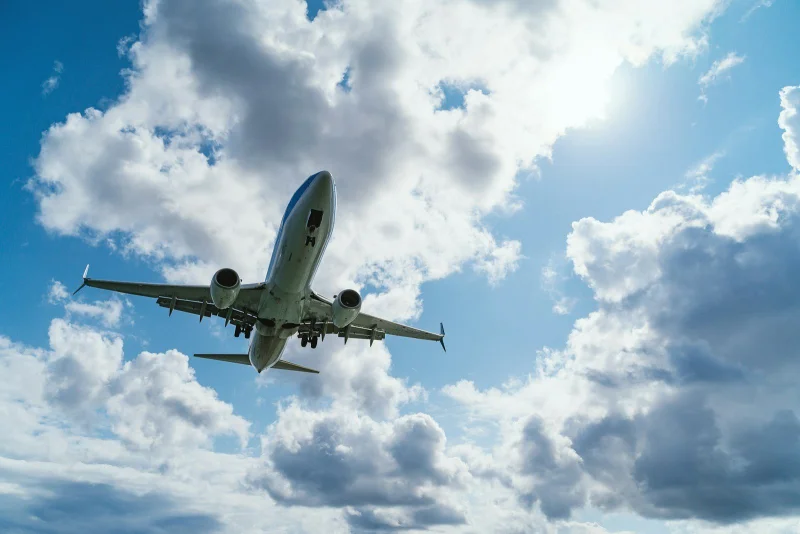
Hyperloop, maglev trains, and supersonic flight all share a common engineering constraint that goes unmentioned in most coverage of these technologies: aerodynamic drag scales with velocity squared, meaning doubling speed quadruples drag force and increases power consumption eightfold — and this relationship, more than any other single factor, explains why high-speed transport is so difficult to make economically viable
Speed's relationship with energy consumption is counterintuitive to people accustomed to fuel economy being roughly proportional to speed. Understanding the physics reveals why certain speed thresholds are economically hard to cross, why aircraft cruise at specific altitudes, and why the Concorde's fuel burn made it uneconomical for most operators despite being technically brilliant.
The drag equation and why speed is so expensive
Aerodynamic drag force follows a precise relationship:
F_drag = ½ × ρ × v² × C_d × A
Where:
- ρ (rho) = air density (kg/m³)
- v = velocity (m/s)
- C_d = drag coefficient (dimensionless, depends on shape)
- A = frontal cross-sectional area (m²)
The v² term is the critical insight. A car travelling at 100 km/h experiences four times the aerodynamic drag of the same car at 50 km/h. At 200 km/h, drag is sixteen times higher than at 50 km/h.
Power, not force, determines fuel consumption: power required to overcome drag = F_drag × v. Since F_drag ∝ v², power ∝ v³. Triple the speed, and power consumption increases by a factor of 27. This is why fuel efficiency drops so sharply at motorway speeds and why hypersonic flight requires astronomical quantities of fuel.
Why aircraft cruise at 35,000 feet
Air density decreases exponentially with altitude — at 35,000 feet (approximately 10,700 metres), air density is roughly 30% of sea-level density. This directly reduces aerodynamic drag at any given airspeed.
The trade-off: at higher altitudes, engines need to work harder to produce thrust (less oxygen per cubic metre of air). Jet engines use turbocompressors to compensate, but efficiency still varies with altitude.
The optimum: modern commercial aircraft (Boeing 737-800, Airbus A320) reach their aerodynamic sweet spot at approximately 33,000-41,000 feet, where the drag reduction from thin air outweighs the engine efficiency losses from altitude — producing the best fuel economy per kilometre at the aircraft's cruise speed (approximately 840-900 km/h true airspeed).
Why faster doesn't mean better at altitude: at transonic speeds (above approximately Mach 0.7-0.8), shock waves begin forming around the aircraft, creating wave drag — a sudden, non-linear increase in drag on top of the baseline aerodynamic drag. This is why commercial jets cruise at Mach 0.78-0.85, just below the onset of significant wave drag, rather than faster.
The Concorde: why supersonic commercial flight was uneconomical
Concorde flew at Mach 2.04 (approximately 2,180 km/h) at 55,000-60,000 feet. Its achievements were extraordinary — London to New York in 3.5 hours instead of 7-8 hours.
The economic problem — fuel burn:
- Concorde carried approximately 100 passengers and burned approximately 25,000 litres of fuel per hour
- A Boeing 747-400 of the same era carried approximately 400 passengers and burned approximately 12,000 litres per hour
- Per-passenger fuel consumption: Concorde used approximately 250 litres per passenger per hour; 747 used approximately 30 litres per passenger per hour — roughly 8× worse
The v³ physics in practice: Concorde flew at roughly 2.3× the cruise speed of a 747. Power consumption ∝ v³ → 2.3³ = approximately 12× more power for drag alone. Concorde partially compensated with its higher altitude (lower air density) and highly refined aerodynamics, but the fundamental physics of the v³ relationship made per-passenger efficiency structurally impossible to match subsonic aircraft.
What made Concorde viable at all: passengers willing to pay a significant premium for time savings (business travellers on the transatlantic route), and British Airways and Air France operating debt-free aircraft (the development costs were written off by the governments). When fuel costs rose sharply post-2001 and the fleet aged, the economics collapsed entirely.
Hyperloop: moving air, not fighting it
Hyperloop's core concept (popularised by Elon Musk's 2013 alpha paper) addresses the v² drag problem directly: put the vehicle in a tube with most of the air removed, and air density drops enough to make near-supersonic ground transport aerodynamically feasible.
The target operating pressure: approximately 100 Pa (roughly 0.1% of atmospheric pressure). At this pressure, air density is about 1,000× lower than at sea level, reducing aerodynamic drag to nearly negligible levels at speeds of 1,000+ km/h.
The remaining challenges:
- Maintaining 100 Pa vacuum in hundreds of kilometres of tube is technically demanding and energy-intensive
- Any breach of the tube (earthquake, mechanical failure) creates a potentially catastrophic pressure wave
- Passenger comfort at sustained 1 g lateral accelerations through curves is a significant design constraint
- The tube itself must handle the stress of thermal expansion over its length (tubes expand and contract significantly with temperature)
Speed unit context: Hyperloop target speeds (1,000-1,200 km/h) are approximately 278-333 m/s — roughly Mach 0.9 at sea level, but in a near-vacuum tube where the speed of sound is irrelevant to wave drag since there's almost no medium.
Terminal velocity and why sky divers reach a fixed speed
Terminal velocity is the speed at which aerodynamic drag exactly equals the gravitational force on a falling object — a direct application of the drag equation:
At terminal velocity: F_drag = F_gravity → ½ × ρ × v_t² × C_d × A = m × g
Solving for v_t: v_t = √(2mg / ρ × C_d × A)
For a human in freefall:
- Belly-to-earth position (maximum frontal area): approximately 195-200 km/h
- Head-down "bullet" position (minimum frontal area, lower C_d): approximately 280-300 km/h
- Felix Baumgartner's jump from 39 km altitude in 2012: reached approximately 1,357 km/h (Mach 1.25) in near-vacuum before the atmosphere became dense enough to slow him
Why terminal velocity varies with altitude: the ρ term in the drag equation is lower at altitude — less air density means less drag at any given speed, so the equilibrium (drag = gravity) is reached at a higher velocity. Baumgartner's extreme speed came from the near-vacuum at jump altitude, not from unusual gravitational effects.
How to use the Speed Converter on sadiqbd.com
- For aerodynamic calculations: convert between m/s (the unit used in physics equations) and km/h or mph (the everyday units used in speed discussions) — the drag equation requires m/s, but speed limits and vehicle specs are typically given in km/h or mph
- For aviation speed conversions: convert between knots (nautical miles per hour, standard in aviation), Mach number (relative to local speed of sound), and km/h or mph for comparing different aviation contexts
- For terminal velocity estimation: use the calculator to convert between the typical belly-freefall terminal velocity (200 km/h, 124 mph, 55.6 m/s) and other units when doing freefall physics calculations
Frequently Asked Questions
If aerodynamic drag scales with v², why don't electric vehicles lose range much more dramatically at motorway speeds compared to city speeds? They do — significantly, though battery technology partially obscures the effect. An EV that achieves 400 km range in city driving (low speeds, lots of regenerative braking) may achieve only 250-280 km at sustained motorway speeds (110-130 km/h), a 30-40% range reduction. The v² drag relationship is the primary reason. The effect is less dramatic than the pure physics suggests because: (1) city driving has many acceleration-deceleration cycles, which waste energy even with regenerative braking, making city efficiency worse than the low-speed aerodynamic advantage alone would suggest; (2) most published range figures are WLTP combined cycle, blending city and motorway conditions. But the fundamental v² relationship is clearly visible when comparing real-world range at city speeds vs motorway speeds for any EV.
Is the Speed Converter free? Yes — completely free, no sign-up required.
Try the Speed Converter free at sadiqbd.com — convert between km/h, mph, m/s, knots, and Mach instantly.