A property listed at "$500 per square foot" and another at "€4,500 per square meter" can represent nearly identical value — or wildly different value — and getting the comparison wrong by even the unit conversion alone can make a property look twice as expensive (or cheap) as it actually is
Comparing real estate prices across countries — for international buyers, investors researching multiple markets, or simply understanding "is this expensive compared to where I'm from" — requires combining area-unit conversion (square feet vs square meters) with currency conversion, and getting either step wrong compounds into a substantial, easy-to-miss error.
The compounding nature of the two conversions
1 square meter ≈ 10.764 square feet — so a price per square meter needs to be divided by ~10.764 to get an equivalent price per square foot (in the same currency) — or, conversely, a price per square foot multiplied by ~10.764 to get price per square meter.
The common mistake: treating "price per square meter" and "price per square foot" as directly comparable numbers — e.g., seeing "$500/sqft" in one market and "$4,500/sqm" in another, and concluding the second market is "9x more expensive" (4500/500 = 9) — without accounting for the area-unit conversion first.
The correct comparison: $4,500/sqm ÷ 10.764 ≈ $418/sqft — meaning the second market, at this converted rate, is actually slightly cheaper than the first market's $500/sqft — the opposite conclusion from the naive "9x more expensive" comparison.
Step-by-step: converting to a common basis
To compare prices across markets using different area units and different currencies, both conversions are needed:
- Convert area units to a common basis (e.g., convert "price per square meter" to "price per square foot," or vice versa) — using the Area Converter's square-meter-to-square-foot relationship
- Convert currency to a common basis (e.g., convert both prices to USD, or whatever currency is most useful for your comparison) — using current exchange rates (which, as covered in previous currency-conversion articles, fluctuate — a comparison done today may not hold next month if exchange rates move significantly)
Order doesn't matter mathematically (you can convert area first then currency, or currency first then area) — but doing both conversions, explicitly, is essential — skipping either one produces a number that looks like a "price per area" figure but isn't comparable to a different-unit, different-currency "price per area" figure without the missing conversion.
Why this matters beyond "academic curiosity": investment/relocation decisions
For someone relocating internationally, or considering property investment in a foreign market — "how does the price-per-area here compare to where I'm familiar with" is often a key initial orientation point — before diving into more detailed market-specific research (local market dynamics, growth trends, rental yields, legal/tax considerations for foreign buyers — all of which are important, but separate from the basic "how does the price-per-area compare" orientation question).
Getting this basic comparison wrong — e.g., believing a market is "9x more expensive" when it's actually comparable (or cheaper) — could lead to dismissing a market prematurely ("too expensive, not worth researching further") based on a flawed initial comparison, before ever reaching the more substantive research that might otherwise follow.
"Price per area" itself can mean different things (callback to the previous floor-area article)
Beyond unit/currency conversion, the previous article on this site covered GIA vs NIA (Gross Internal Area vs Net Internal Area) — different definitions of "floor area" used in different markets (UK vs US conventions, among others).
This compounds with the unit/currency issue: a "price per square meter" figure in one market might be calculated using GIA-style area (including walls, common areas, etc.), while another market's "price per square foot" might use NIA-style area (excluding such elements) — even after correctly converting units and currency, the underlying "area" figures themselves might not represent the same thing — a property with identical "price per converted-unit-and-currency area" figures, but where one market's "area" is measured more generously (GIA-style) than the other's (NIA-style), would represent a better "value" in the GIA-measured market (since the "price per area" figure is being applied to a larger, more-inclusive area definition, meaning the "effective" usable/livable space per dollar might actually be higher than the raw price-per-area comparison alone would suggest, if the NIA-measured market's figure corresponds to a smaller portion of the property's total area).
The practical takeaway: "price per area" comparisons across international markets are, at best, a rough orientation tool — useful for "is this roughly in the same ballpark, or wildly different" — but precise, confident "market A is exactly X% more expensive than market B" conclusions, based purely on converted-price-per-area figures, should be treated with significant caution, given the multiple layers of potential unit/definition/currency mismatches.
Land area vs floor area: a different unit-comparison entirely
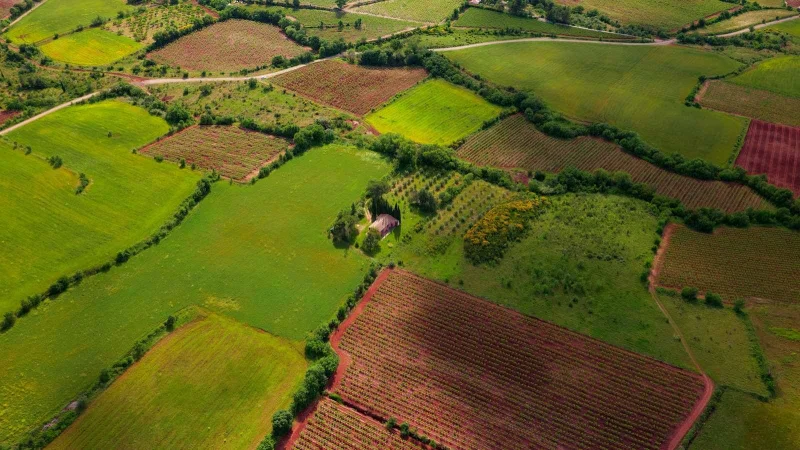
For land (rather than building/floor) area — prices are often expressed per acre, hectare, or region-specific land-area units (covered in the "how land is measured around the world" article) — comparing land prices across markets involves the same fundamental "convert area units, convert currency" process, but using the land-area conversion factors (acres↔hectares↔region-specific units) rather than the square-foot↔square-meter factors relevant to floor area.
Land and floor area are not interchangeable for this purpose — a property's "price per square foot of floor area" and "price per acre of land" are different metrics, each relevant to different aspects of the property (the building itself, vs the plot it sits on) — converting between area units is the same underlying operation (the Area Converter handles both floor-area and land-area unit conversions), but the resulting "price per"* figures answer different questions, and shouldn't be conflated.
How to use the Area Converter on sadiqbd.com
- For comparing price-per-area across markets: convert both listings' area units to a common basis (e.g., both to square feet, or both to square meters) — then apply currency conversion (using a currency-converter tool) to both resulting figures, for a like-for-like comparison
- For land-price comparisons: use the land-area unit conversions (acres, hectares, and region-specific units) — recognizing this as a separate metric from floor-area-based price-per-area figures
- Treat results as orientation, not precision: given the additional GIA/NIA-style definitional differences that unit-conversion alone doesn't address — converted price-per-area comparisons are most useful for broad "is this roughly similar, or wildly different" assessments, rather than precise percentage-difference claims
Frequently Asked Questions
Is there a "standard" way that international real estate listing sites handle this conversion for users? Practices vary — some international-facing listing platforms do offer automatic unit/currency conversion toggles, allowing users to view listings in their preferred units/currency — others display listings only in the local market's conventional units/currency, requiring users to convert manually. Even where automatic conversion is offered, the underlying "what does 'area' include" (GIA/NIA-style) definitional question generally isn't addressed by automatic unit/currency conversion alone — that remains a market-specific convention that automatic conversion tools typically don't (and can't easily) normalize.
Is the Area Converter free? Yes — completely free, no sign-up required.
Try the Area Converter free at sadiqbd.com — convert between square feet, square meters, acres, hectares, and many regional land units instantly.