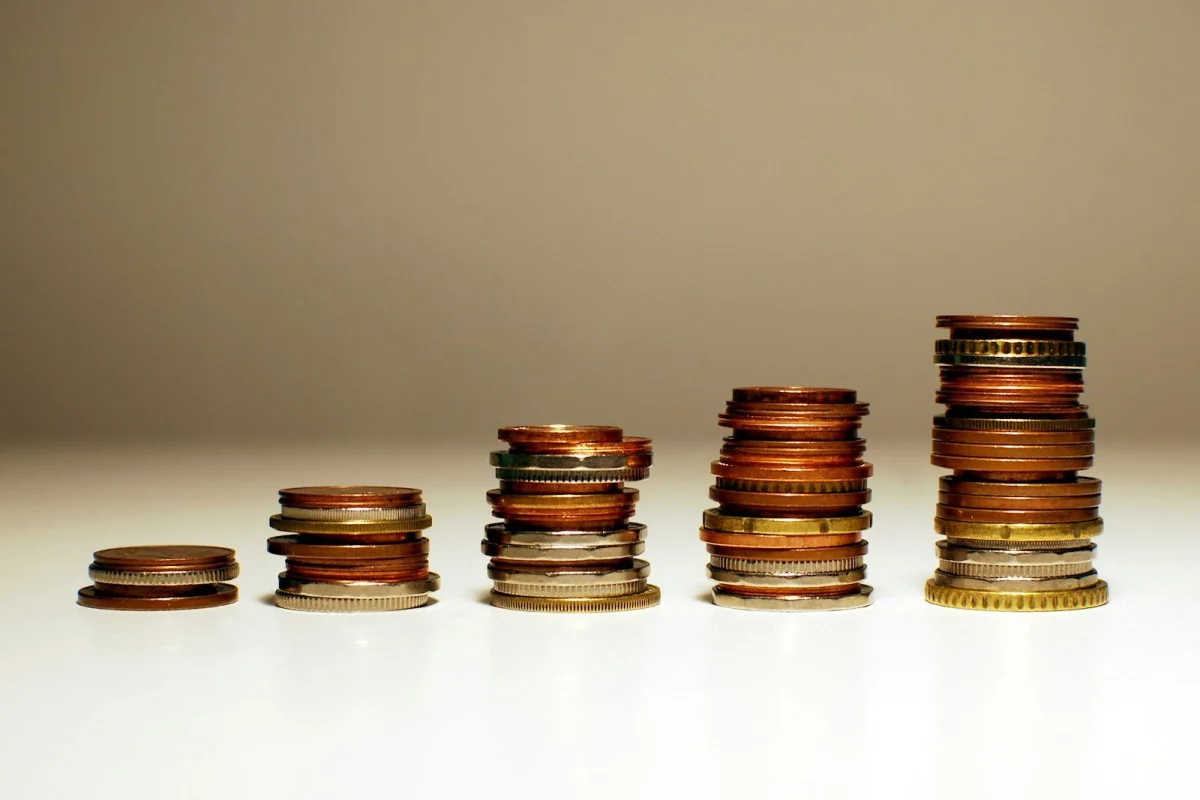
The difference between rich and broke over a lifetime is often just starting earlier
Ask anyone who built meaningful wealth whether timing mattered and the answer is almost always the same: starting early matters more than starting big. This isn't motivational rhetoric — it's mathematics. Compound interest creates a curve, not a line, and the curve bends sharply upward only after years of accumulation. The person who starts at 25 with ৳3,000 per month ends up with more than the person who starts at 35 with ৳9,000 per month, at the same interest rate.
This is the core insight behind compound interest, and a compound interest calculator makes it visible in seconds.
The Mechanics Behind the Magic
Compound interest means your returns generate returns. In year one, you earn interest on your principal. In year two, you earn interest on your principal plus last year's interest. In year three, on the total of all three. The growth accelerates because the base keeps growing.
The formula:
A = P × (1 + r/n)^(n×t)
- A = final amount
- P = principal
- r = annual interest rate (decimal)
- n = compounding periods per year
- t = years
But you don't need to memorise this. The calculator handles it. What matters is understanding the inputs:
Time is the most powerful variable. Doubling time roughly corresponds to the Rule of 72: divide 72 by the interest rate to get the approximate years to double. At 8%: 72 ÷ 8 = 9 years to double. At 12%: 72 ÷ 12 = 6 years to double.
Rate is significant but secondary to time. A 10% return beats an 8% return, but 5 more years at 8% beats fewer years at 10%.
Compounding frequency matters at the margins. Monthly compounding beats annual, but the gap is modest compared to the impact of rate and time.
Three Investment Scenarios Worth Modelling
The early starter
Riya invests ৳2,00,000 at age 22 and does nothing else. At 10% annual compound interest for 38 years (retiring at 60):
A = 2,00,000 × (1.10)^38 ≈ ৳64,72,000
One lump sum, left alone, becomes 32 times its original value. She invested ৳2 lakh and ended up with over ৳64 lakh.
The late starter with a larger amount
Ahmed waits until 42 to invest ৳8,00,000 — four times as much — at the same 10% for 18 years:
A = 8,00,000 × (1.10)^18 ≈ ৳45,04,000
He invested four times more money and still ended up with ৳19 lakh less. The 20-year head start Riya had was worth more than quadrupling the investment.
The person who pauses
Tania invests ৳50,000 per year for 10 years starting at 25, then stops — letting it grow untouched until 60 at 9%.
Amount at age 35 (after 10 years of contributions): ~৳75,97,000 (using SIP-style compounding) Growth from age 35 to 60 (25 more years at 9%, no new contributions): 75,97,000 × (1.09)^25 ≈ ৳7,33,00,000
She stopped contributing at 35 and still ended up with over ৳7 crore by 60. The 25 years of passive compounding after contributions stopped did the heavy lifting.
What the Calculator Reveals That Intuition Misses
Human intuition is poor at exponential growth. We naturally expect linear relationships — if 5 years gets you X, 10 years should get you 2X. Compound interest doesn't work that way. 10 years gets you more than 2X because of the curve.
Running numbers through the calculator repeatedly builds intuition that pure arithmetic can't. Some patterns that surprise most people:
The last 10 years of a 30-year investment produce more growth than the first 20 combined. At 10%: the first 20 years of ৳1,00,000 grow it to ৳6,72,000. The last 10 years take it from ৳6,72,000 to ৳17,44,000. Years 21–30 added ৳10,72,000; years 1–20 added only ৳5,72,000.
Fees destroy compounding. A 2% annual management fee on an investment earning 10% gross leaves you with 8% net. Run both through the calculator over 30 years and the difference is staggering. On ৳10 lakh over 30 years: 10% produces ৳1,74,49,000; 8% produces ৳1,00,62,000. The 2% fee costs you ৳73,87,000 — nearly as much as the principal you started with.
Inflation compounds too. At 6% inflation, ৳1,00,000 today is worth only ৳17,411 in today's money after 30 years. Your savings must grow faster than inflation just to maintain purchasing power.
Compound Interest in Financial Products
Different products use compound interest differently:
Fixed deposits and savings accounts: Interest compounds at intervals defined by the product (quarterly, annually, at maturity). Higher compounding frequency means slightly higher effective returns.
Mutual funds and SIPs: Returns aren't a fixed percentage — they vary with market performance. But the compounding mechanism is the same: gains on gains. The Compound Interest Calculator is a useful estimate for projected growth; the SIP Calculator handles regular contributions more precisely.
Loans and credit cards: Compound interest works against you on debt. Credit card interest often compounds daily — if you carry a balance, interest is accruing on interest every single day.
Government savings instruments: National Savings Certificates, bonds, and similar products typically offer fixed, guaranteed rates with compounding. Safe, but lower return than equity over long periods.
How to Use the Compound Interest Calculator on sadiqbd.com
- Enter the principal — your starting investment or deposit
- Enter the annual interest rate — the rate your product offers
- Set the compounding frequency — monthly, quarterly, or annually
- Enter the time period — in years
- Read the results — final amount, total interest earned, and the breakdown between your original principal and the returns
Run multiple scenarios to understand how changing each variable affects the outcome — especially time.
The Most Important Calculation You Can Do Right Now
Whatever your age, open the calculator and run this:
- Principal: however much you could set aside today
- Rate: a reasonable expected return for your chosen instrument (6–10% depending on risk tolerance)
- Time: years until retirement or your target date
- Frequency: monthly or quarterly
The number you see is what's available to you if you act now versus waiting another year or two. That delta — the cost of delay — is often the most motivating number a compound interest calculator produces.
Frequently Asked Questions
Does compound interest work the same way for both savings and investments? The mechanism is the same, but returns differ. Savings products (FDs, bonds) offer guaranteed fixed rates. Market investments offer variable returns that can be higher or lower than expected. The calculator works for both — use a conservative rate for uncertainty.
What's the effective annual rate (EAR) and how does it differ from the nominal rate? The nominal rate is what's advertised. EAR accounts for compounding frequency: 12% compounded monthly has an EAR of approximately 12.68%. The calculator computes the final amount using the actual compounding — EAR is the equivalent simple interest rate that produces the same result.
Is compound interest taxable? In most jurisdictions, interest income is taxable. The pre-tax return your calculator shows may need adjustment for your marginal tax rate. A 9% return after 30% tax is effectively 6.3%.
Can I use the compound interest calculator for debt? Yes — the same formula applies. To understand how an unpaid credit card balance grows, enter the outstanding amount as principal and the credit card's APR as the rate.
Is the compound interest calculator free? Yes — completely free, no sign-up required.
The compound interest calculator doesn't create opportunity — it reveals it. The numbers for starting now versus starting later are specific, concrete, and often startling enough to prompt action. That's its real value.
Try the Compound Interest Calculator free at sadiqbd.com — see exactly what your money can grow to, and what waiting another year actually costs.