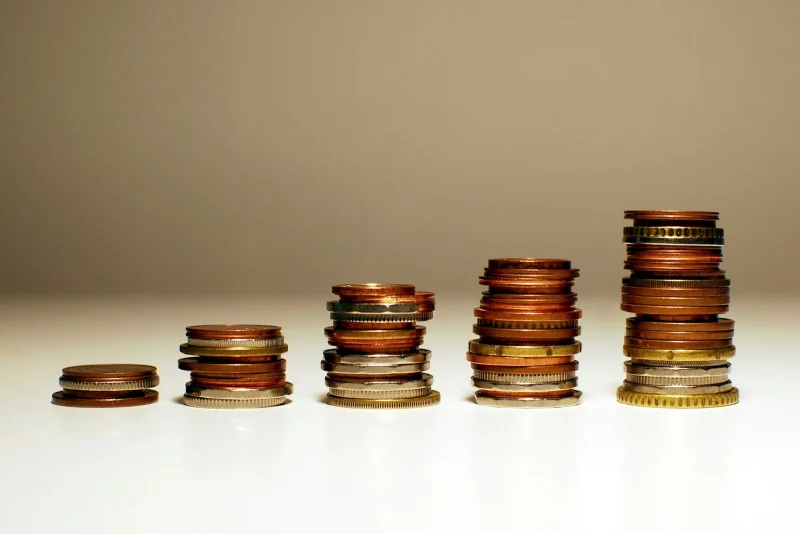
Your savings are either working hard or barely moving — compound interest is the difference
Put ৳10,000 in a savings account at 8% simple interest for 20 years and you end up with ৳26,000. Put that same ৳10,000 at 8% compound interest for 20 years and you end up with just over ৳46,600. Same rate, same money, same time — but a ৳20,600 difference. That's not a rounding error; it's the entire logic behind why some savings strategies pull ahead and others plod along.
Compound interest is the mechanism behind most savings accounts, fixed deposits, SIPs, and investment returns. You've probably heard it called "earning interest on interest," which is accurate but undersells it a little. Over long horizons, the compounding effect becomes dramatic. The trouble is that most people either don't calculate it at all, or rely on rough mental estimates that end up being way off.
That's exactly where a compound interest calculator saves you time and stops you from making decisions based on guesswork.
What Is Compound Interest?
At its core, compound interest means you earn returns not just on your original amount (the principal), but also on the interest you've already earned. Every compounding period, your interest gets added to the principal — and the next round of interest is calculated on that larger number.
The formula is:
A = P × (1 + r/n)^(n×t)
Where:
- A = the final amount (principal + interest)
- P = principal (your starting amount)
- r = annual interest rate as a decimal — so 8% = 0.08
- n = number of times interest compounds per year
- t = time in years
So for ৳10,000 at 8% compounded annually for 20 years:
A = 10,000 × (1 + 0.08/1)^(1×20) = 10,000 × (1.08)^20 ≈ ৳46,610
Change annual to monthly compounding (n = 12) and the same inputs give you ৳49,268 — about ৳2,658 more, just from compounding more frequently. The compounding frequency matters more than most people realise. Monthly beats quarterly, quarterly beats annually — and daily (used by some fintech savings accounts) beats them all.
How to Use the Compound Interest Calculator on sadiqbd.com
The calculator is straightforward — you'll get your result in seconds.
- Enter your principal amount — the money you're starting with or depositing upfront.
- Set the annual interest rate — use the rate your bank or investment product quotes. Don't convert it; the calculator handles the math.
- Choose your compounding frequency — monthly is the most common for savings accounts and FDs. Use annually for simpler investment projections.
- Enter the time period in years — if you're thinking in months, divide by 12 first.
- Read the result — the calculator shows you the final amount and total interest earned separately, so you can see exactly how much your money grew vs. what you originally put in.
No sign-up, no ads, no waiting. Adjust any input and the result updates immediately, so you can run multiple scenarios back to back.
Real-World Examples
A student starting an RD at 18
Riya is 18 and puts ৳5,000 into a recurring deposit paying 7% interest compounded quarterly. She plans to leave it alone for 10 years.
A = 5,000 × (1 + 0.07/4)^(4×10) = 5,000 × (1.0175)^40 ≈ ৳10,048
She roughly doubles her money without doing anything else. Starting at 18 instead of 28 is worth more than doubling the deposit amount at 28 — that's the time component doing its thing.
A professional investing a lump sum
Karim is 32 and invests ৳2,00,000 in a mutual fund with an expected annual return of 12%, compounded annually, for 15 years.
A = 2,00,000 × (1.12)^15 ≈ ৳10,91,467
His ৳2 lakh grows to over ৳10.9 lakh with no additional contributions. The compound interest calculator makes this projection immediate — useful when comparing funds or deciding between a 12% and a 10% option. That 2% gap at 15 years is worth roughly ৳2.5 lakh. Worth knowing before you commit.
A small business owner comparing FD options
A business owner has ৳5,00,000 to park for 3 years. Bank A offers 6.5% annual compounding; Bank B offers 6.3% monthly compounding.
- Bank A: 5,00,000 × (1.065)^3 ≈ ৳6,03,948
- Bank B: 5,00,000 × (1 + 0.063/12)^36 ≈ ৳6,02,151
Bank A wins here despite the lower-seeming rate — because the rate advantage outweighs Bank B's more frequent compounding. Running both through the calculator takes 30 seconds and settles the comparison cleanly, without any back-of-envelope guessing.
Common Mistakes That Cost People Money
Confusing simple and compound interest. Some loan products advertise rates that look identical to savings rates, but one is simple and the other compound. ৳1,00,000 at 10% simple interest for 5 years = ৳1,50,000. At 10% compound: ৳1,61,051. The difference matters even more when you're the borrower — you pay more than you expect.
Ignoring compounding frequency. "7% annual" and "7% monthly compounding" are not the same product. The effective annual rate (EAR) of 7% compounded monthly is actually 7.229%. Small difference at one year, meaningful at 10.
Assuming linear growth. People mentally model compound interest as a straight line — a fixed amount per year. But it's a curve that steepens over time. In a 20-year investment, more than half the total interest typically accrues in the final 7–8 years. Pulling money out early doesn't just cost you those years; it costs you the steepest part of the curve.
Forgetting inflation. A compound interest calculator gives you nominal returns. If your FD earns 6.5% and inflation is running at 5.5%, your real return is roughly 1%. Still positive, but a very different story than "6.5% growth."
Tips for Getting More Out of Compound Interest
Start earlier, not bigger. Time is the most powerful variable in the formula. ৳10,000 invested at 25 at 8% for 40 years → ৳2,17,245. The same ৳10,000 at 35 for 30 years → ৳1,00,627. Ten extra years is worth more than doubling the principal at 35.
Reinvest returns instead of withdrawing them. The whole point of compounding is that interest stays in the pot. If you withdraw interest annually, you're effectively converting compound interest into simple interest.
Use the calculator to compare, not just calculate. Run your current savings rate, then run a scenario 1% higher. The difference at 10–15 years is usually enough to motivate shopping around for better rates.
Watch for fees in investment products. A mutual fund with a 1.5% expense ratio on a 10% gross return is actually giving you 8.5% net. Over 20 years on ৳1 lakh, that 1.5% fee shaves off roughly ৳1.7 lakh in final value. Always calculate on the net return, not the headline figure.
Match compounding frequency to your actual product. If your savings account compounds daily, use daily in the calculator. Using annual compounding will slightly understate your real returns.
Frequently Asked Questions
What's the difference between compound interest and simple interest? Simple interest is calculated only on the original principal every period. Compound interest is calculated on the principal plus all previously earned interest. They produce the same result in year one; after that, compound interest pulls ahead — and the gap widens every year.
How often does compounding happen? It depends on the product. Bank FDs in Bangladesh typically compound quarterly or at maturity. Savings accounts often compound monthly. Some international platforms compound daily. Check your account terms — the calculator lets you test any frequency.
Is the compound interest calculator free to use? Yes, completely free. No account, no login, no limit on how many times you use it.
Can I use this for loan calculations too? The same formula applies to loans — your outstanding balance grows through compound interest if you're not making regular payments. For a more loan-specific breakdown with monthly EMIs and a repayment schedule, the EMI Calculator on sadiqbd.com is better suited.
What if I make regular deposits rather than a single lump sum? The standard compound interest formula covers a single principal amount. For regular monthly contributions (like a SIP or recurring deposit), use the SIP Calculator or RD Calculator on sadiqbd.com — they're built specifically for those scenarios.
Compound interest rewards patience and punishes delay more than almost any other financial concept. The numbers above aren't theoretical — they reflect how FDs, savings accounts, and long-term investments actually behave. Understanding the formula is useful; being able to run scenarios in seconds is better.
Try the Compound Interest Calculator free at sadiqbd.com — no sign-up, instant results.