ROT13 Encoder
Articles, guides, and in-depth tips for the ROT13 Encoder — everything you need to get the most out of it.
✦ AI-powered — understands natural language

ROT13 Isn't Weak Encryption — It Isn't Encryption

The 300-Year Unbreakable Cipher That Got Broken — Vigenère, Enigma, and What Every "Unbreakable" Cipher Has in Common
The Vigenère cipher was unbreakable for 300 years — until the Kasiski test revealed that repeated keywords create periodic patterns detectable by measuring distances between repeated ciphertext sequences. Enigma failed not through mathematical weakness but through operator protocol flaws (predictable message formats, the reflector's no-self-encryption constraint). The one-time pad is provably unbreakable but impractical. Here's what each historical failure teaches about what "secure" actually means.

Beyond ROT13: ROT47, ROT18, Atbash, and the Complete Family of Caesar-Style Rotation Ciphers
ROT47 extends ROT13 to all 94 printable ASCII characters — rotating digits and punctuation in addition to letters — but remains identically trivial to decode. Here's the full Caesar cipher family (ROT5 for digits, ROT13 for letters, ROT18 for both, ROT47 for all printable ASCII), Atbash's Hebrew origins (it appears in the Bible as the first known cipher in a religious text), and the modern use cases where ROT13 is deliberately not meant to be secure.

Why ROT13's Encode Button and Decode Button Do the Same Thing — and Why That's the Point
ROT13 shifts each letter by 13, and shifting by 13 again returns you to the start — because 13 is exactly half of 26, and the English alphabet has 26 letters. This self-inverse property means "encode" and "decode" are literally the same operation, which is exactly why ROT13 became the standard for Usenet spoilers and forum answers: one button, symmetric, no separate decode tool needed. Here's the math, the variants (ROT5, ROT18, ROT47), and where self-inverse operations appear elsewhere.

ROT13 in Puzzle Design: Why Escape Rooms and ARGs Use a Cipher That's Deliberately Not Secure
ROT13 in an escape room or puzzle hunt isn't there for security — it's there because recognizing "this is a substitution cipher" IS the puzzle, and decoding it afterward is trivial by design. Here's how puzzle designers use ROT13 as a "calibration" cipher, why shift-amount discovery becomes its own puzzle layer, and ROT13's self-inverse property for spoiler-text use.
ROT13, Internet Culture, and Why Obfuscation Is Not Encryption
ROT13 is useless for security but was extensively used in Usenet for spoilers — and this illustrates the difference between obfuscation (hiding in plain sight) and encryption (computationally secure). Here's ROT13's internet history, why frequency analysis defeats simple ciphers, and what makes modern encryption actually work.
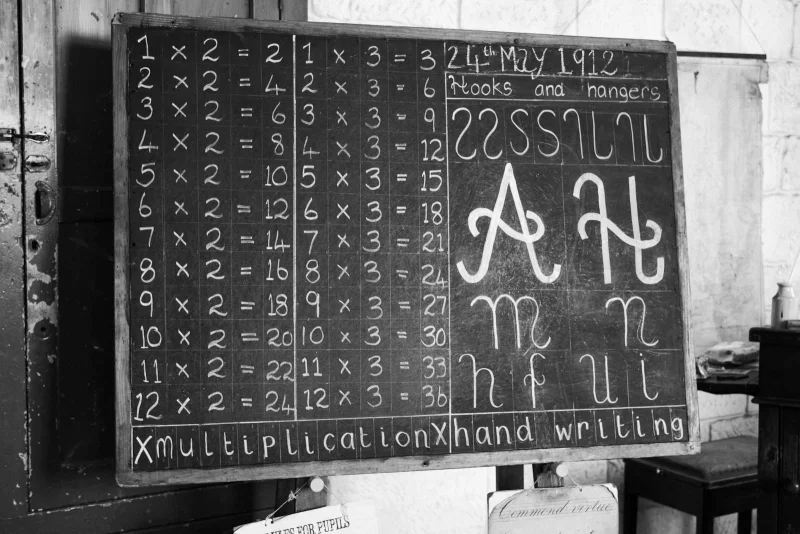
From Caesar Cipher to AES: The History of Why Substitution Ciphers Fail
ROT13 is a specific case of the Caesar cipher, which was broken by frequency analysis described in 800 AD. Here's the history from Caesar to Vigenère to Enigma to AES — and what each cipher's failure revealed about what real security requires.
ROT13 Encoder — Encode & Decode Text Instantly with the Classic Cipher
Learn how ROT13 works, why it was invented for spoiler protection, how it differs from real encryption, and the variations (ROT5, ROT18, ROT47) — with a free ROT13 encoder/decoder tool.
