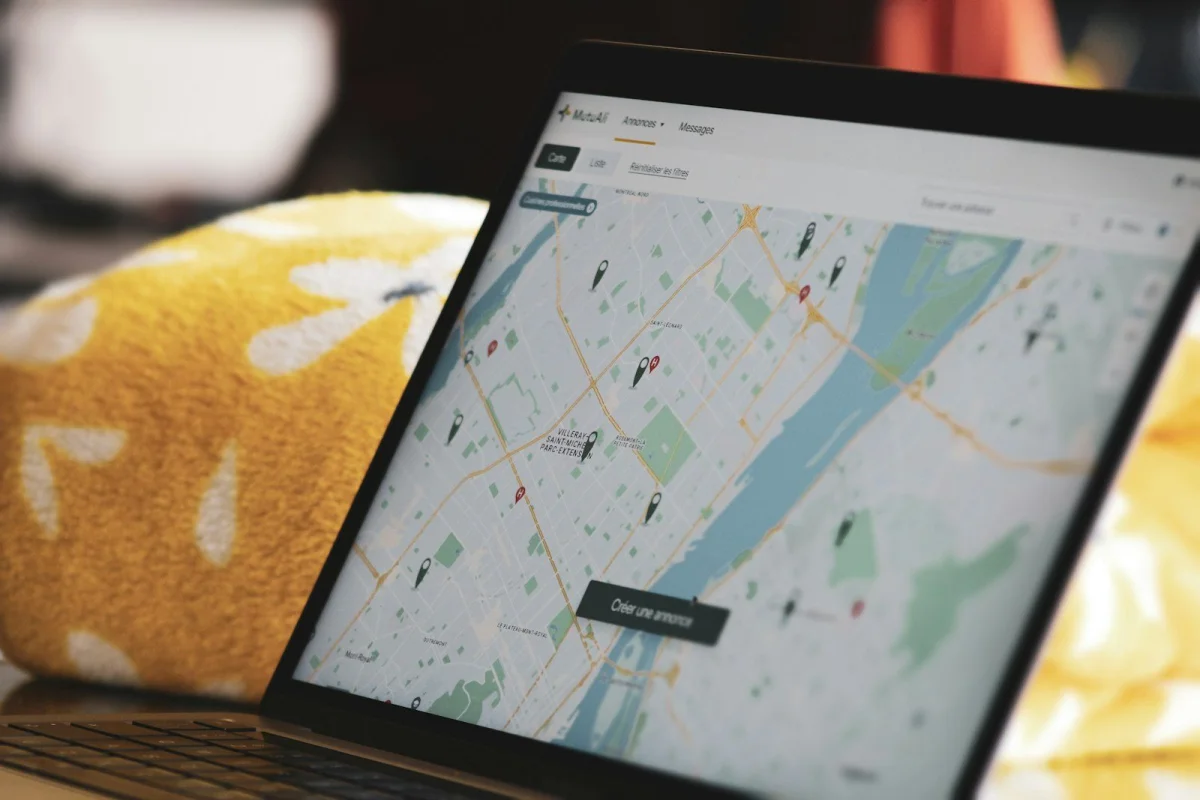
IP geolocation is less accurate than most applications assume — and the reasons matter for how you use it
"What country is this IP from?" seems like a simple question. It's not. IP geolocation maps an IP address to a likely physical location based on registry data, network infrastructure information, and statistical inference. For a /24 subnet belonging to a telecommunications company in Germany, the country-level answer is reliable. For an individual server, the answer might be off by hundreds of kilometres. For a VPN exit node, the answer is simply wrong by design.
How IP geolocation works
IP addresses are allocated in blocks. The allocation history and current ownership of these blocks is recorded in Regional Internet Registry (RIR) databases:
- ARIN (North America): whois.arin.net
- RIPE NCC (Europe, Middle East, Central Asia)
- APNIC (Asia Pacific)
- LACNIC (Latin America)
- AFRINIC (Africa)
These records tell you who owns an IP block and sometimes a general location. This is the foundation of IP geolocation.
Additional data sources layered on top:
- BGP routing table data (which internet exchanges and networks advertise these prefixes)
- Active probing (measuring latency from known geographic points)
- User-submitted corrections
- Commercial agreements with ISPs who share location data
- DNS hostnames (which sometimes reveal geographic information)
Accuracy by precision level
Country-level accuracy is high for most IPs:
- Major commercial databases: 95–99% accuracy at country level
City-level accuracy varies significantly:
- Major commercial databases: 50–80% accuracy at city level (within 25km)
- For cloud provider IPs: often accurate to data centre, not customer location
- For mobile IPs: often accurate only to the carrier's headquarters city
Why city-level accuracy is limited:
- ISPs assign IPs dynamically — a user in Manchester may have an IP registered to a London operations centre
- Mobile carriers often route traffic through central gateways
- Cloud instances are located where the data centre is, not where the customer is
- VPN traffic exits from the VPN provider's servers, not the user's location
Business uses of IP geolocation
Content localisation
Detecting country to display local currency, localised content, or region-specific product availability. Works well at country level. Should always offer a manual override — users with VPNs, travellers, and expats will be incorrectly located.
Compliance and licensing
Geo-blocking content to comply with regional licensing agreements (streaming services) or export controls. Operated at country level where accuracy is adequate. VPN bypass is a known limitation.
Fraud detection
One signal among many. An order from a billing address in Toronto with an IP geolocation in Romania is suspicious. But no individual signal should automatically reject a transaction — a legitimate user might use a VPN for privacy reasons. IP geolocation is a risk signal, not a decision.
Advertising targeting
Ad networks use IP geolocation for geographic targeting. Country and state/province level is generally reliable. City-level targeting may reach users 50–200km from the intended city.
The VPN problem for geolocation-dependent services
VPNs route traffic through exit nodes in the provider's chosen locations. A user in London connected to a US VPN server appears to services as being in the US. This:
- Breaks country-level content restrictions (intentionally, from the user's perspective)
- Causes geolocation-based currency or language settings to show the wrong option
- Creates false fraud signals in risk systems
The percentage of internet users using VPNs has grown substantially — estimates vary widely but range from 15–30% in some markets. Any geolocation-dependent service should accommodate the reality that a meaningful fraction of users will have incorrect apparent locations.
IP information lookup: what a reverse lookup reveals
Beyond geographic location, IP lookups reveal:
Organisation/ISP: who operates the IP block. This distinguishes a home broadband user (ISP = Sky, BT, Comcast) from a cloud instance (ISP = Amazon, Google, Microsoft) from a corporate network (ISP = the company itself).
ASN (Autonomous System Number): the routing identifier for the network. Each ISP and large network has one or more ASNs.
Connection type: residential, business, hosting, mobile, etc.
Proxy/VPN/Tor detection: commercial databases track known VPN exit nodes, data centre IP ranges, and Tor exit nodes. This is used for fraud detection.
Tools for IP information lookup
whois: provides raw registry data — who owns the block, registration dates, contact information.
ipinfo.io / ipapi.com / ip-api.com: commercial and freemium APIs providing structured geolocation and organisation data.
Reverse DNS: the PTR record often reveals the ISP or network (broadband.12345.telecomco.com, ec2-192-168-1-1.compute-1.amazonaws.com).
Shodan: goes further — shows open services discovered on IP addresses, historical scan data.
How to use the Reverse DNS Lookup on sadiqbd.com
- Enter the IP address
- Look up PTR record — often reveals the organisation and sometimes the general location
- Use alongside WHOIS — WHOIS provides the block owner; PTR provides the specific device hostname
- Combine for investigation — an IP in your server logs + reverse DNS + WHOIS gives context for whether traffic is from a residential user, cloud infrastructure, or known bad actor infrastructure
Frequently Asked Questions
Can I build a geolocation-dependent application on free geolocation APIs? For country detection at low volume: yes, free tiers from providers like ipapi.com, ip-api.com, or ipinfo.io are adequate. For production applications requiring reliable city-level accuracy or high query volumes, paid tiers of MaxMind GeoIP2 or similar commercial databases are more appropriate.
Does GDPR restrict IP geolocation? IP addresses are personal data under GDPR when they can be used to identify a natural person (which they often can). Collecting IP addresses and using geolocation requires a legal basis — typically legitimate interest or consent. Purely technical uses (fraud prevention, security logging) generally qualify as legitimate interest.
Is the Reverse DNS Lookup free? Yes — completely free, no sign-up required.
IP geolocation is a useful signal with specific accuracy characteristics. Country-level is reliable; city-level is approximate; individual-user location is unreliable. Building applications that treat it as a strong signal at precise granularity produces poor user experiences when the inevitable mismatches occur.
Try the Reverse DNS Lookup free at sadiqbd.com — translate any IP to its hostname and identify the organisation operating that address.