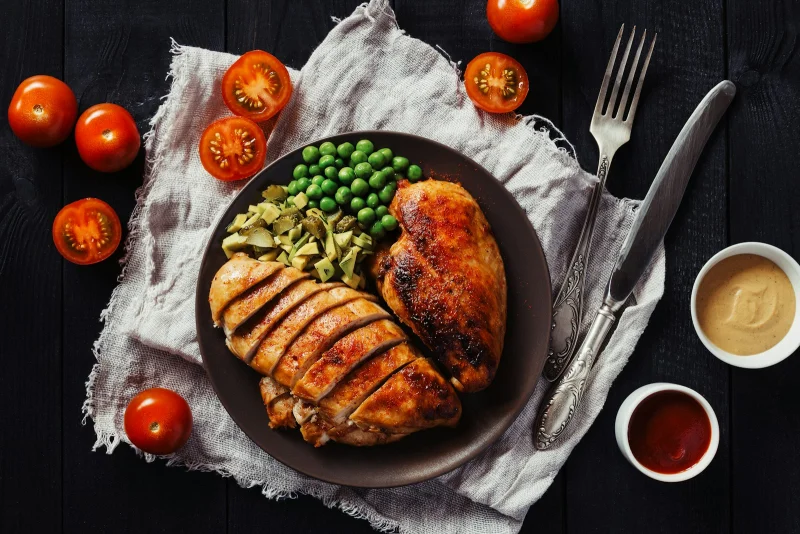
Of the three macronutrients, protein is the one where getting it right makes the biggest difference
Carbohydrates and fat are fought over endlessly in nutrition debates — low-fat, low-carb, keto, high-carb. Protein rarely generates the same controversy. The scientific consensus is unusually consistent: most people eat too little protein for optimal body composition, the risks of eating more are negligible for healthy people, and the practical benefits of prioritising protein are well-documented.
This is a deep dive on protein — how much you actually need, why the official recommendations are probably too low, how timing matters, and which foods deliver it most efficiently.
The official recommendation vs. what the evidence supports
The UK and US dietary reference intake for protein is 0.8g per kg of bodyweight per day for sedentary adults. For a 75kg person, that's 60g of protein per day.
This figure was designed to prevent protein deficiency in the general population — not to optimise muscle maintenance, satiety, or body composition. It represents the minimum to avoid deficiency, not the target for health optimisation.
The research on optimal protein intake, particularly for body composition and muscle maintenance, consistently supports higher intakes:
For muscle gain and body recomposition: 1.6–2.2g per kg of bodyweight is the evidence-backed range for most resistance-training individuals. This is based on a 2018 meta-analysis by Morton et al. in the British Journal of Sports Medicine, covering 49 studies and over 1,800 participants.
For fat loss while preserving muscle: Higher end of the range (2.0–2.4g/kg) is supported, as protein has a higher thermic effect, is more satiating than carbohydrates or fat, and helps spare muscle mass during a calorie deficit.
For older adults: The International Osteoporosis Foundation and other bodies recommend 1.2–1.5g/kg for adults over 65 to counteract age-related muscle loss (sarcopenia). The standard 0.8g/kg recommendation appears insufficient for this population.
Why protein is the most satiating macronutrient
Protein produces greater satiety per calorie than carbohydrates or fat. The mechanism involves:
Gut hormones: protein consumption stimulates greater release of satiety hormones (GLP-1, PYY, CCK) compared to equivalent calories from carbohydrates or fat.
Reduced hunger hormones: high-protein intake suppresses ghrelin (the hunger hormone) more effectively than other macronutrients.
Thermic effect: 20–35% of protein calories are burned in the digestion and metabolism process, compared to 5–10% for carbohydrates and 0–3% for fat. A 100-calorie protein food yields roughly 70–80 calories of net energy; a 100-calorie fat food yields about 97.
Studies examining ad libitum intake (eating until satisfied without restrictions) consistently find that higher protein diets lead to spontaneous reductions in total calorie intake. A 2005 study by Weigle et al. found that increasing protein from 15% to 30% of calories caused participants to spontaneously eat 441 fewer calories per day and lose significant fat mass without calorie restriction instructions.
Muscle protein synthesis: the leucine threshold
Not all protein is equal for muscle building. The key variable is leucine — an essential amino acid that acts as the primary trigger for muscle protein synthesis (MPS).
Leucine activates the mTOR pathway, which signals muscle cells to synthesise new protein. There's a leucine threshold for maximally stimulating MPS — approximately 2–3 grams of leucine per meal — below which the MPS response is blunted.
Leucine content of common protein sources:
- 30g of whey protein: ~3.0g leucine — above threshold
- 100g chicken breast: ~1.9g leucine — near threshold
- 100g beef: ~1.7g leucine
- 150g Greek yogurt: ~1.5g leucine
- 200g tofu: ~1.2g leucine — below threshold (need a larger portion)
- 80g oats: ~0.9g leucine — well below threshold
This is why animal proteins tend to build muscle more efficiently per gram than plant proteins — they have higher leucine content and more complete amino acid profiles. Plant-based eaters can compensate by eating larger total protein amounts or combining complementary sources.
Does protein distribution throughout the day matter?
Yes — protein timing affects muscle protein synthesis, though the effect is secondary to total daily intake.
Even distribution appears optimal. Research suggests that consuming 3–5 protein-rich meals distributed throughout the day, each providing 25–40g protein (above the leucine threshold), maximises cumulative MPS compared to the same total protein concentrated in one or two large meals.
Practical implication: if you eat 150g protein per day, spreading it as 40g–35g–35g–40g across four meals produces better MPS outcomes than 10g–20g–120g.
The anabolic window myth (partially): early sports nutrition advice suggested consuming protein within 30–60 minutes post-workout was critical. The evidence now suggests the window is considerably wider — up to 2 hours post-workout is effective for most people. Total daily protein intake matters more than precise timing.
Pre-sleep protein: 30–40g of casein protein before sleep has been shown to support overnight MPS and recovery. Casein digests slowly, providing a sustained amino acid supply during the overnight fast.
High-protein foods: efficiency comparison
| Food | Serving | Protein | Calories | Protein/100 cal |
|---|---|---|---|---|
| Chicken breast (grilled) | 100g | 31g | 165 kcal | 18.8g |
| Tuna (canned in water) | 100g | 26g | 116 kcal | 22.4g |
| Cod fillet | 100g | 23g | 105 kcal | 21.9g |
| Egg whites | 100g | 11g | 52 kcal | 21.2g |
| Greek yogurt (0% fat) | 150g | 18g | 90 kcal | 20g |
| Tofu (firm) | 100g | 17g | 144 kcal | 11.8g |
| Lentils (cooked) | 100g | 9g | 116 kcal | 7.8g |
| Whole eggs | 2 large | 13g | 156 kcal | 8.3g |
| Edamame | 100g | 11g | 122 kcal | 9.0g |
| Whey protein (scoop ~30g) | 30g | 24g | 120 kcal | 20g |
Fish, Greek yogurt, and egg whites provide the most protein per calorie — useful for people targeting high protein within a calorie deficit.
Is high protein intake harmful?
For healthy adults with normal kidney function: the evidence does not support the concern that high protein intake causes kidney damage. This concern stems from the fact that people with pre-existing kidney disease need to restrict protein — but consuming high protein doesn't cause kidney disease in healthy people.
For adults with diagnosed chronic kidney disease: protein restriction is medically appropriate. Consult a nephrologist or dietitian.
The concern about calcium loss from high protein intake (due to increased urinary calcium) has similarly been updated — bone density studies show that adequate protein intake is associated with better bone density, not worse, when calcium intake is sufficient.
How to use the Macro Calculator on sadiqbd.com
- Enter your stats and goal — the calculator allocates protein, carbohydrates, and fat based on your calorie target
- Adjust protein upward if you're resistance training or in a calorie deficit — use 1.6–2.0g/kg as your target
- Fill the remaining calories with carbs and fat based on preference — the ratio matters less than protein adequacy
- Check leucine per meal — aim for at least 25–30g protein per sitting to reliably clear the leucine threshold
Frequently Asked Questions
Can eating too much protein make you fat? Excess protein calories can contribute to fat gain if total calorie intake exceeds expenditure — like any macronutrient. However, protein is the hardest macronutrient to overeat (the satiety effects are strong) and has the highest thermic effect. In practice, protein overconsumption is an uncommon cause of fat gain compared to excess carbohydrates and fat.
What about plant protein vs. animal protein? Both are effective. Animal proteins have higher leucine content and more complete amino acid profiles. Plant proteins often require higher total amounts to achieve the same MPS response. Combining different plant protein sources (legumes + grains, for example) improves the amino acid profile. Leucine-enriched plant protein supplements are another option.
How do I know if I'm eating enough protein? The simplest check: is every meal built around a substantial protein source? A palm-sized portion of chicken, fish, meat, or equivalent for omnivores; a cup of legumes, 200g tofu, or similar for plant-based eaters. Tracking for a week reveals your actual baseline.
Is the Macro Calculator free? Yes — completely free, no sign-up required.
Protein is the macro that does the most work — for satiety, muscle maintenance, fat loss, and metabolic health. Most people eating typical Western diets are hitting the deficiency-prevention threshold but falling well short of the amount that actually optimises body composition and long-term health.
Try the Macro Calculator free at sadiqbd.com — find your personalised protein, carbohydrate, and fat targets for any goal.