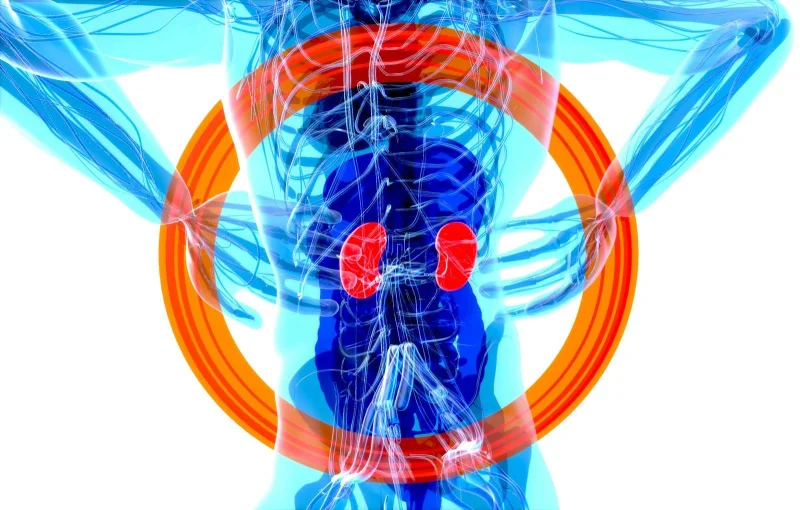
Brown adipose tissue — "brown fat" — was thought to exist only in human infants until 2009, when PET/CT scans revealed metabolically active brown fat deposits in adult humans, and the subsequent decade of research has reframed our understanding of BMR as a more dynamic and potentially modifiable system than previously thought
The previous articles on this site covered why diets stop working (adaptive thermogenesis), muscle and sarcopenia, aging and sarcopenia, BMR formula accuracy, and indirect calorimetry measurement. This article addresses the biology of thermogenesis — specifically what generates body heat beyond muscle movement, why brown fat is metabolically different from white fat, and what this means for understanding BMR.
White fat vs brown fat: two different tissues with opposite functions
White adipose tissue (WAT) — what most people think of as "body fat" — stores energy in large lipid droplets. White fat cells (adipocytes) have a single large fat vacuole occupying most of the cell, with the nucleus pushed to one side. WAT is an energy reserve: accumulate it when energy is plentiful, mobilize it when energy is scarce.
Brown adipose tissue (BAT) — "brown fat" — burns energy to produce heat. Brown fat cells contain many small fat droplets and, critically, a high density of mitochondria (the cellular energy-producing organelles, which also give the tissue its brown colour). BAT generates heat through a process called non-shivering thermogenesis.
The mechanism: brown fat mitochondria contain Uncoupling Protein 1 (UCP1, also called thermogenin). UCP1 "uncouples" the normal process of ATP production — instead of generating chemical energy (ATP), the proton gradient across the mitochondrial membrane is dissipated as heat. Effectively, BAT burns fat for warmth rather than for useful chemical work.
Why infants have more: newborns can't shiver (the muscle-contraction-based heat generation that adults use), so they rely heavily on BAT for thermoregulation. BAT is approximately 5% of a newborn's body weight, concentrated around the neck, shoulders, and back — the location of BAT deposits that imaging reveals in adults.
The 2009 discovery: adult humans have active brown fat
Before 2009, textbooks stated that brown fat was essentially absent in adult humans — thought to regress after infancy and become negligible in adults.
PET/CT scans (Positron Emission Tomography combined with CT scans) used for cancer detection began showing unexpected areas of glucose uptake in patients — concentrated around the neck, collarbones, and upper back. These were initially treated as artifacts; researchers eventually identified them as metabolically active BAT.
The landmark 2009 papers in the New England Journal of Medicine confirmed that adult humans have metabolically active BAT, with activity inversely correlated with BMI and positively correlated with cold exposure. Thinner individuals had more active BAT; colder ambient temperatures activated it more.
What cold does to BAT and BMR
Cold exposure activates BAT: the sympathetic nervous system detects cold and releases noradrenaline, which activates UCP1 in brown fat cells, dramatically increasing heat production.
Quantitative effect: studies measuring metabolic rate in controlled cold environments find that cold-induced thermogenesis from BAT can increase total energy expenditure by 100-300 kcal per day in adults with active BAT — a meaningful fraction of BMR.
The seasonal variation in BMR: some research shows that BMR varies by season — slightly higher in winter than summer for people living in temperate climates — consistent with cold-activated BAT contributing to resting energy expenditure.
Habituation: regular cold exposure (cold showers, cold water swimming) increases BAT activity in some studies. The habituation effect — whether cold exposure durably increases metabolically active BAT — is an active area of research, with some positive but not definitive findings.
Beige fat: a third adipose tissue type
"Beige fat" (also called brite fat — "brown in white") is a third category discovered in the 2010s: white fat cells that acquire brown fat characteristics under specific stimuli (cold exposure, exercise, certain hormones).
Unlike BAT (which is a distinct tissue with its own developmental lineage), beige fat represents the metabolic plasticity of white fat — the same cells can switch between energy-storage and energy-burning modes.
FGF21 (fibroblast growth factor 21) and irisin (a hormone released by exercising muscle) have been shown to promote "browning" of white fat — increasing UCP1 expression in what were previously white fat cells. This "brown fat recruitment" is a possible mechanism by which exercise improves metabolic health independently of weight loss.
Thyroid hormone and thermogenesis: the thyroid-BMR connection
Thyroid hormones (T3 and T4) are the primary regulator of BMR — they control the baseline rate of cellular metabolism throughout the body. This is why thyroid disorders produce such significant metabolic effects:
Hypothyroidism (underactive thyroid): low thyroid hormone → reduced cellular metabolism → lower BMR → weight gain, fatigue, cold intolerance. BMR in hypothyroid patients can be 10-40% below what BMR formulas would predict from height, weight, age, and sex.
Hyperthyroidism (overactive thyroid): high thyroid hormone → elevated cellular metabolism → higher BMR → weight loss despite normal or increased appetite, heat intolerance, rapid heart rate.
BMR calculators don't account for thyroid status — this is a significant source of individual-level inaccuracy for anyone with undiagnosed or undertreated thyroid dysfunction. If calculated TDEE consistently diverges from actual weight change at the same intake, thyroid function testing is warranted.
How to use the BMR Calculator on sadiqbd.com
- Thyroid context: if your actual metabolic rate seems significantly lower or higher than the calculator predicts (consistently losing or gaining weight at intakes far from the calculated TDEE), thyroid function is worth investigating clinically
- Cold exposure note: if you regularly swim in cold water or expose yourself to cold, your actual BMR may be slightly higher than calculated due to BAT activation — a minor effect but real
- For interpreting BMR changes: if you're losing weight and your BMR decreases more than expected from the mass change alone, this may reflect adaptive thermogenesis (UCP1 downregulation) — the calculator predicts the structural component but not the adaptive component
Frequently Asked Questions
Can "eating in the cold" or cold showers meaningfully increase calorie burn? Cold showers: small effect. Cold eating: negligible. Cold showers may activate BAT thermogenesis — studies show short-term increases in metabolic rate during and immediately after cold exposure. The effect size is modest (50-100 kcal per cold shower session, perhaps) and whether it persists with habituation is uncertain. Eating cold food: the caloric cost of warming food from cold to body temperature is genuinely measurable (approximately 8 kcal to warm 500ml of ice water to body temperature) but so small as to be nutritionally irrelevant. The "ice diet" claims are not supported by meaningful evidence. Cold exposure is interesting metabolic research — as a primary weight management strategy, the effect size is too small relative to dietary and exercise interventions to make practical sense.
Is the BMR Calculator free? Yes — completely free, no sign-up required.
Try the BMR Calculator free at sadiqbd.com — calculate your basal metabolic rate using multiple formula options.