Professional cyclists produce 400+ watts sustained — and measuring power has transformed how every endurance sport is trained
The watt is the standard unit of human physical output as well as electrical power. When a cyclist's training plan says "hold 280W for 20 minutes," they need a power meter to know if they're complying. When a coach says their athlete has an FTP of 310 W/kg doesn't make sense — what they mean is 310W ÷ 70kg = 4.43 W/kg — the key metric for comparing cyclists of different body weights.
Understanding power output in sport connects the physics of mechanical work to real athletic performance.
Functional Threshold Power (FTP)
FTP is defined as the highest average power a cyclist can maintain for one hour. It's the gold standard metric for setting training intensities in cycling.
Typical FTP values:
| Athlete level | FTP (Watts) | FTP relative (W/kg at 70kg) |
|---|---|---|
| Recreational cyclist | 150–200W | 2.1–2.9 W/kg |
| Competitive club | 200–280W | 2.9–4.0 W/kg |
| Cat 4/5 racer | 250–330W | 3.6–4.7 W/kg |
| Elite amateur/Cat 1 | 330–400W | 4.7–5.7 W/kg |
| Pro cyclist (domestique) | 380–420W | 5.5–6.0 W/kg |
| Pro GC contender | 400–450W+ | 6.0–6.5+ W/kg |
| World Tour elite (climbers) | 410–440W | 6.7–7.1 W/kg |
Why W/kg (watts per kilogram) matters: on flat roads, heavier riders have an advantage (more mass = more momentum). On climbs, every kilogram must be lifted against gravity. W/kg is the relevant metric for climbing performance — which is why Tour de France GC contenders are light.
Power zones and training
FTP defines training zones as percentages:
| Zone | % FTP | Name | Description |
|---|---|---|---|
| Z1 | <55% | Active recovery | Very easy; recovery rides |
| Z2 | 56–75% | Endurance | Long aerobic base rides |
| Z3 | 76–90% | Tempo | Comfortably hard; sustainable |
| Z4 | 91–105% | Threshold | At or near FTP; unsustainable >1hr |
| Z5 | 106–120% | VO2max | Hard; 3–8 min efforts |
| Z6 | 121–150% | Anaerobic | 30–120 second efforts |
| Z7 | >150% | Neuromuscular | Sprint power; <15 seconds |
Training plans specify time in each zone, targeting different physiological adaptations. Zone 2 builds aerobic base; Zone 4 builds lactate threshold; Zone 5 builds VO2max.
How power meters work
A cycling power meter measures the torque applied to the drivetrain and the angular velocity (cadence), then calculates power:
Power (W) = Torque (Nm) × Cadence (rad/s)
Types:
- Pedal-based: measures force at the pedal axle (Garmin Rally, Favero Assioma)
- Crank arm: strain gauges in the crank arm (4iiii, Stages)
- Bottom bracket: strain gauges at the spindle (2INpower, Pioneer)
- Chain ring spider: measures at the front chainring spider (Rotor, Quarq)
All measure the same physical quantity from slightly different positions in the power transmission chain.
Human power in other activities
Running power (Stryd): running power meters (foot pods) measure the mechanical work of running. A runner at 4:30/km pace might produce 250–320W. Unlike cycling, running power is less directly correlated to performance because the efficiency of converting energy to forward motion varies widely.
Rowing: Olympic rowers sustain approximately 350–450W for 2,000m (approximately 6–7 minutes). The erg (Concept2 rowing machine) displays power directly.
Swimming: swimmers produce surprisingly low power due to the high inefficiency of converting muscular effort to propulsion in water. Elite swimmers produce approximately 100–200W, but the drag is enormous.
Maximum human power output (very brief):
- World-class sprint cyclist peak sprint: 1,800–2,200W for 5–10 seconds
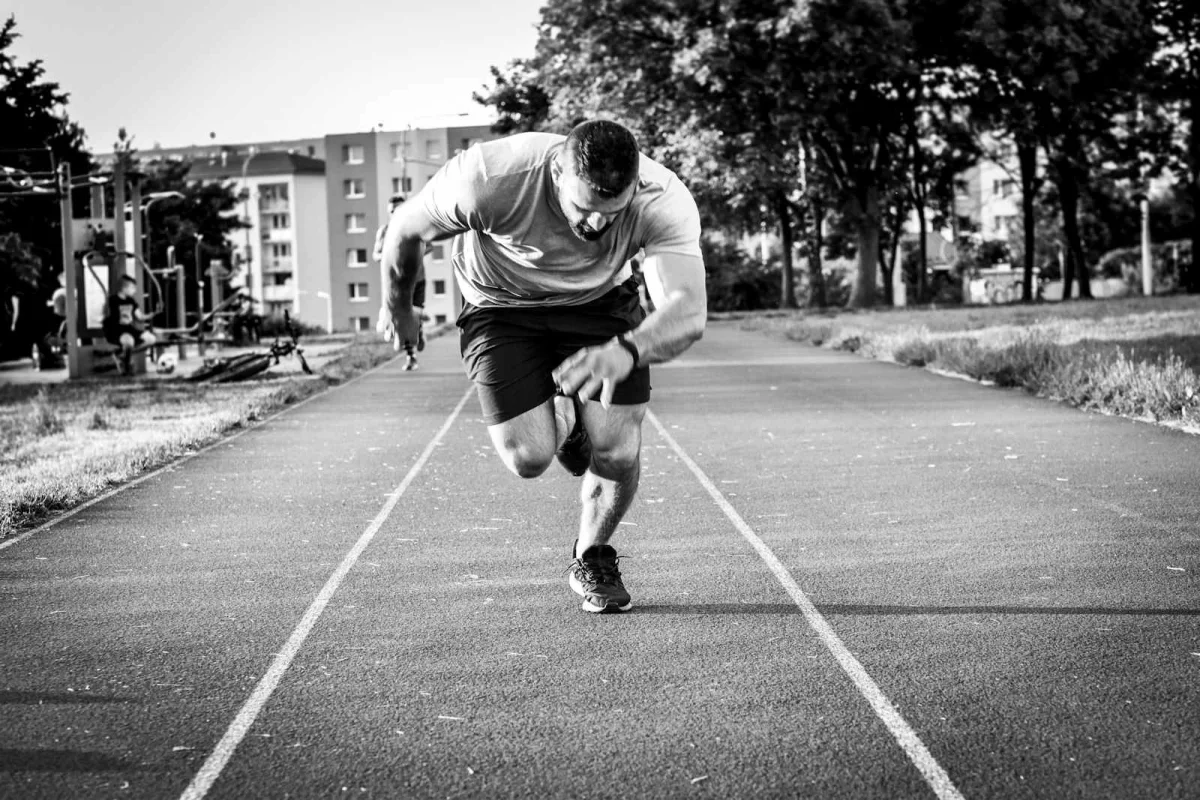
- Bolt's estimated peak power during 100m sprint: approximately 2,600W (at approximately 5 seconds)
- Maximum for untrained person: approximately 1,000–1,200W for a few seconds
Mechanical efficiency of exercise
The human body is not a perfectly efficient machine. The efficiency of converting metabolic energy (food) to mechanical power is:
- Cycling: approximately 20–25% efficient. For every 100 Watts of mechanical output, the body expends approximately 400–500W of metabolic energy.
- Running: less efficient than cycling at equivalent speeds; efficiency improves with fitness
- Rowing: approximately 18–20% mechanical efficiency
This is why the power output of cyclists can be cross-referenced to calorie burn: a rider producing 250W for 1 hour produces 250 × 3600 = 900,000 J = 215 kcal of mechanical work, but metabolically burns approximately 850–1,000 kcal at 22–25% efficiency.
How to use the Power Converter on sadiqbd.com
- Convert watts to horsepower — contextualise human power vs machines (a 250W cyclist = 0.34 hp; a car engine = 100,000W = 134 hp)
- Convert BTU/hr to watts — for comparing exercise energy with heat output or food energy
- Calculate training load — kilojoules of work done = watts × seconds ÷ 1000
Frequently Asked Questions
How many watts does the average person produce on a stationary bike? An untrained adult will typically sustain 100–150W for a 20-minute effort. After a few months of training, this rises to 200W+. The typical commercial spin class participant averages 120–180W during a 45-minute session.
What is the relationship between VO2max and FTP? VO2max (maximum oxygen consumption, in mL/kg/min) and FTP are correlated but not the same. FTP represents approximately 70–85% of VO2max power output. Elite cyclists with high VO2max (typically 70–90 mL/kg/min) also have high FTP. However, the percentage of VO2max sustainable at threshold (lactate threshold) varies between athletes — some can sustain a higher fraction, which is what training can improve even without changing VO2max.
Is the Power Converter free? Yes — completely free, no sign-up required.
Try the Power Converter free at sadiqbd.com — convert between watts, kilowatts, horsepower, BTU/hr, and more.